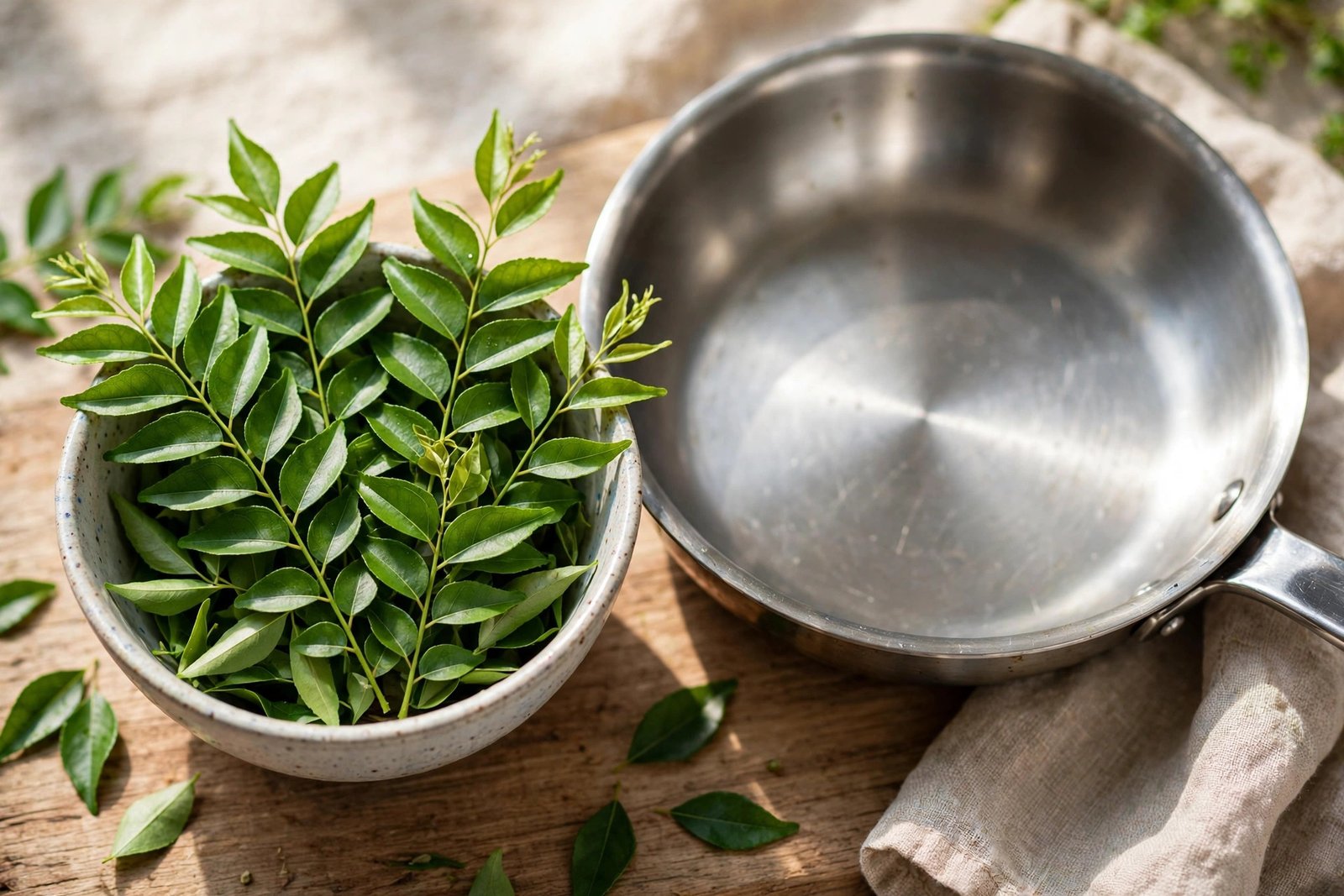
Curry leaves benefits may include help with blood sugar, cholesterol, and digestion, and the leaves are rich in iron and antioxidants. That is the short answer. The longer answer matters more: most of the strong claims come from animal studies using concentrated extracts, not from people eating a few leaves in everyday cooking. Curry leaves are genuinely nutritious and worth eating often. They are not a medicine. Here is what the evidence actually shows, benefit by benefit, so you can decide for yourself.
Updated November 21, 2026
In this article
- Blood sugar: the most promising benefit
- Cholesterol and heart health
- Digestion and gut health
- Hair and skin: what is real and what is not
- Antioxidants and inflammation
How to read the evidence on curry leaves benefits
Curry leaves are the foliage of the curry tree, Murraya koenigii, a plant native to India. They are not the same as curry powder, though they are often added to spice mixtures. Their flavour is hard to describe if you have never had them: citrusy, slightly bitter, and warm all at once. They are now sold in grocery stores in many countries, fresh, dried, or as a powder.
Nutritionally, they punch above their weight. They contain iron, calcium, phosphorus, vitamin C, carotene that your body converts to vitamin A, and B vitamins including thiamine, riboflavin, and niacin. Dried curry leaves pack roughly 12 mg of iron per 100 grams, which makes them one of the more iron-dense plant foods around. Beyond vitamins and minerals, they contain carbazole alkaloids, a class of plant compounds that is relatively rare in the plant kingdom. The most studied one is mahanimbine, and it drives many of the effects researchers report.
The key habit for reading this article: ask, for each benefit, whether the evidence comes from people or from animals given extracts. A lab result is not the same as a result from eating a few leaves in a meal. That distinction is the whole point of the list below — and it is also why curry leaves belong with other budget-friendly healthy foods and food habits that support healthy aging, as a small daily habit rather than a cure.
1. Blood sugar: the most promising benefit
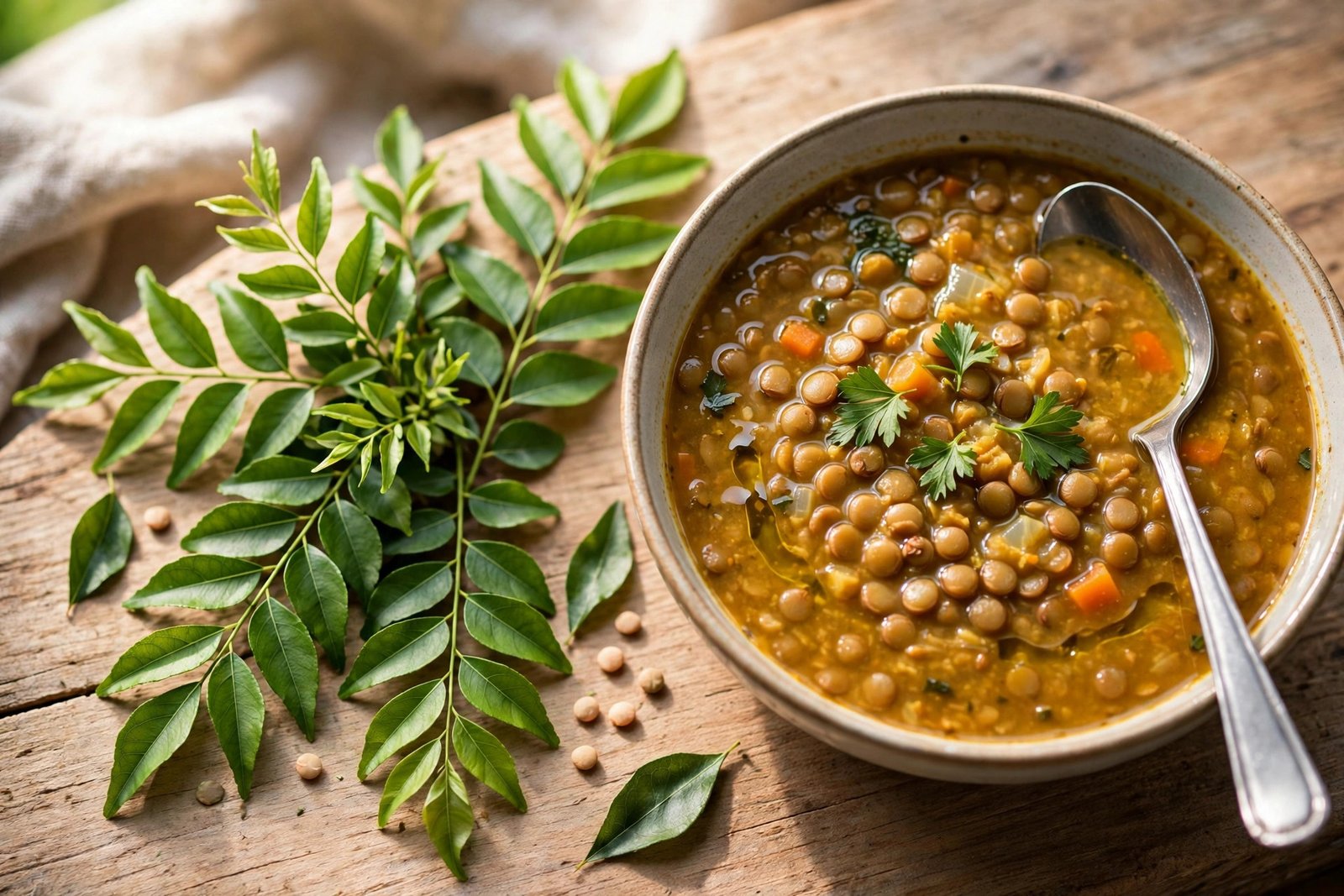
If there is one area where curry leaf research looks genuinely exciting, it is blood sugar control. Curry leaf extracts act as natural inhibitors of alpha-amylase, the enzyme that breaks down starch into sugar in your digestive tract. Slow that enzyme down, and the blood sugar spike after a carbohydrate-heavy meal gets smaller. In laboratory testing, curry leaf extracts performed comparably to acarbose, a drug prescribed specifically to manage post-meal blood sugar in people with type 2 diabetes.
That is a striking result. It is also a laboratory result, using extracts. Nobody has shown that the handful of leaves in a lentil soup has the same effect. Still, the mechanism is plausible, and it lines up with the traditional Ayurvedic use of curry leaves for diabetes. One honest caveat: if you take diabetes medication, do not treat curry leaves as a replacement for it. They are a food, not a drug, and any change to your diet or medication needs your doctor in the loop.
Up next: 2. Cholesterol and heart health
2. Cholesterol and heart health
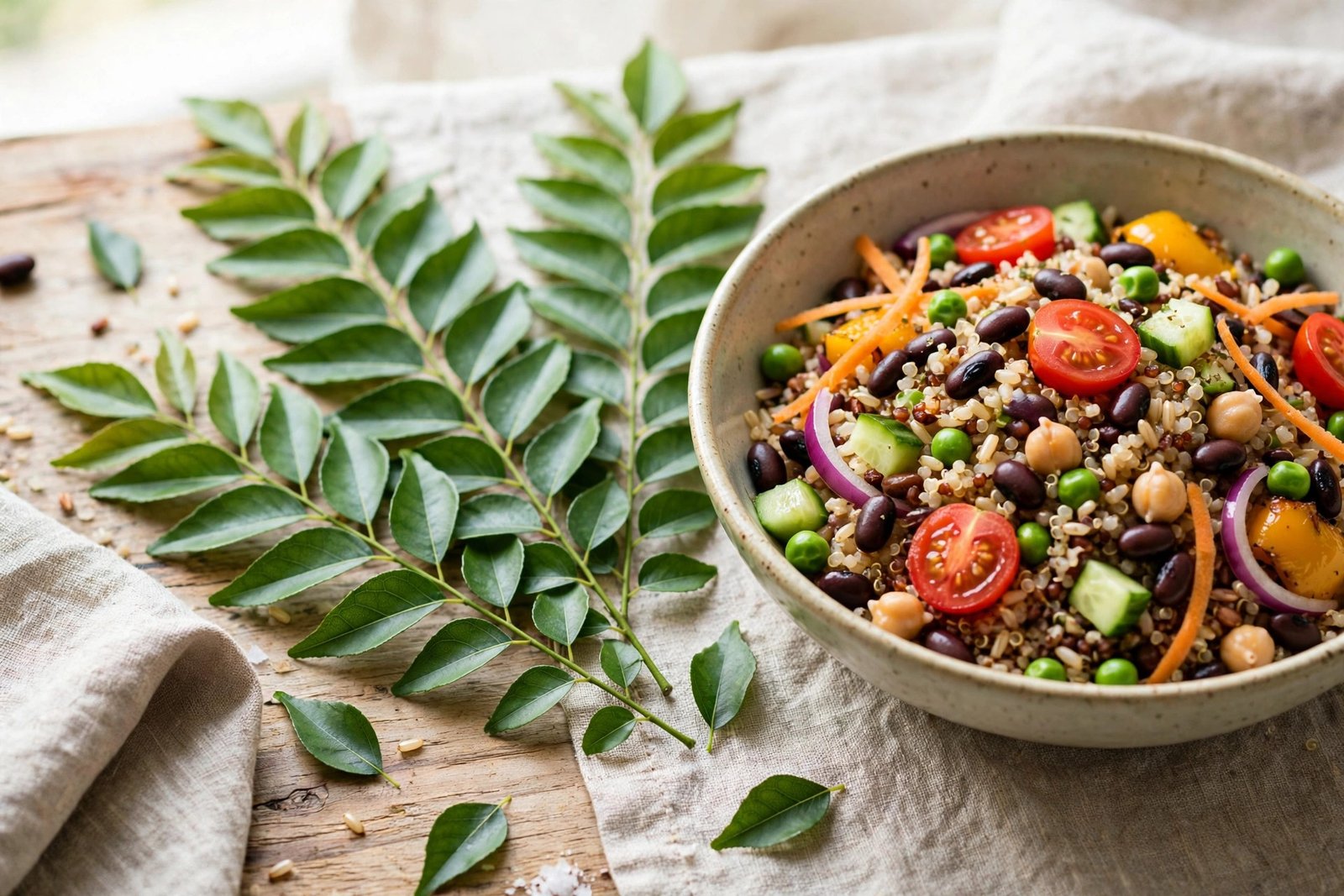
Animal studies show curry leaf extracts can lower total cholesterol by up to 30 percent and triglycerides by 37 percent, while raising HDL, the protective form of cholesterol. Those are big numbers. They come from studies using concentrated extracts in diabetic rats, not from everyday cooking amounts.
The human evidence is thinner but real. In one small study, postmenopausal women who consumed curry leaves over 45 days saw their total cholesterol drop by about 31 mg/dl. That is a meaningful change, and it is one of the few human numbers we have. The effect likely comes from mahanimbine, which appears to reduce dietary fat absorption and increase the excretion of unabsorbed fat. So where does that leave us? Curry leaves probably help heart health markers a little. They are not a substitute for statins, exercise, or eating less fried food. They are a good habit stacked on top of the things that matter most.
Up next: 3. Digestion and gut health
3. Digestion and gut health
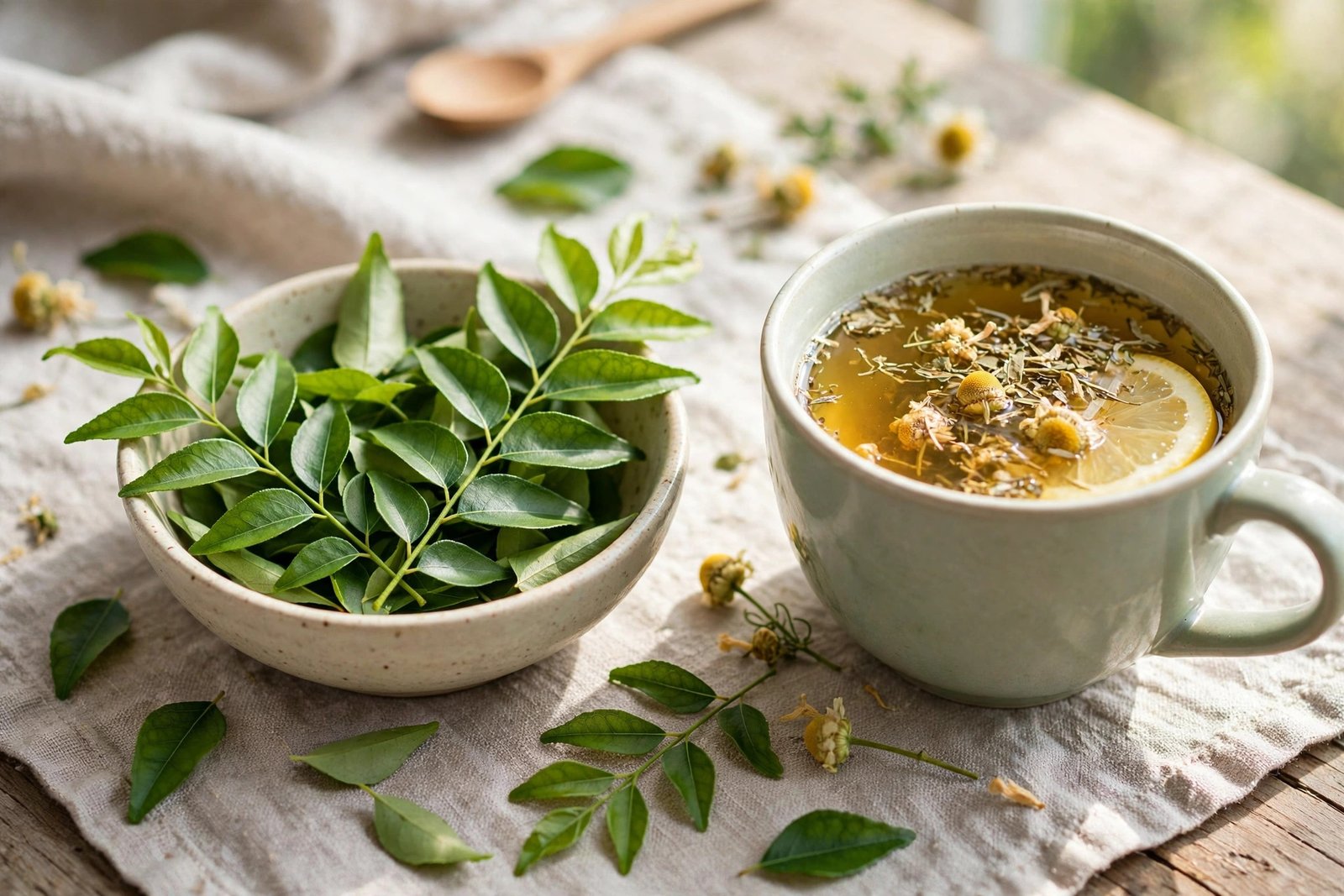
In Ayurveda, curry leaves have been used for centuries to treat dysentery, diarrhoea, and indigestion. Modern research gives this some support. Curry leaves appear to protect the stomach lining, particularly against damage from anti-inflammatory painkillers like piroxicam. In rats given a damaging painkiller, pre-treatment with curry leaf extract reduced stomach damage and lowered markers of oxidative stress.
They also stimulate digestive enzymes, which helps nutrient absorption. This is the least controversial benefit on the list. It matches both tradition and the lab work, and it is the one you can feel most directly: a tempering of curry leaves in hot oil simply sits better than a meal without it.
Up next: 4. Hair and skin: what is real and what is not
4. Hair and skin: what is real and what is not

This is where the blogs get ahead of the science. Curry leaves are widely said to promote hair growth and reduce hair loss, and the claim usually points to their beta-carotene and protein content, which strengthen hair follicles. It sounds convincing. The problem is that there is almost no human research testing curry leaf oil or curry leaf paste on actual hair growth.
What we do know is that the leaves are rich in antioxidants, and antioxidants protect cells, including skin and scalp cells, from oxidative damage. Curry leaf oil is also used traditionally for skin, and its essential oils have shown antibacterial and anti-inflammatory properties in lab studies. So the honest version is this: curry leaves are good for your hair and skin in the same way any nutrient-rich food is. They are not a proven hair growth treatment. If someone sells you curry leaf hair oil with a before-and-after photo, ask for the study. You will be waiting a while.
Up next: 5. Antioxidants and inflammation
5. Antioxidants and inflammation
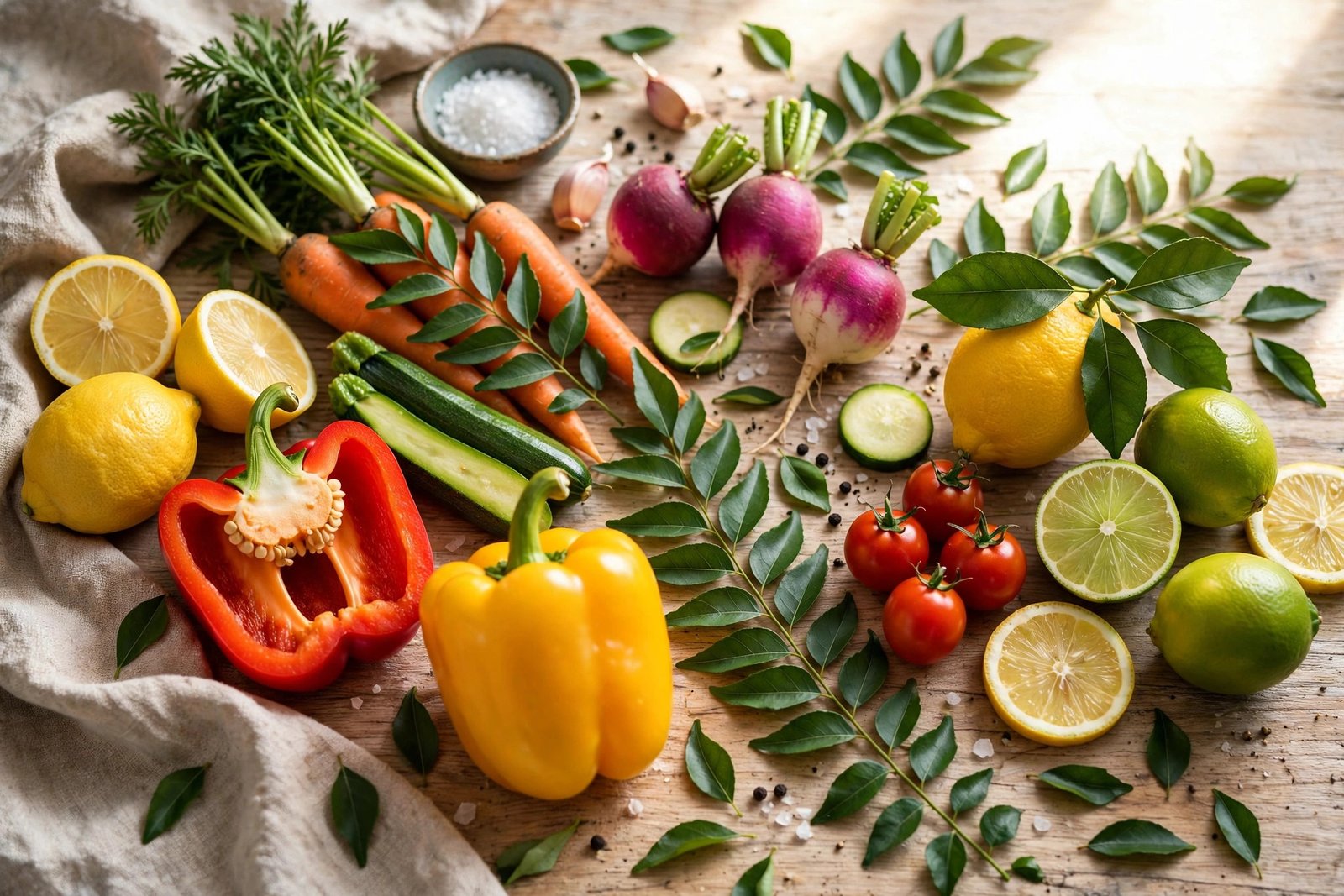
Curry leaves are packed with protective plant compounds: alkaloids, glycosides, and phenolic compounds, including linalool, alpha-terpinene, myrcene, mahanimbine, and caryophyllene. Many of these function as antioxidants, scavenging free radicals and suppressing oxidative stress, a condition linked to chronic disease.
In animal studies, curry leaf extract protected against medication-induced stomach damage and against oxidative damage in the nervous system, heart, brain, and kidneys. Human research on the antioxidant effects specifically is lacking. That does not make the claim false. It makes it unproven in people, which is a different thing, and worth saying plainly.
That is the honest picture: a genuinely nutritious leaf with promising research behind it, especially for blood sugar and cholesterol, where most of the strongest results still come from animal studies and extracts rather than everyday eating. Eat curry leaves often, in real food. That is where their value really sits: not as a miracle leaf, but as a small, daily habit that adds up.
Five easy ways to eat curry leaves every day
Knowing the benefits is useless if the leaves stay in the fridge. Here are five ways that take almost no extra effort.
- The tempering. Heat oil or ghee, add mustard seeds, then a sprig of curry leaves. Let them crackle for ten seconds, then pour over a lentil soup, rasam, or sambar. This is the classic, and it works because the fat carries the flavour.
- Curry leaf powder. Dry a big batch of leaves in the shade, grind them with a little salt and roasted lentils, and keep the powder in a jar. A spoonful over rice with ghee, or mixed into yogurt, gives you a concentrated dose with zero extra cooking.
- Chutney. Blend fresh curry leaves with coconut, green chilli, and tamarind for a chutney that goes with dosa, idli, or rice. It keeps in the fridge for three or four days.
- Buttermilk. A few torn leaves stirred into spiced buttermilk, or a tempering poured over it, is the easiest way to get curry leaves into a summer lunch.
- Just eat them. The leaves in your soup are edible. Most of us push them aside out of habit. Try eating them instead. They are slightly bitter, but in a small quantity they add a pleasant bite, and it is the simplest way to get the nutrients.
Are curry leaves safe?
For most people, yes. They are a food eaten daily by millions of people, and toxicity studies have found no major adverse effects at normal or therapeutic doses. A few sensible limits apply. If you are pregnant, eat them in normal food amounts rather than taking concentrated supplements. If you take diabetes or cholesterol medication, remember that curry leaves may nudge blood sugar and lipids, so tell your doctor if you start eating large quantities daily. And if you have a known allergy to plants in the Rutaceae family, which includes citrus, be cautious.
Frequently asked questions
Can I eat curry leaves raw?
Yes. Raw leaves are safe and nutritious, though they are bitter. Most people prefer them cooked in a tempering, powdered, or blended into chutney.
Do curry leaves help with hair growth?
There is no good human evidence that curry leaves grow hair. They contain beta-carotene, protein, and antioxidants that support overall hair health, but claims of regrowth are unproven. Eat them for general nutrition, not as a hair treatment.
How many curry leaves should I eat a day?
There is no official recommended amount. A sprig or two in your daily cooking, roughly 8 to 10 leaves, is a normal food amount and a reasonable target.
Are dried curry leaves as good as fresh?
Dried leaves keep most of the minerals, including iron, and are more concentrated by weight. Fresh leaves keep more of the aromatic oils. Both are worth using. Use fresh for tempering and chutney, dried for powder.
References
Sources checked November 21, 2026. General information; individual needs and rules can differ.
- NIH study: curry leaf, blood sugar and cholesterol
- NIH study: curry leaf supplementation in people with diabetes
Keep reading: 25 Budget-Friendly Foods for Simple, Balanced Meals or 13 Food Habits Worth Reviewing as You Get Older.