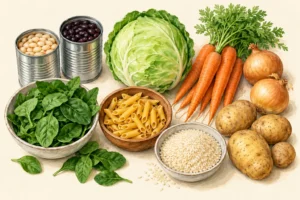
Half-finished ingredients can still have a place in your next meal. Half an onion, a few spoonfuls of yogurt and a small bowl of beans can each seem too minor to plan around. Put them next to the meal you’re already making and they become easier to use. You don’t need a special leftover recipe for every container.
References
These practical meal ideas are not kitchen-tested recipes. Source links support the handling guidance and cultural context; they are not claims that these exact methods were tested by those organizations.
Start by checking what the food is and how it was stored. These ideas are for ingredients that are still safe and in good condition. Cooking, freezing or adding strong seasoning does not rescue food that has been stored unsafely. When you can’t establish its handling, don’t build a meal around it.
Make a short use-next list
Write down the opened items, the dates you opened or cooked them and one realistic use for each. Keep them visible without blocking cold-air circulation in the refrigerator. Follow the product’s instructions; different ingredients don’t share one universal storage deadline. USDA’s leftover guidance is a useful starting point for cooked dishes.
Published October 18, 2026
In this article
- Half an onion: start the next saucepan
- An open can of tomatoes: make a small sauce
- A little plain yogurt: mix a dressing
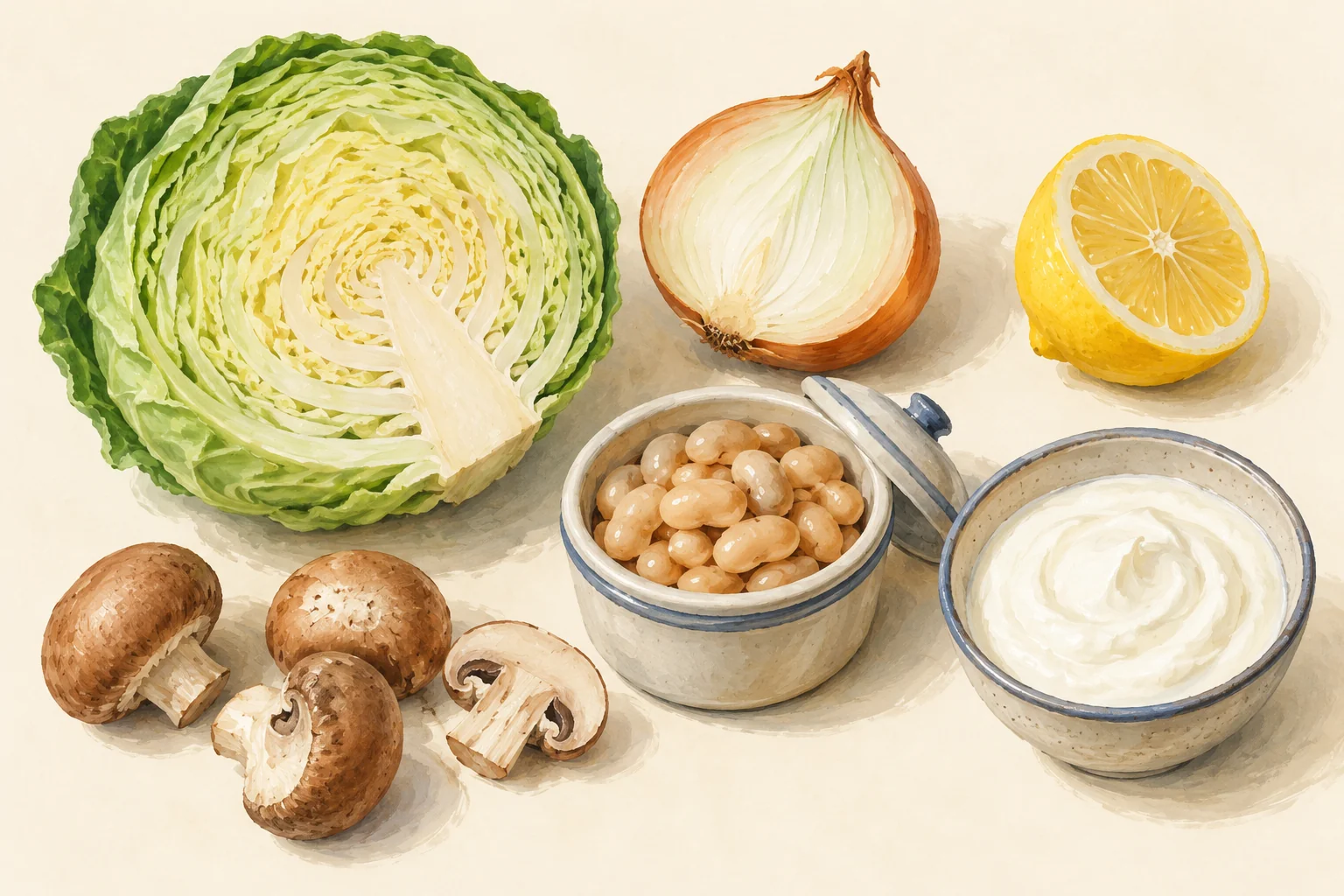
- Half a cabbage: choose wedges or shreds
- A handful of spinach: add it near the end
- A small amount of cooked rice: plan one proper use
- An opened can of beans: thicken a soup
- Part of a lemon: season the finished meal
- A small piece of cheese: finish rather than fill
- A few mushrooms: give them space in the pan
- The last portion of broth: use it where flavor matters
- Bread that is becoming stale: make crisp pieces
Page 1 of 4
1. Half an onion: start the next saucepan
Chop the usable onion and soften it in a little oil before adding canned tomatoes, beans or vegetables. That turns it into the beginning of soup or a sauce rather than a separate item you have to serve. A small amount is often enough for a two-person pan.
If dinner is already under way, choose a dish where softened onion belongs rather than adding it to everything. Onion can change the flavor of a delicate sauce. Keep prepared onion covered and chilled as appropriate, and use clean utensils when taking some from the container.
2. An open can of tomatoes: make a small sauce
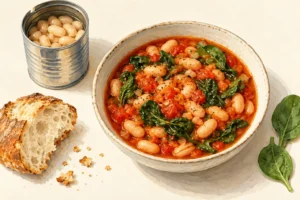
Simmer the tomatoes in a saucepan with garlic or oregano until they reach a consistency you like. Stir occasionally and add water if they begin to stick. Spoon the sauce over pasta, use it with a can of beans or serve it beside a baked potato.
If there isn’t enough for a main dish, treat it as part of the meal. A few tablespoons can go into a vegetable soup. Refrigerate the unused product promptly in a suitable covered container and follow its label. Don’t rely on an open can sitting beside the stove as a plan for tomorrow.
3. A little plain yogurt: mix a dressing
Stir plain yogurt with lemon juice a little at a time, then add black pepper and chopped herbs if you have them. Spoon over roasted vegetables or a bean bowl. Start with a few spoonfuls; it is easier to thin a dressing than to recover one that is too watery.
Sweetened yogurt will give a different result, so check the container before treating every yogurt as interchangeable. Keep the dressing cold and use a clean spoon. Dairy-free products have different flavors and textures; choose one you would enjoy eating rather than assuming it behaves like dairy yogurt.