Budget-friendly foods work best when you can turn them into meals and use them before they spoil. This list covers 25 ordinary ingredients, with ideas for cooking and storing them. Prices vary by shop and season, so compare unit prices and waste rather than relying on a fixed promise that one item is always cheapest.
Updated October 26, 2026
In this article
- Rolled oats
- Dry lentils
- Canned beans
- Dried beans
- Chickpeas
- Brown rice
- Whole-grain pasta
- Potatoes
- Sweet potatoes
- Carrots
- Cabbage
- Onions
- Frozen mixed vegetables
- Frozen spinach
- Canned tomatoes
- Bananas
- Apples
- Oranges
- Frozen berries
- Eggs
- Plain yogurt
- Milk or fortified alternatives
- Peanut butter
- Tofu
- Canned fish
Turn a short shopping list into several meals
Try this flexible example using foods from the list: oats with plain yogurt and banana for breakfast; lentils with canned tomatoes and carrots for a warm bowl; and rice with beans and frozen vegetables for another meal. Use leftovers only when they have been handled and stored safely. These are meal ideas, not a nutritionally calculated daily menu. For a five-dinner example using one grocery list, see our weeknight dinner plan.
Before shopping, check which ingredients you already have, then buy quantities you can use. If there are open cans or partly used vegetables in the fridge, start with these ideas for using half-finished ingredients. Compare prices in the same unit: a hypothetical 1 kg bag costing $3 is $0.30 per 100 g; a 500 g bag costing $2 is $0.40 per 100 g. These figures illustrate the arithmetic and are not current store prices. The larger bag saves money only if you can use it without waste. For dry versus canned beans, compare the usable cooked amounts rather than treating their package weights as equivalent.
1. Rolled oats
References
Sources checked October 11, 2026. General information; individual needs and rules can differ.
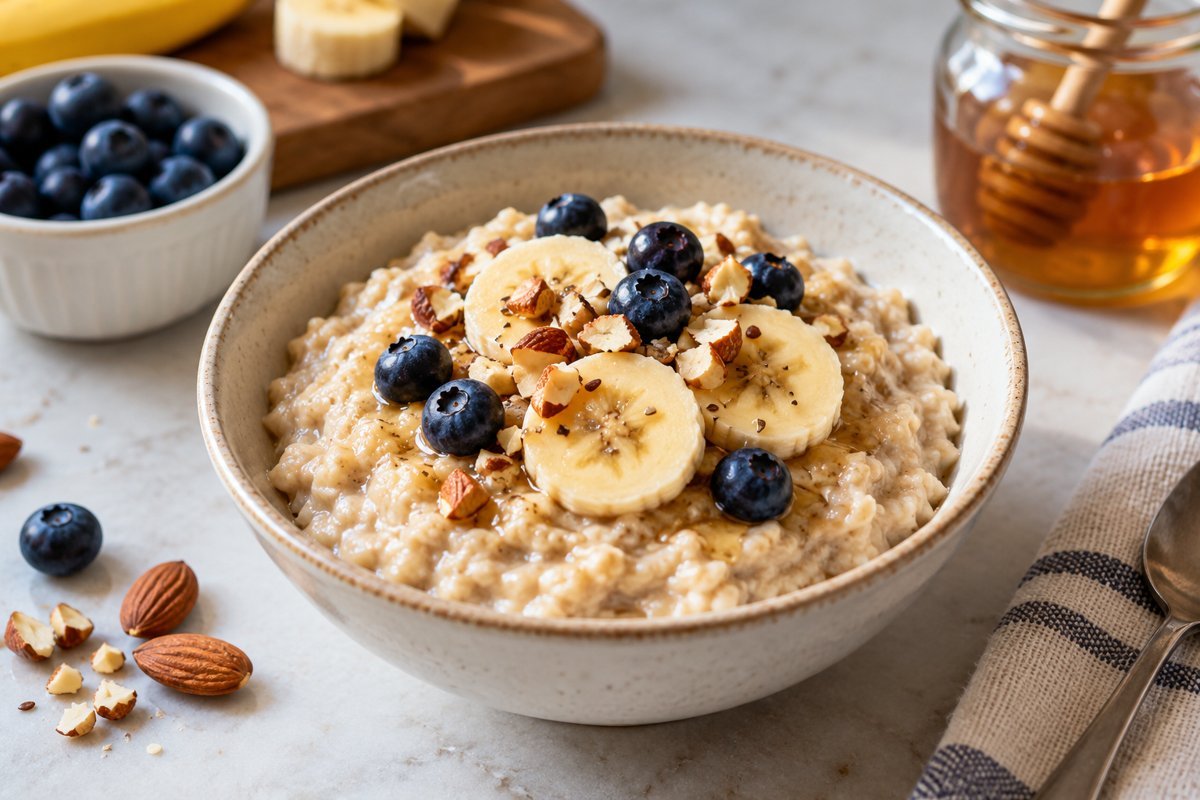
Plain oats are useful because the same container can become several meals. Cook them for breakfast, add them to a crumble topping or use them in savory bowls. Compare the price per ounce, not just the package price. A very large bag is only a saving if you can store it dry and use it.
Use plain oats for hot breakfast, overnight oats or baking. A larger container may cost less per ounce, but check the shelf label. Start with a bowl you enjoy: oats, milk or a suitable alternative, and sliced banana. Keep toppings simple so breakfast stays affordable.


4 thoughts on “25 Budget-Friendly Foods for Simple, Balanced Meals”