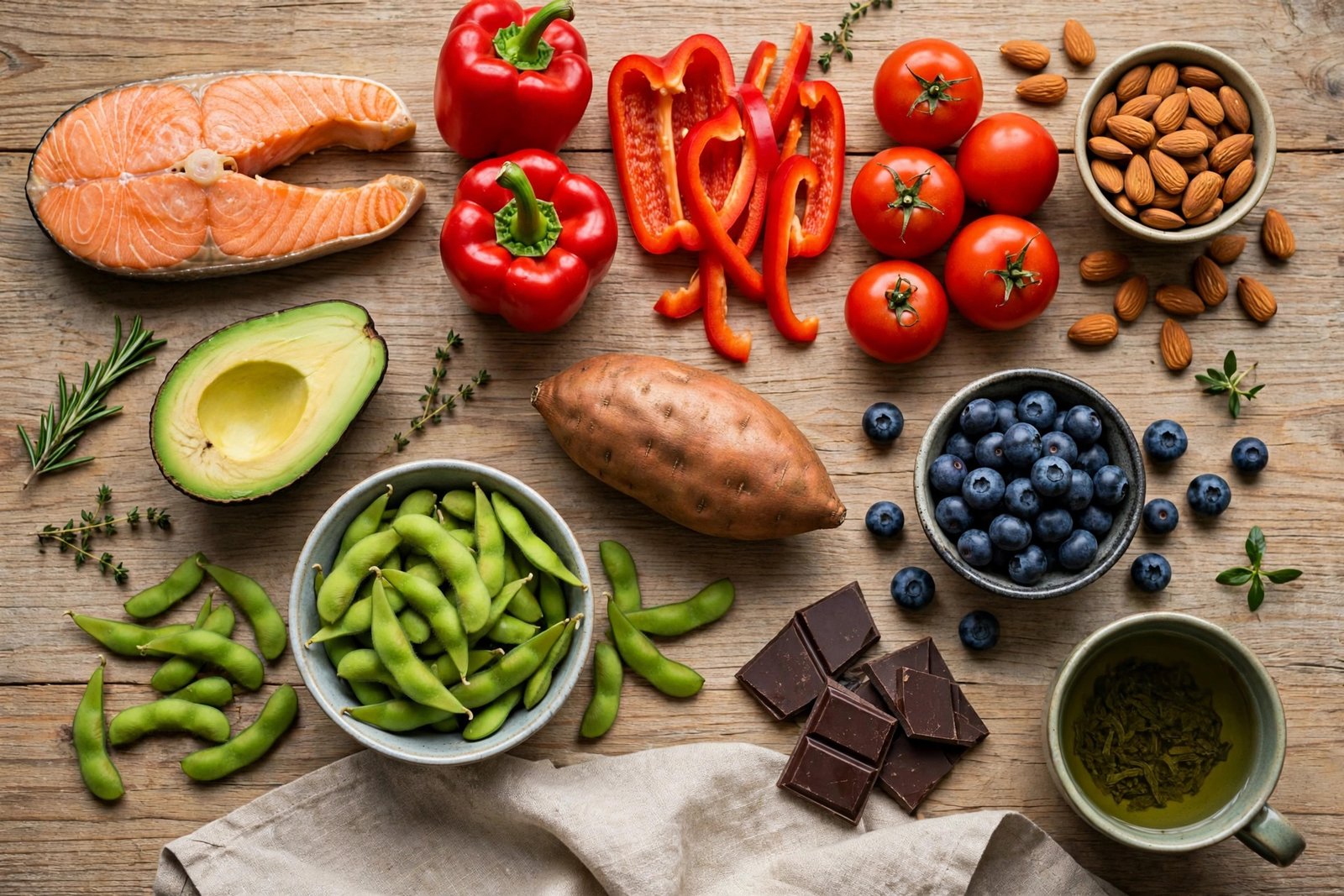
Fatty fish, red peppers and tomatoes carry the strongest evidence of any foods for healthy skin. This list ranks ten foods the same way, strongest first. The strongest evidence comes from a 2025 meta-analysis of 61 human studies, plus a handful of small trials that tested single foods. The effects in the studies are small and slow. So treat this list as a guide to what is worth eating often, not as a cure. No food here replaces sunscreen, and if a rash, sore or mole changes, or a skin condition does not improve, ask a qualified professional for advice.
Updated November 26, 2026
In this article
- Fatty fish
- Red bell peppers
- Tomatoes
- Almonds
- Avocado
- Sweet potatoes
- Dark chocolate
- Edamame
- Green tea
- Berries
How to use foods for healthy skin in everyday meals
The pattern behind most of the evidence is simple. A 2025 meta-analysis of 61 human studies found that four groups of dietary compounds help skin ageing in different ways. Collagen and lipids improve wrinkles and hydration, polyphenols strengthen the skin barrier, and carotenoids reduce redness. No single food does all of it, which is why the list below ranks foods by how strong their own evidence is, rather than by how often they appear in other lists.
Use the list as a shopping guide, not a prescription. Two servings of oily fish a week, a red pepper or a tomato most days, and a handful of nuts cover most of what the research supports, and they fit easily with other budget-friendly healthy foods. The fibre and plant compounds in several of them also overlap with our list of foods for gut health, which is a useful bonus rather than the point of this article.
Keep expectations modest and keep sunscreen. The trials below measured small changes over weeks or months, not a transformation. None of them tested food as a replacement for sun protection. Food supports the skin from the inside. Sunscreen, shade and a hat do the outside work. A dermatologist is the right call for acne, eczema or any spot that changes.
1. Fatty fish
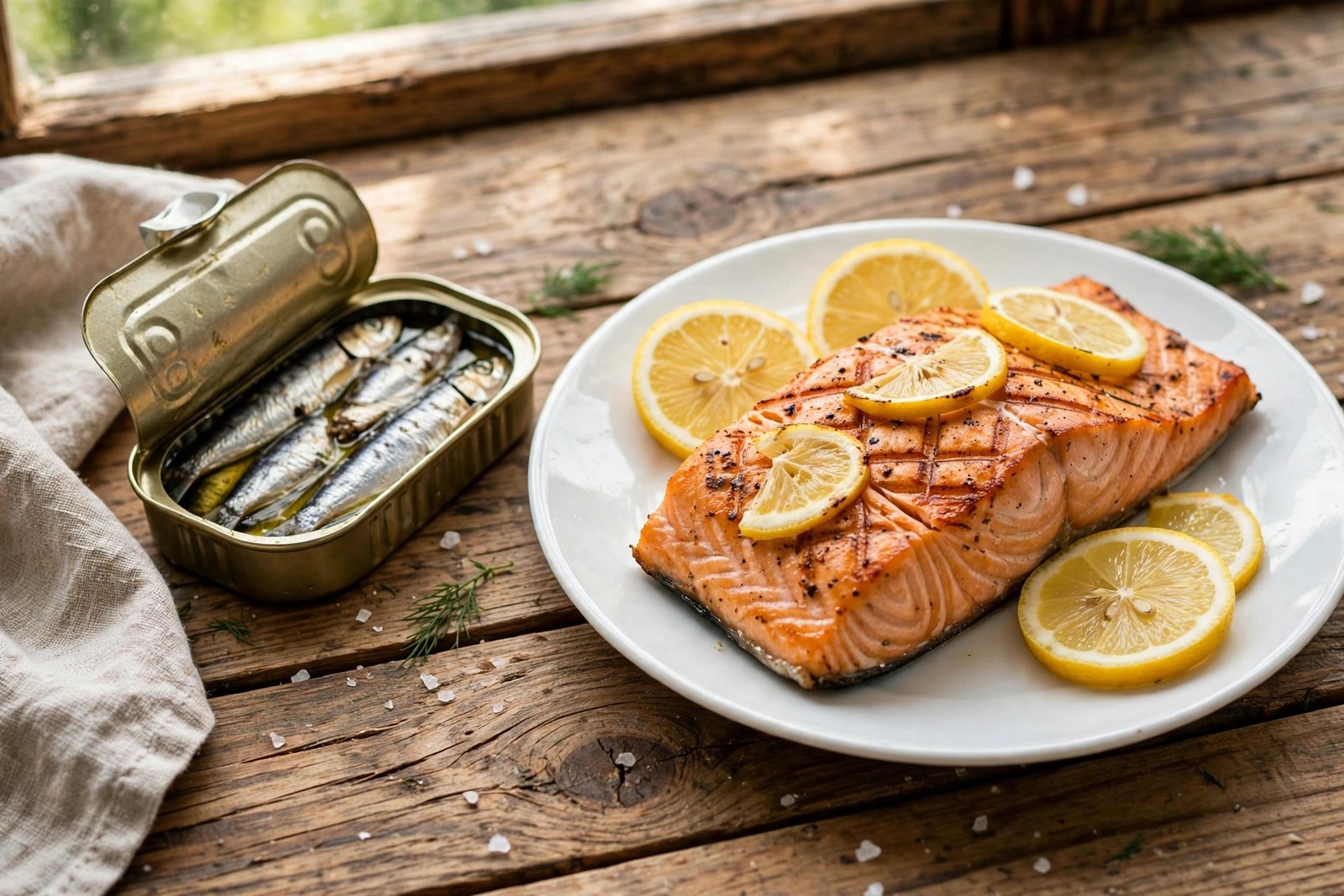
Fatty fish top this list because the strongest summary of the evidence points to them. A 2025 meta-analysis of 61 human studies found that lipids and fatty acids reduced wrinkles, improved skin hydration and improved elasticity, with the clearest effects of any food group it tested. The omega-3 fats EPA and DHA are part of the skin’s lipid barrier. They help hold water in the skin. Salmon also carries astaxanthin, the carotenoid that gives it its pink colour. Though the astaxanthin trials so far have used supplements rather than fish.
One limit matters. No large trial has tested eating fish itself against wrinkles, and much of the direct evidence comes from capsules. In a 12-week trial, daily flaxseed oil capsules (a plant omega-3) improved skin sensitivity and barrier function, with less water loss and roughness, but that was a supplement, not a meal of fish. Eat oily fish twice a week. Choose sardines when you want a cheaper option that is also low in mercury. Do not expect a fish oil capsule to do the same job as the fish. Salmon also appears in our list of foods for brain health, where the same omega-3 fats are the point.
Up next: 2. Red bell peppers
2. Red bell peppers
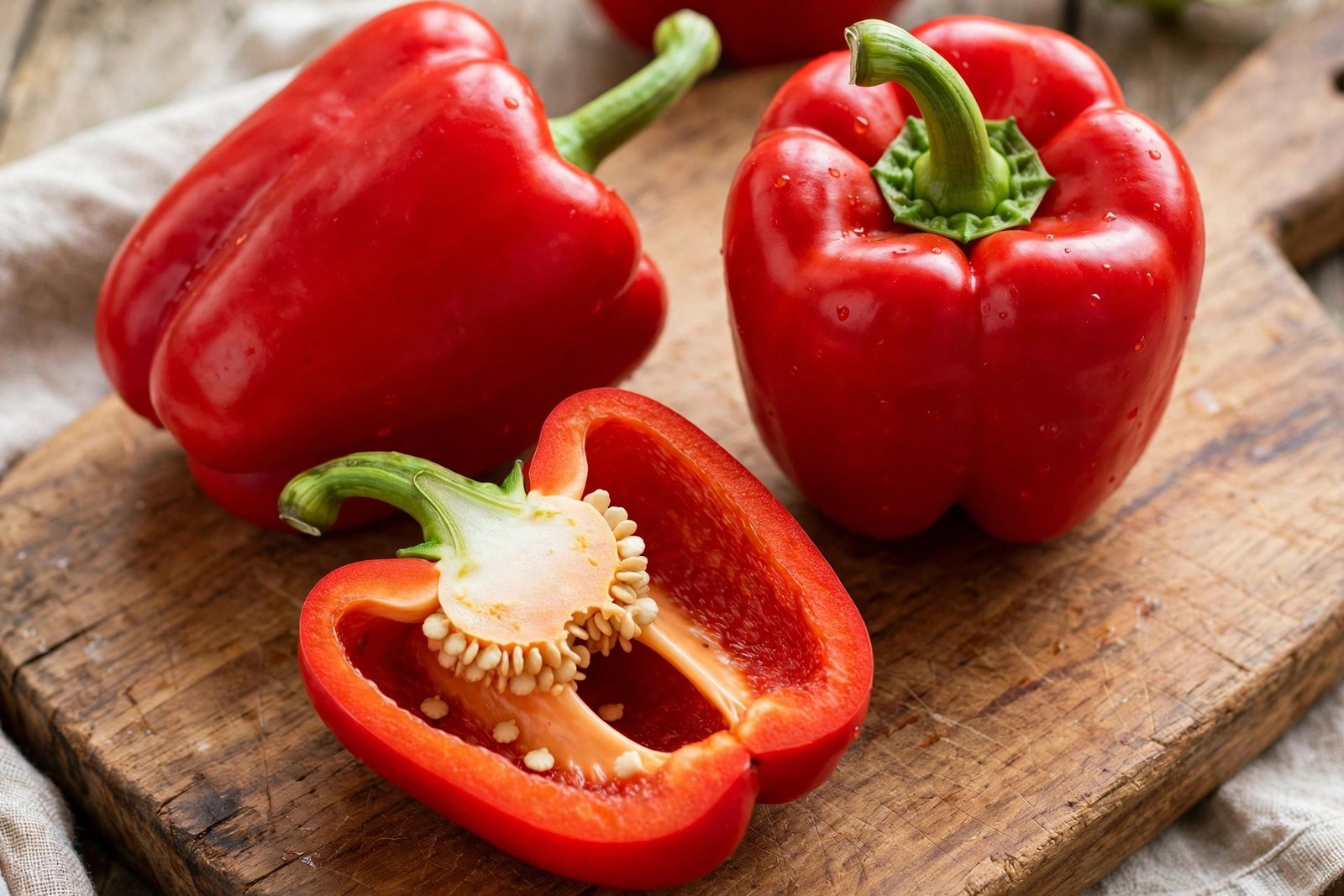
Red bell peppers earn second place on the strength of one of the largest studies of diet and skin. In a 2007 study of 4,025 women aged 40 to 74, higher vitamin C intake was linked to a lower likelihood of a wrinkled appearance and of dry skin, after accounting for age, sun exposure, income, body mass and physical activity. A red pepper holds about twice the vitamin C of an orange by weight, and vitamin C is needed to build and hold collagen, the protein that gives skin its structure.
The study was observational, so it cannot prove that peppers smooth wrinkles. People who eat more vitamin C also tend to eat better overall. A single day of food recall cannot capture a whole diet. The study’s authors worked for a food company, which is a reason to read it carefully rather than to dismiss it. Still, peppers are cheap, easy and low risk. Eating them raw or lightly cooked keeps more of their vitamin C than long cooking does.
Source: Cosgrove et al., 2007, dietary nutrient intakes and skin-ageing appearance, 4,025 women
Up next: 3. Tomatoes
3. Tomatoes
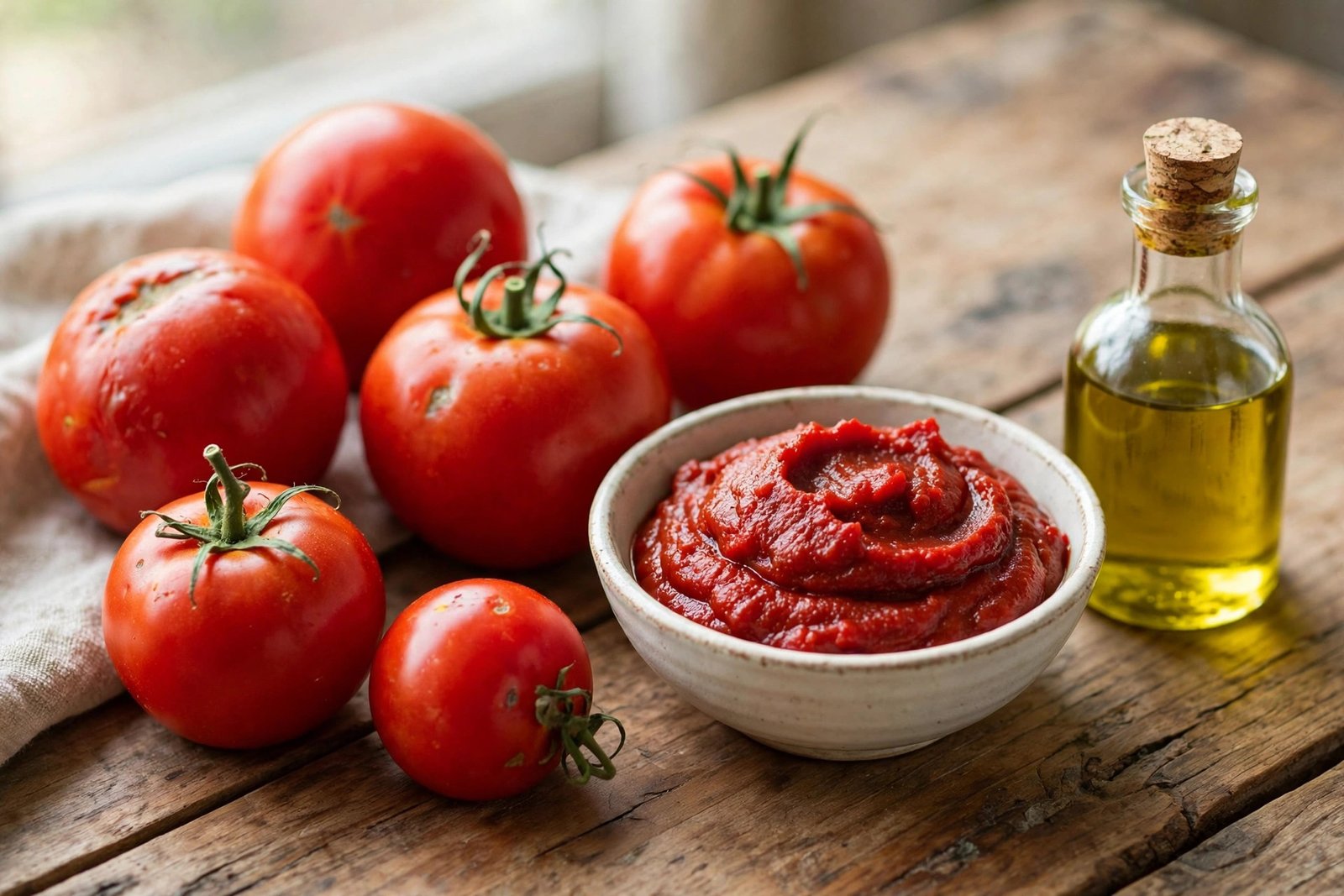
Tomatoes sit third because two small trials tested them directly against sun damage. In the first, volunteers ate 40 grams of tomato paste with olive oil every day for ten weeks, and the redness from a measured dose of UV light was 40 percent lower than in the control group, with no difference at four weeks. In a later 12-week trial, 20 women ate 55 grams of tomato paste a day, and the skin’s tolerance to UV light rose while markers of collagen damage fell.
Two cautions belong here. The second trial’s visually assessed measure of sun sensitivity did not change, only the instrument reading did, and both trials were small and short. Lycopene, the pigment that makes tomatoes red, is fat-soluble. So paste cooked with olive oil is absorbed far better than a raw tomato on its own. Tomatoes may raise the skin’s baseline resilience over months. They are no substitute for sunscreen on the day you go out.
Source: 2025 review, nutrients that slow skin ageing, tomato and lycopene entry
Up next: 4. Almonds
4. Almonds
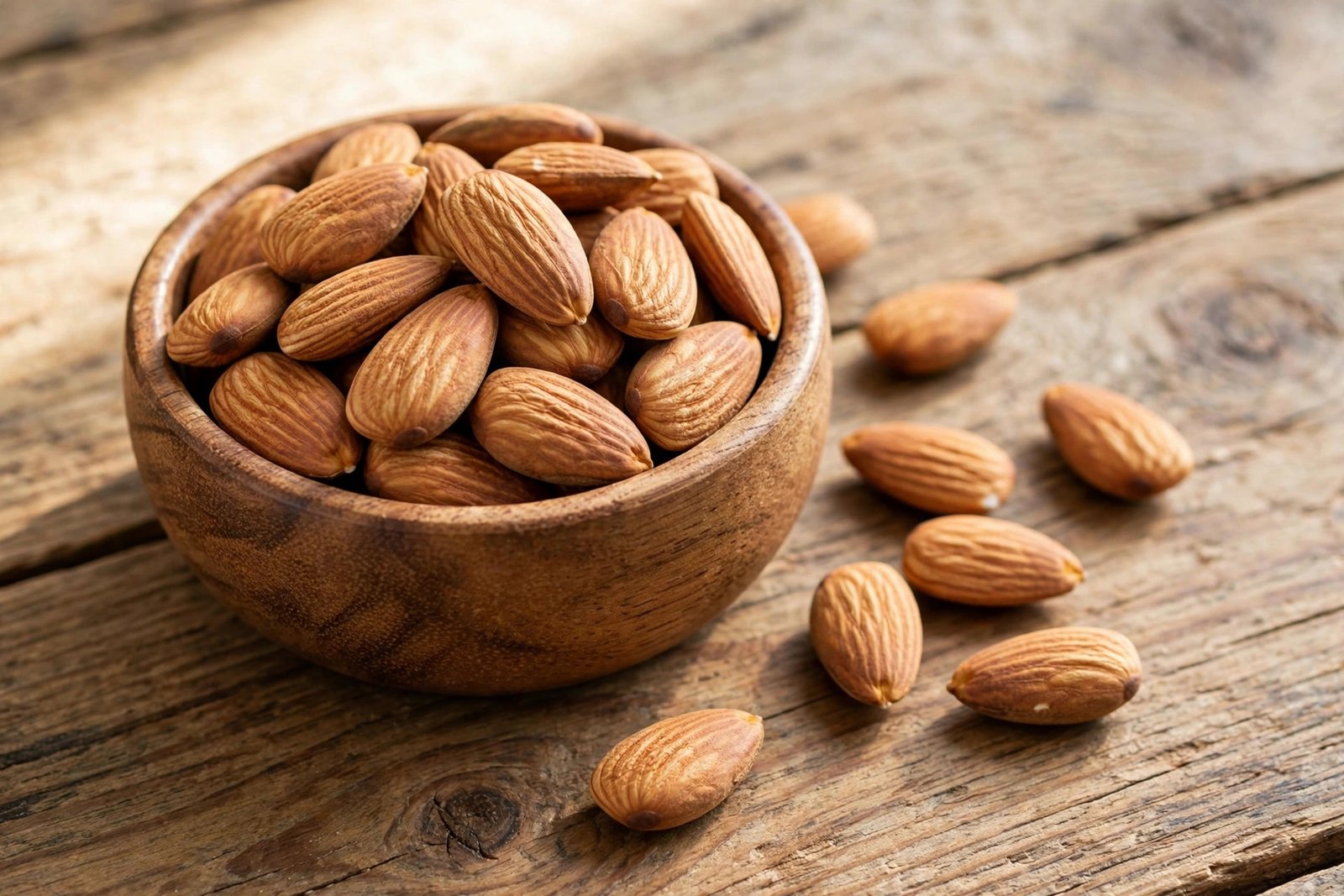
Almonds have the clearest single-food trial in this list. In a 2021 trial, 49 postmenopausal women with fair skin ate almonds worth about a fifth of their daily energy, roughly two small handfuls a day, or a calorie-matched snack, for 24 weeks. Wrinkle severity fell by 15 percent at 16 weeks and 16 percent at 24 weeks in the almond group, and facial pigment intensity fell by 20 percent at week 16 and stayed there. Almonds supply vitamin E and unsaturated fats, both of which the skin uses.
The limits are plain. The trial studied only postmenopausal women with fair, burn-prone skin, so the results may not apply to everyone, and it was funded by the Almond Board of California. A small handful a day is a sensible portion. Almonds are energy dense. So two handfuls a day means eating less of something else, not adding them on top of everything. For more on the habits around healthy skin, see the food habits that support healthy aging.
Source: Rybak et al., 2021, almonds, facial wrinkles and pigmentation, 49 women, 24 weeks
Up next: 5. Avocado
5. Avocado
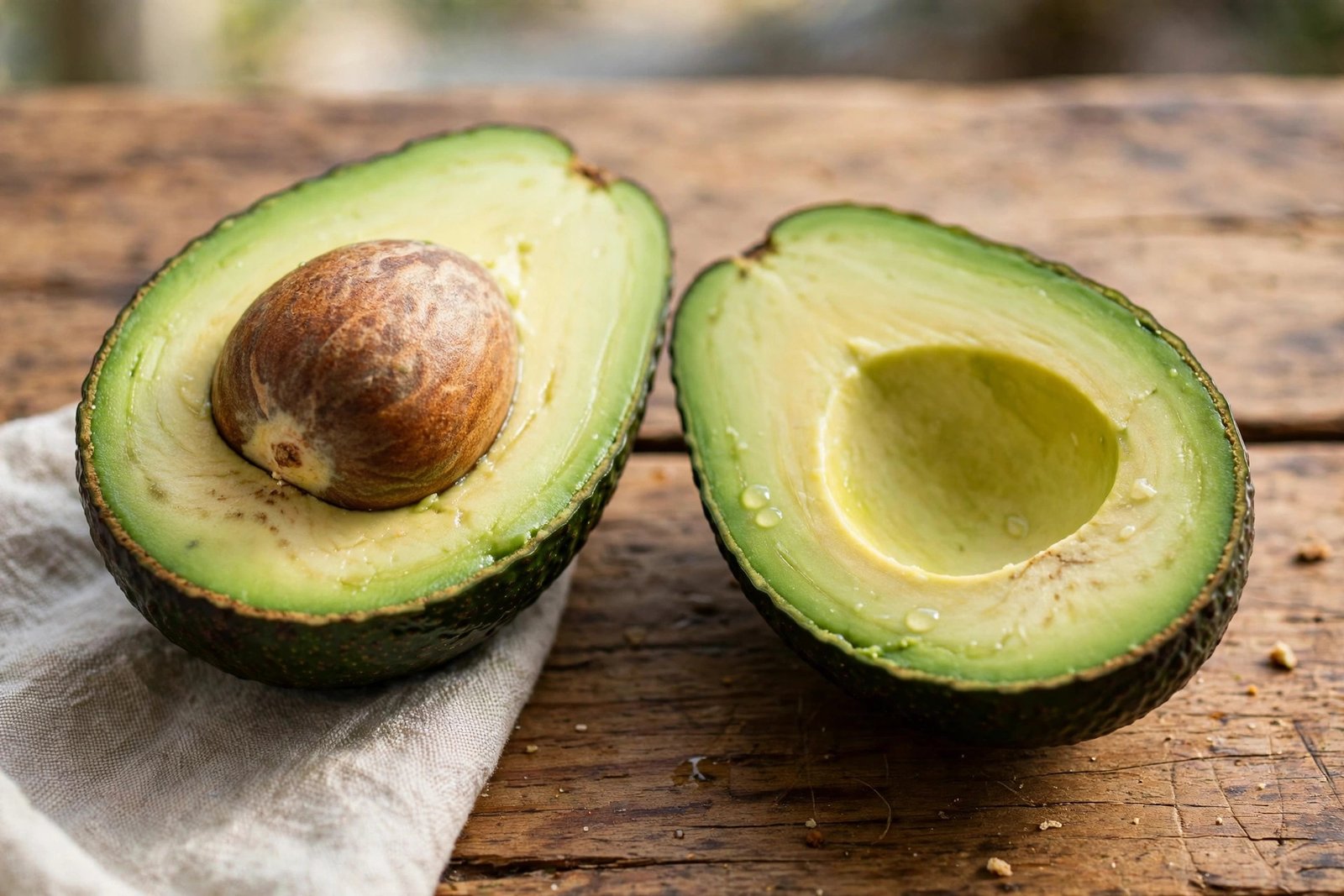
Avocado has one small pilot trial behind it. In 2022, 39 women aged 27 to 73 ate one avocado a day or kept their usual diet for eight weeks. The avocado group showed better forehead skin elasticity and firmness than the control group by the end of the trial. Avocados supply vitamin E and monounsaturated fats, and the fat in an avocado also helps the body absorb carotenoids from the vegetables eaten with it.
The trial was small, lasted only eight weeks and studied women only, and it found no change in hydration, pigmentation, sebum or resistance to UV light. That makes avocado a reasonable food for the skin, not a proven treatment. One avocado holds around 230 calories, so half a day on toast or in a salad is a more sensible habit than a whole one every day.
Source: Henning et al., 2022, avocado consumption, skin elasticity and firmness, 39 women, 8 weeks
Up next: 6. Sweet potatoes
6. Sweet potatoes
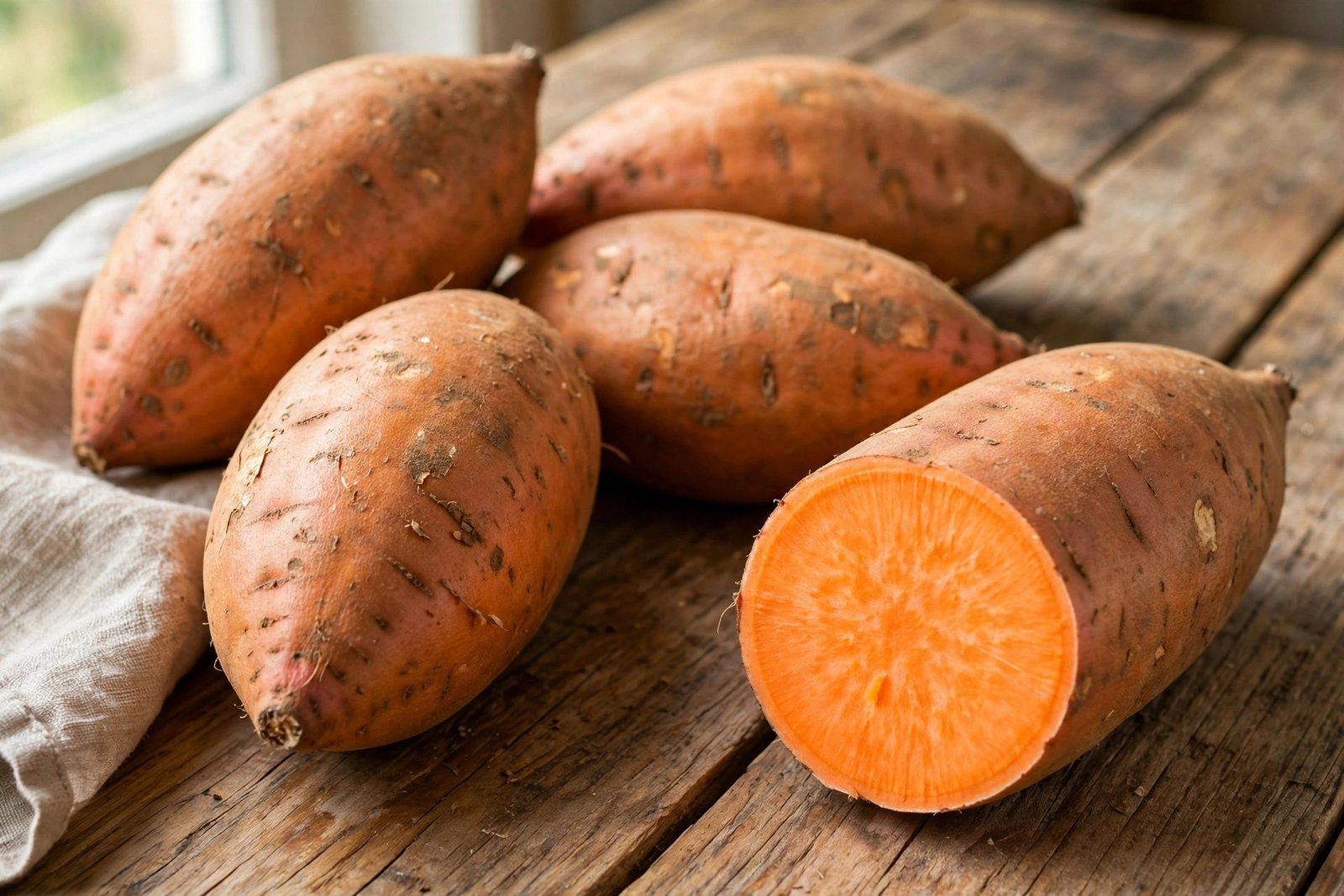
Sweet potatoes are here on their beta-carotene, not on a trial of the food itself, and that is why they sit in the middle. Beta-carotene is a carotenoid the body converts to vitamin A as needed, and the 2025 meta-analysis found carotenoids the most effective dietary group for reducing skin redness. A 2003 trial of beta-carotene or mixed carotenoids also found less UV-induced reddening after several weeks of supplements.
No trial has tested sweet potatoes themselves against skin outcomes, so this item is a nutrient argument, not a proven effect. One medium sweet potato holds well over a day’s vitamin A, along with vitamin C and fibre. Eating very large amounts of beta-carotene-rich foods for weeks can give the skin a slight orange tint, which is harmless and fades when intake drops. Roast or steam them rather than deep-frying.
Source: Ng et al., 2025, dietary interventions in skin ageing, carotenoids and skin redness
Up next: 7. Dark chocolate
7. Dark chocolate
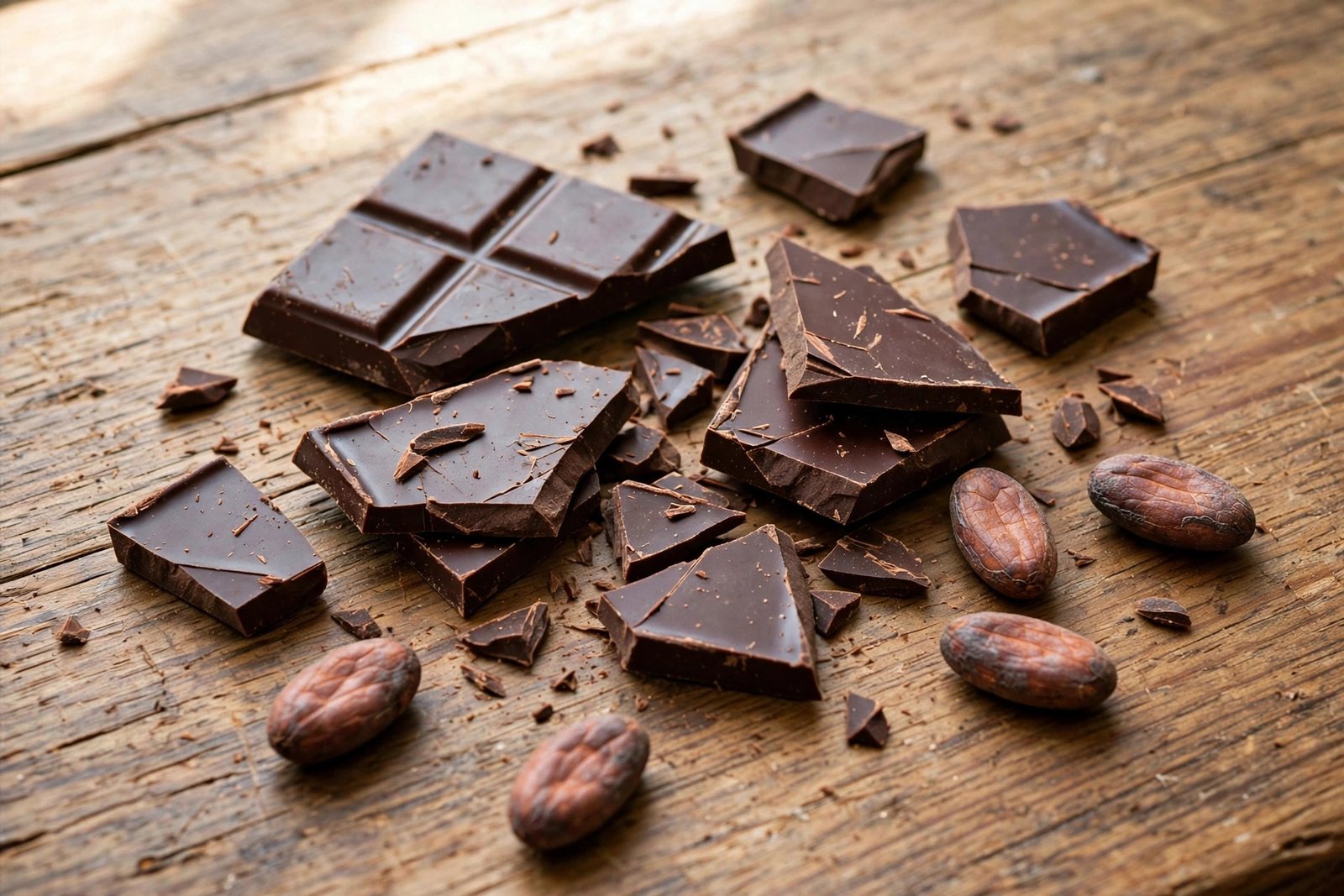
Dark chocolate has one proper trial behind it, which is more than most foods on this list can claim. In a 2006 study, 24 women drank a daily cocoa drink with 329 mg of cocoa flavanols, or a matched drink with only 27 mg, for 12 weeks. The high-flavanol group showed 25 percent less reddening from UV light at 12 weeks, along with better skin hydration, density and thickness, and less water loss through the skin.
The trial was small and studied women only, and the drinks were supplied by Mars Inc., a chocolate maker. The drink tested was a specially made high-flavanol cocoa, not a chocolate bar, and flavanol content is not printed on chocolate labels, so a square of dark chocolate is not the same dose. Choose chocolate with at least 70 percent cocoa, keep the portion small, and treat it as a pleasant extra, not a skin treatment.
Up next: 8. Edamame
8. Edamame
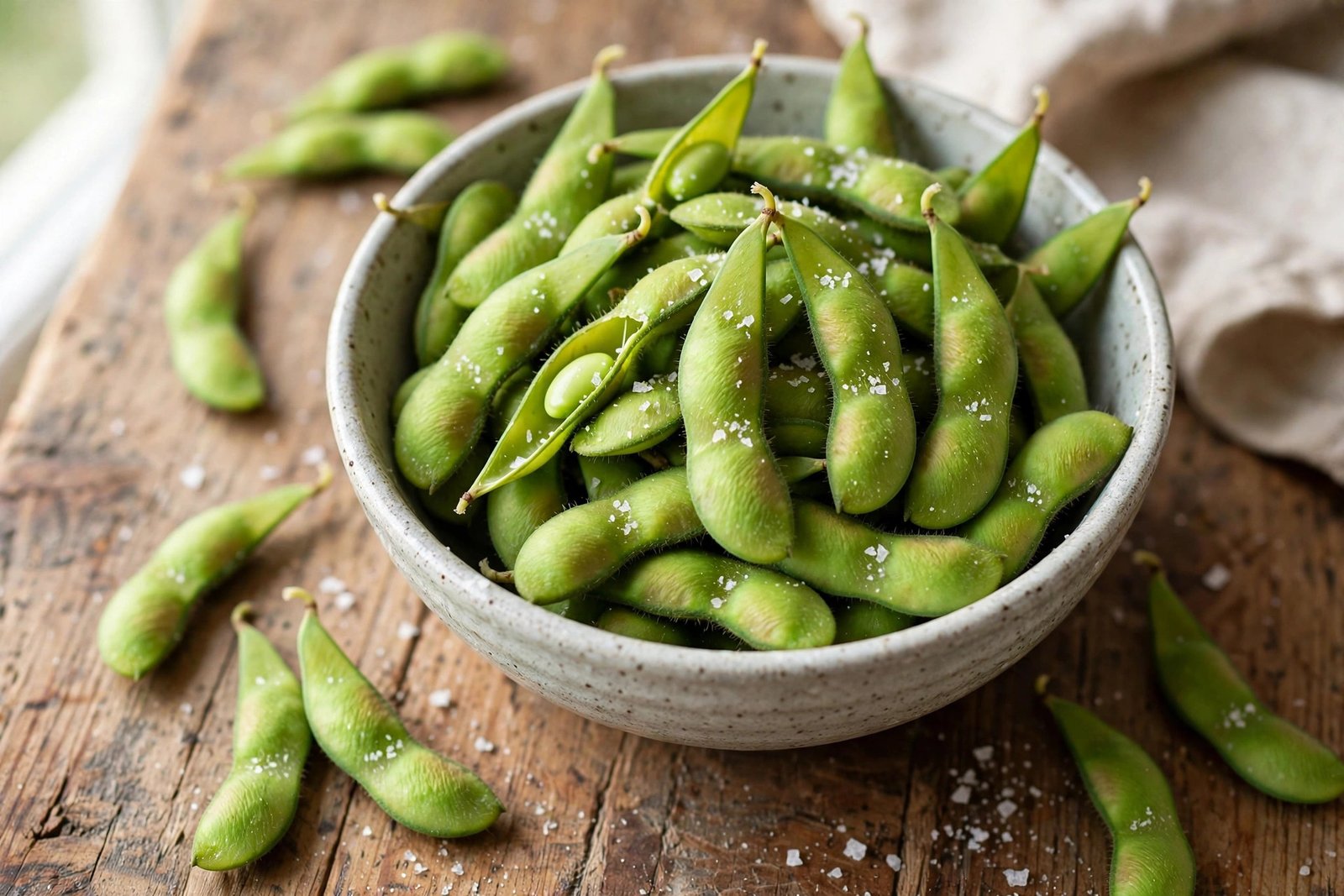
Edamame earns its place from one small trial of the isoflavones soy contains. In 2007, 26 women in their late thirties and early forties took 40 mg of soy isoflavone a day or a placebo for 12 weeks. The isoflavone group showed better fine wrinkles at week 12 and better cheek elasticity at week 8 than the placebo group. Isoflavones act weakly like oestrogen in the body, and oestrogen supports collagen, which is the likely reason researchers tested them.
The trial was small, lasted 12 weeks and tested an isoflavone product, not edamame itself. About two servings of soy foods a day roughly match the dose range the trials used. Edamame is the simplest way to eat soy as a whole food, and tofu works the same way. People with thyroid conditions or on hormone treatments should ask a doctor before adding large amounts of soy or isoflavone supplements.
Source: Izumi et al., 2007, oral soy isoflavone, aged skin, 26 women, 12 weeks
Up next: 9. Green tea
9. Green tea
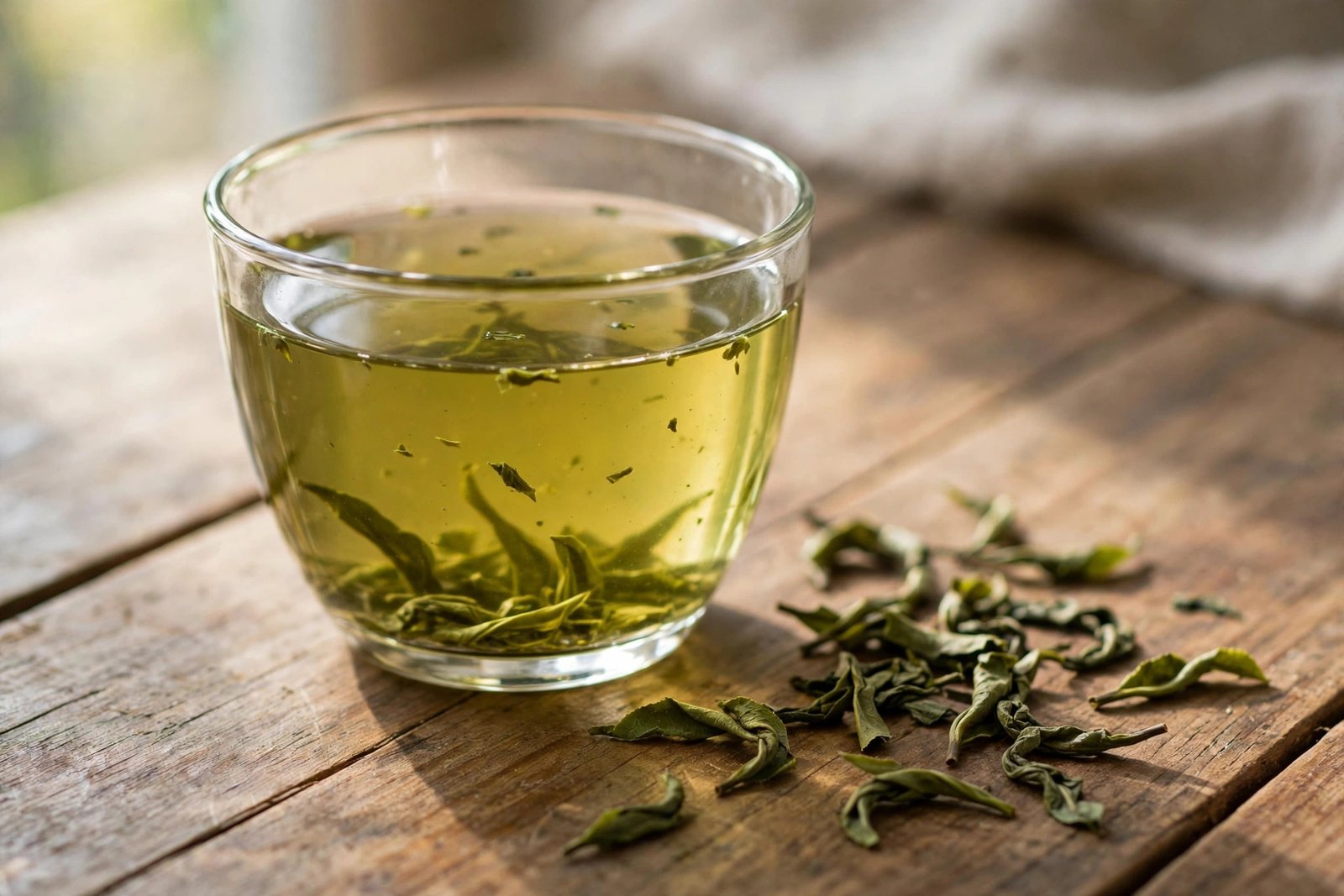
Green tea’s evidence is broad but shallow. A 2025 meta-analysis found polyphenols improved skin hydration and strengthened the skin barrier, and green tea is rich in a polyphenol called EGCG. Lab studies show EGCG protects skin cells from UV damage, and a few small human trials of green tea extracts have found modest gains in elasticity and hydration.
No trial has tested brewed green tea itself against wrinkles or ageing, and the extract trials used doses far above a cup of tea. That puts green tea near the bottom of this list despite its strong reputation. A cup or two a day is a reasonable habit, and it is a gentler source of caffeine than coffee late in the day. For evening routines, see our list of foods that help you sleep. Do not expect tea alone to protect skin.
Source: Ng et al., 2025, dietary interventions in skin ageing, polyphenols, hydration and barrier
Up next: 10. Berries
10. Berries
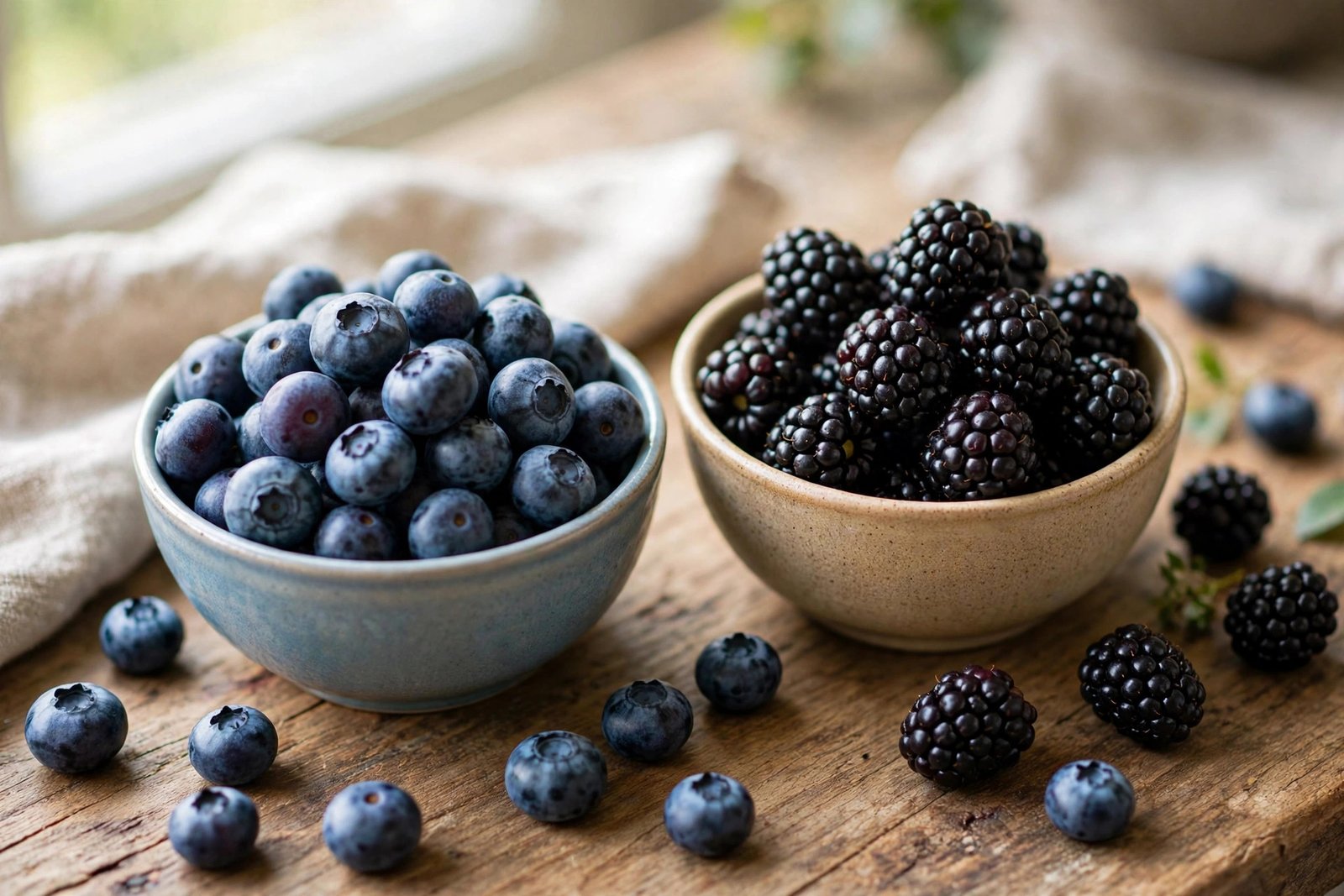
Berries take the last place because no study has tested them against skin outcomes at all. Their case is purely nutritional: blueberries and blackberries are rich in polyphenols and vitamin C, the two groups the 2025 meta-analysis linked to better hydration and a stronger skin barrier. Blueberries also top our list of foods for brain health, which is a reminder that the same foods keep showing up across healthy eating patterns.
A small handful a day is still a reasonable habit, and frozen berries are as good as fresh and often cheaper, which makes them cheap, filling foods that keep well in the freezer. Scatter them on porridge or yoghurt rather than eating them on their own. If a list ever claims berries are proven skin food, it is guessing, and this article would rather say so than repeat the claim.
That is the honest picture. Fatty fish, red peppers and tomatoes have the best evidence, almonds and avocado have one trial each, and the rest of the list runs from nutrient arguments down to no direct trial at all. The pattern matters more than any single item: oily fish, colourful vegetables, nuts and soy, eaten often, beat a cupboard full of supplements. Sunscreen still does the heavy lifting against sun damage, and a skin problem that does not improve deserves a qualified professional, not another food.
References
Sources checked November 26, 2026. General information; individual needs and rules can differ.
- Ng et al., 2025: dietary interventions in skin ageing, systematic review and meta-analysis, 61 studies
- Cosgrove et al., 2007: dietary nutrient intakes and skin-ageing appearance, 4,025 women aged 40 to 74
- Stahl et al., 2001, Journal of Nutrition: dietary tomato paste protects against UV-induced erythema in humans, 10 weeks
- Rizwan et al., 2011, British Journal of Dermatology: tomato paste rich in lycopene protects against cutaneous photodamage, 20 women, 12 weeks
- Neukam et al., 2011, Skin Pharmacology and Physiology: flaxseed oil supplementation, skin sensitivity and barrier function, 12 weeks
- Rybak et al., 2021: almonds, facial wrinkles and pigmentation, 49 postmenopausal women, 24 weeks
- Henning et al., 2022: avocado consumption, skin elasticity and firmness, 39 women, 8 weeks
- Heinrich et al., 2006: high flavanol cocoa, UV-induced erythema and skin condition, 24 women, 12 weeks
- Izumi et al., 2007: oral soy isoflavone, aged skin, 26 women, 12 weeks
- 2025 review: nutrients that slow skin ageing, tomato and lycopene entry
- Lifestyle medicine for prevention of cognitive decline: focus on green tea
Keep reading: 10 Foods for Brain Health, Ranked by the Evidence or 13 Food Habits Worth Reviewing as You Get Older.