10 Foods for Gut Health, Ranked by the Evidence
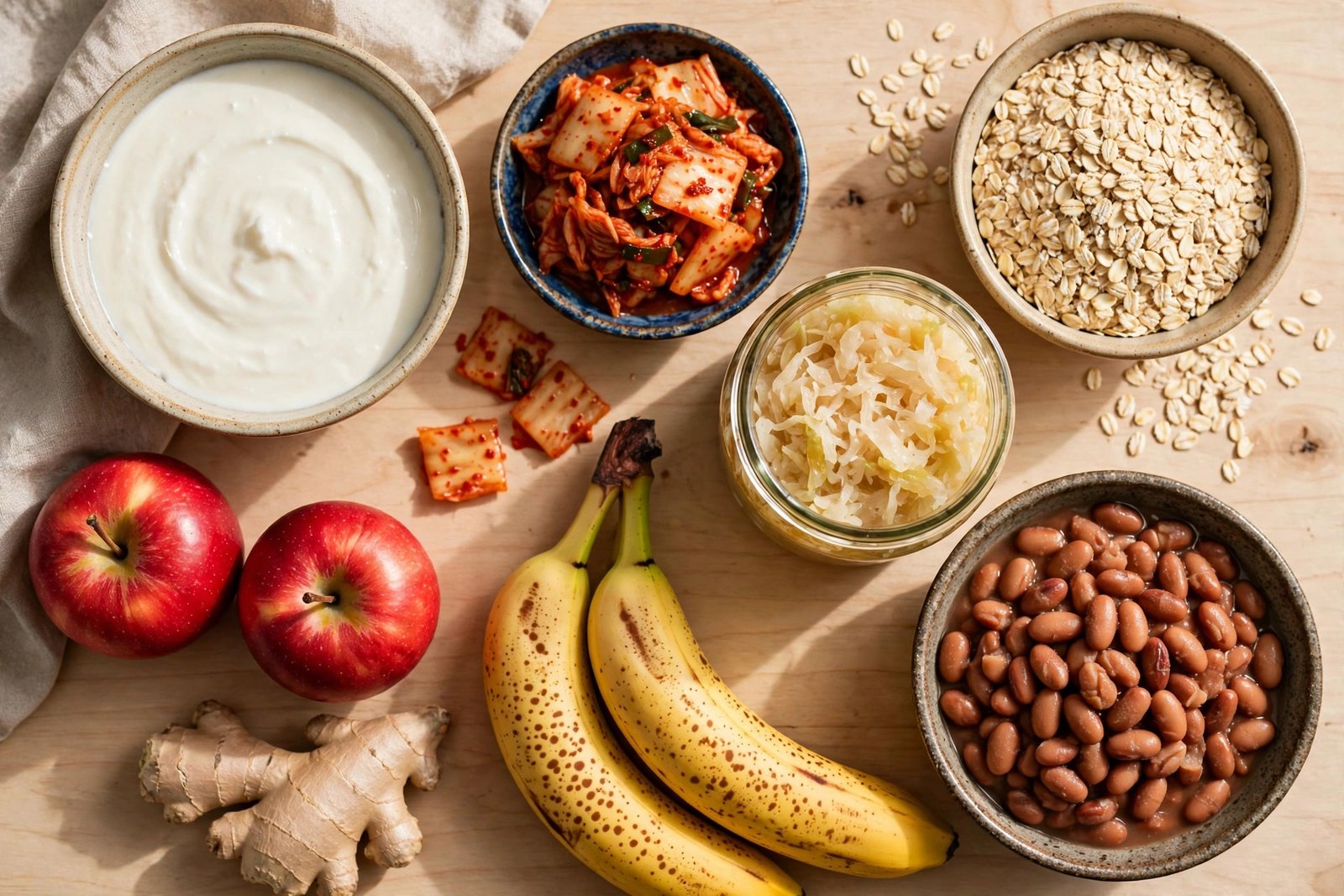
Yoghurt, kefir, kimchi, oats and beans carry the strongest evidence of any foods for gut health, and this list ranks ten foods the same way, strongest first. Fermented foods add live microbes to the gut, while fibre-rich foods feed the microbes already there, and both routes change the gut in measurable ways. The effects in the studies are modest and often fade when the food stops, so no item here heals a gut condition on its own. If bloating, pain or bowel changes last more than a few weeks, ask a qualified professional for advice.
Updated November 23, 2026
In this article
How to use foods for gut health in everyday meals
A gut-friendly diet is mostly a matter of adding two kinds of food. Fermented foods such as yoghurt, kefir and kimchi bring live microbes, while fibre foods such as oats, beans and apples feed the microbes you already have. You do not need both at every meal, and you do not need expensive products. The foods at the top of this list are ordinary and cheap, and they sit well with other budget-friendly healthy foods.
Start with one item and give it a few weeks. The trials below ran for two to twelve weeks before researchers measured a change, so a single serving will not show up in how you feel. Add fibre slowly, since a sudden jump often causes gas and bloating before the gut adjusts. Drink water with fibre foods, and keep portions modest at first.
Keep the rest of the routine steady too. Sleep, movement and regular meals shape the gut as much as any single food, and the food habits that support healthy aging overlap a lot with the ones here. The foods below help at the edges. They do not replace medical care when something is wrong.
1. Yoghurt
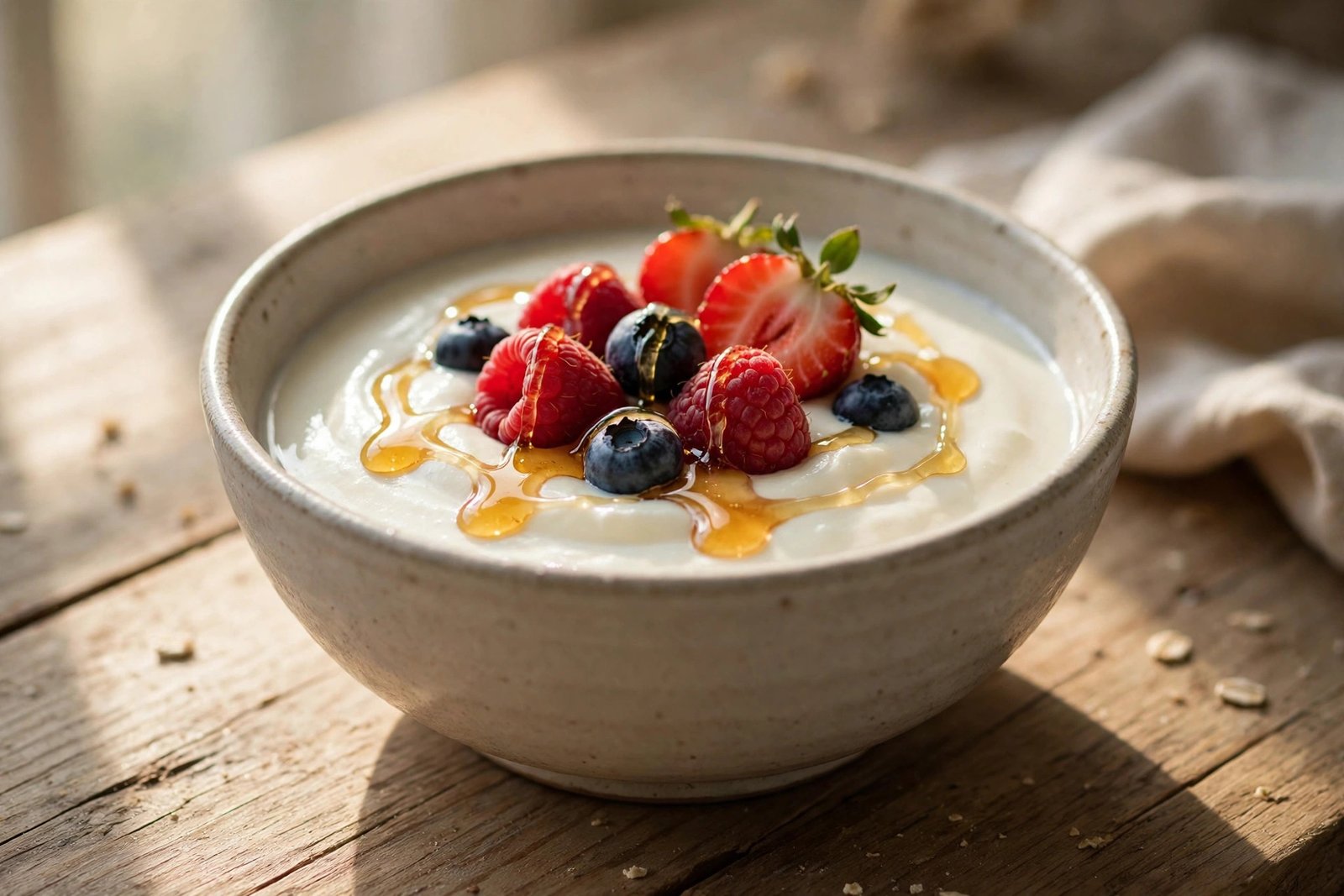
Plain yoghurt with live cultures tops this list because probiotics have the most trial data behind them. A 2023 review of 52 randomised trials in 6,289 people with irritable bowel syndrome found that probiotics raised the overall response rate, with Lactobacillus and Bifidobacterium strains showing the clearest benefit. Yoghurt is the everyday food form of those same microbes, and it also brings protein and calcium.
Read the label before you buy. Only yoghurt marked “live cultures” or “live and active cultures” contains the microbes the trials tested, and sweetened yoghurt adds sugar that works against the point. A small pot a day is a reasonable habit. The trials tested probiotic strains, often in capsules, so yoghurt itself has less direct proof than the review suggests, and results vary a lot from person to person.
Source: Zhang et al., 2023, probiotics, prebiotics and synbiotics in irritable bowel syndrome
Up next: 2. Kefir
2. Kefir
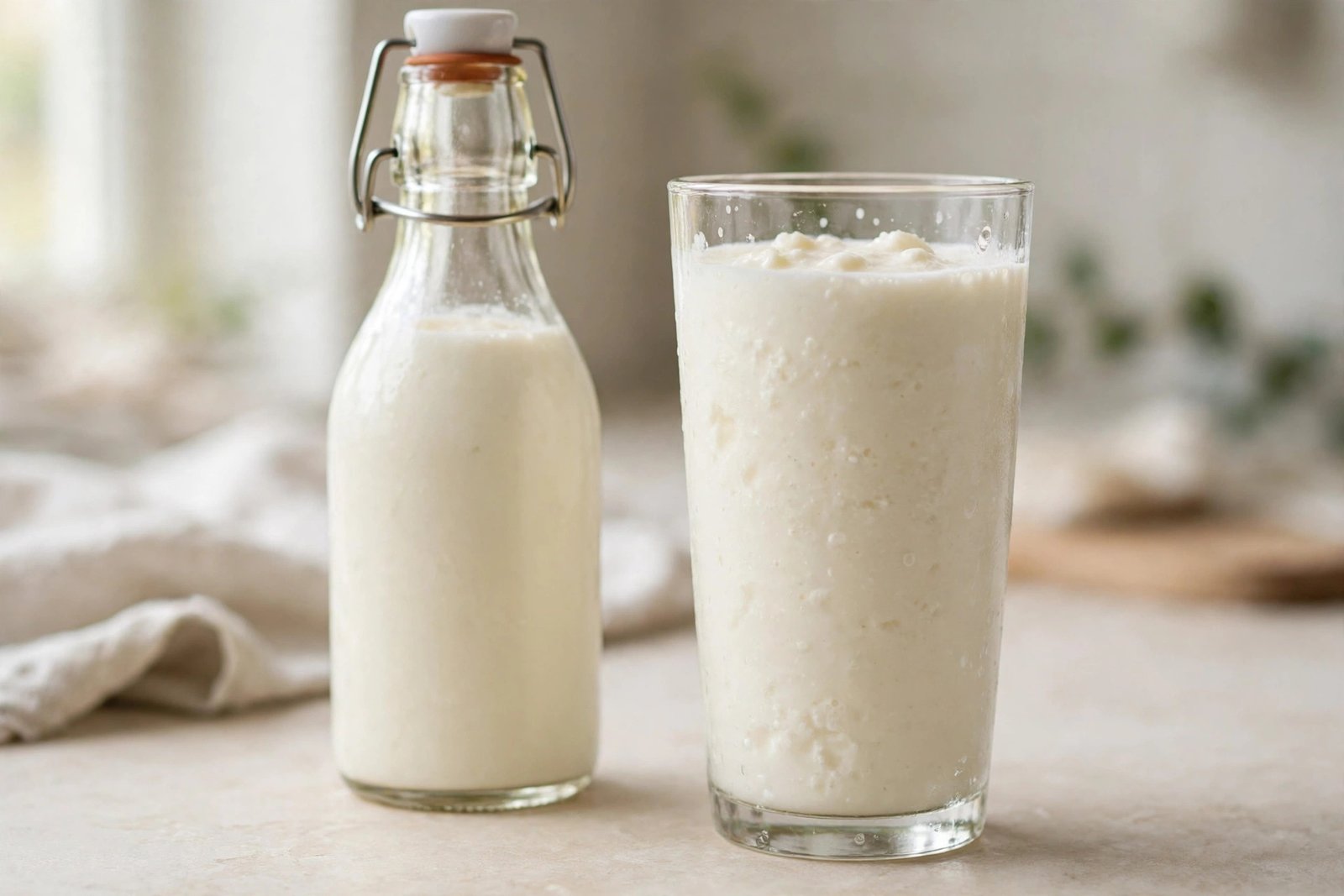
Kefir is a fermented milk drink that carries a wider mix of microbes than yoghurt, including yeasts as well as bacteria. In a 2025 trial, 28 healthy young adults drank 150 millilitres of kefir, milk or yoghurt daily for two weeks. The kefir group showed a rise in lactate-producing bacteria such as Bifidobacterium breve, plus a shift toward more short-chain fatty acid production.
The trial was small and lasted only two weeks, so it shows a change in gut bacteria, not a health outcome. A 2019 trial in people with metabolic syndrome found kefir improved some blood markers, but the gut bacteria changes were no bigger than with plain milk. Kefir is still a reasonable daily choice if you like the taste. Start with a small glass, since the fizz and acidity can unsettle a sensitive stomach.
Source: Choi et al., 2025, kefir consumption and gut microbial diversity
Up next: 3. Kimchi
3. Kimchi
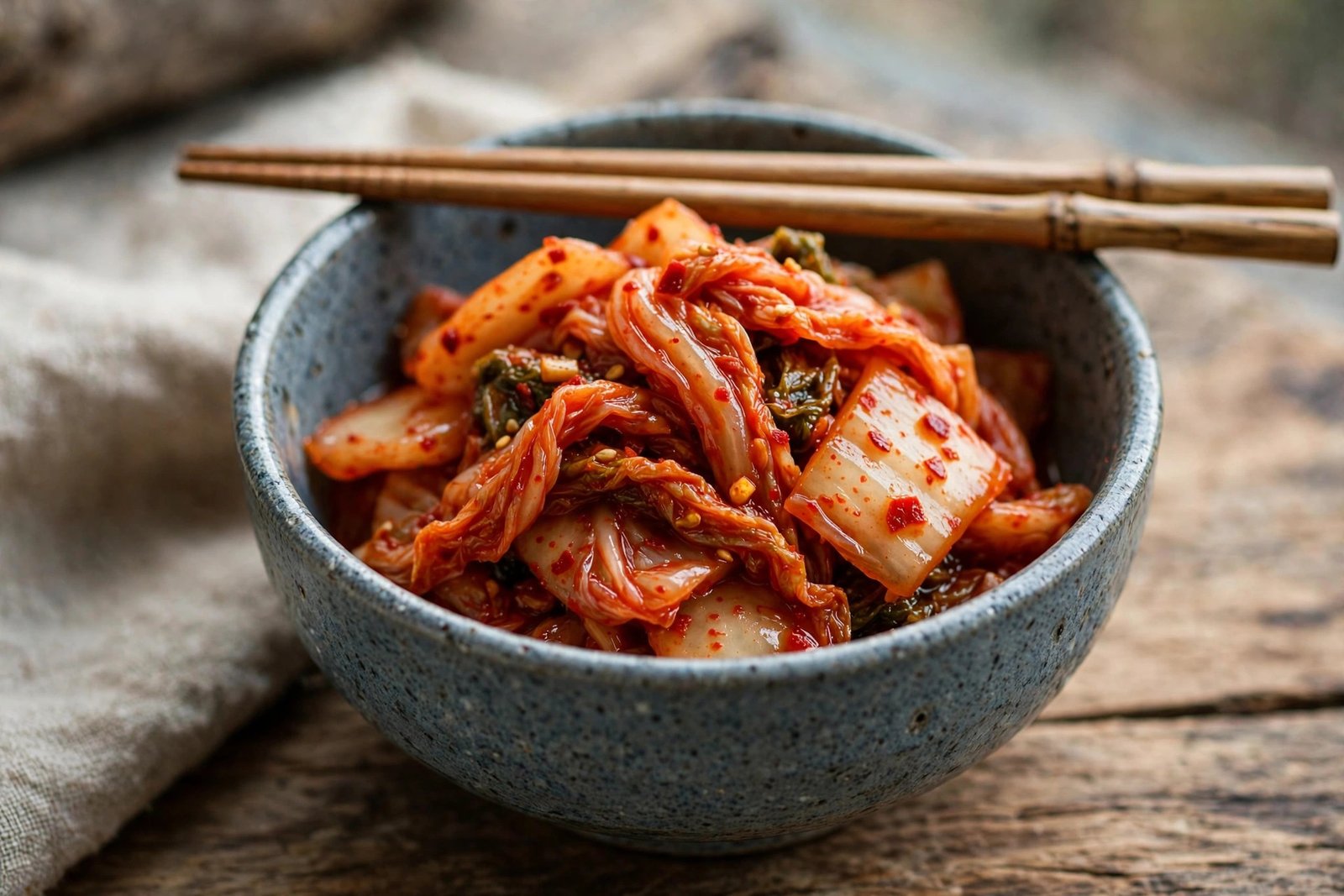
Kimchi is fermented cabbage with chilli, garlic and ginger, and it brings live lactic acid bacteria plus fibre in one dish. In a 2022 trial, 90 adults with irritable bowel syndrome ate 210 grams of kimchi a day for 12 weeks. Bloating, abdominal pain and stool type all improved, and inflammatory markers in the blood fell.
There is a catch. Every group in that trial ate kimchi, so there was no group eating no kimchi at all, which means part of the improvement could be a placebo effect or simply the extra fibre. Kimchi is also salty, so a small side serving makes more sense than a large bowl. Look for unpasteurised kimchi in the chilled section if you want live cultures, since shelf-stable jars are usually heat-treated.
Source: Kim et al., 2022, kimchi and irritable bowel syndrome
Up next: 4. Oats
4. Oats
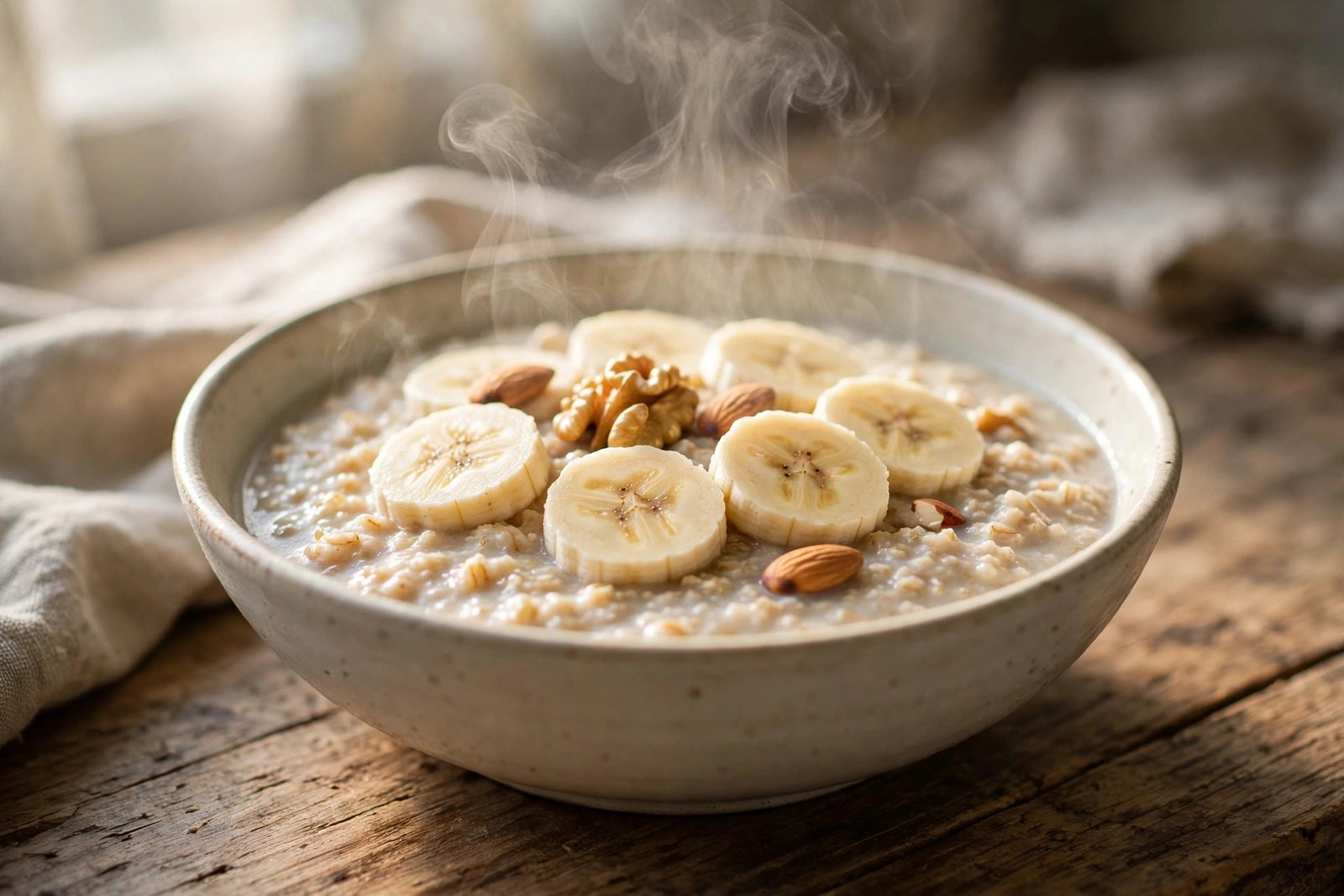
Oats feed gut bacteria through beta-glucan, a soluble fibre that microbes ferment into short-chain fatty acids. In a 2021 trial, 210 adults with raised cholesterol ate 80 grams of oats or rice every day for 45 days. The oat group saw a rise in Akkermansia muciniphila and Roseburia, two bacteria linked with a healthy gut lining, and their cholesterol fell further than the rice group’s.
Oats are also one of the easiest items on this list to eat daily. Porridge, overnight oats or oat-based breakfasts all work, and the fibre helps with regular bowel movements too. The trial studied people with raised cholesterol, so the results may not look the same in everyone. Steel-cut or rolled oats keep more of the fibre intact than instant sachets, which are often sweetened. For morning ideas, see our breakfast choices for busy mornings.
Source: Xu et al., 2021, oats, gut microbiota and short-chain fatty acids
Up next: 5. Beans and lentils
5. Beans and lentils
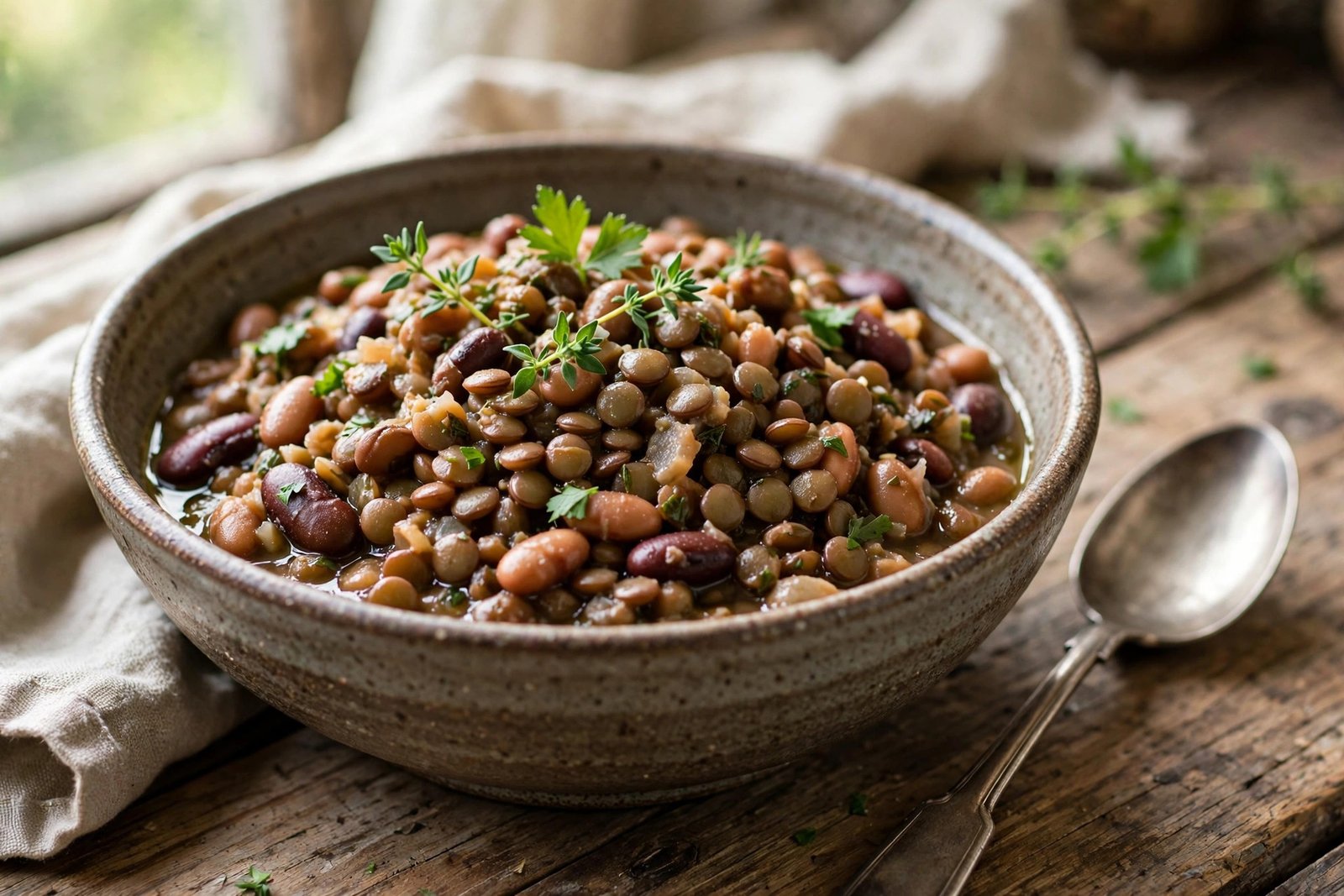
Beans and lentils are the most powerful fibre food on this list, and they were tested in a proper trial. In the BE GONE trial, 55 adults added one cup of canned navy beans to their usual diet each day for eight weeks. Gut diversity rose, and Faecalibacterium, Eubacterium and Bifidobacterium all increased, along with shifts in blood metabolites linked to gut health.
The gains faded when the beans stopped, so this is a habit, not a one-off fix. The trial also studied people at higher risk of bowel problems, not the general public, so the size of the benefit for a healthy gut is less clear. Start with half a cup a day if beans are new to you, since a sudden jump in fibre often causes gas. Rinse canned beans well, and lentils cook faster if you are short on time. Beans and lentils are also cheap, filling foods that stretch a weekly shop.
Source: BE GONE trial, 2023, beans and the gut microbiome
Up next: 6. Sauerkraut
6. Sauerkraut
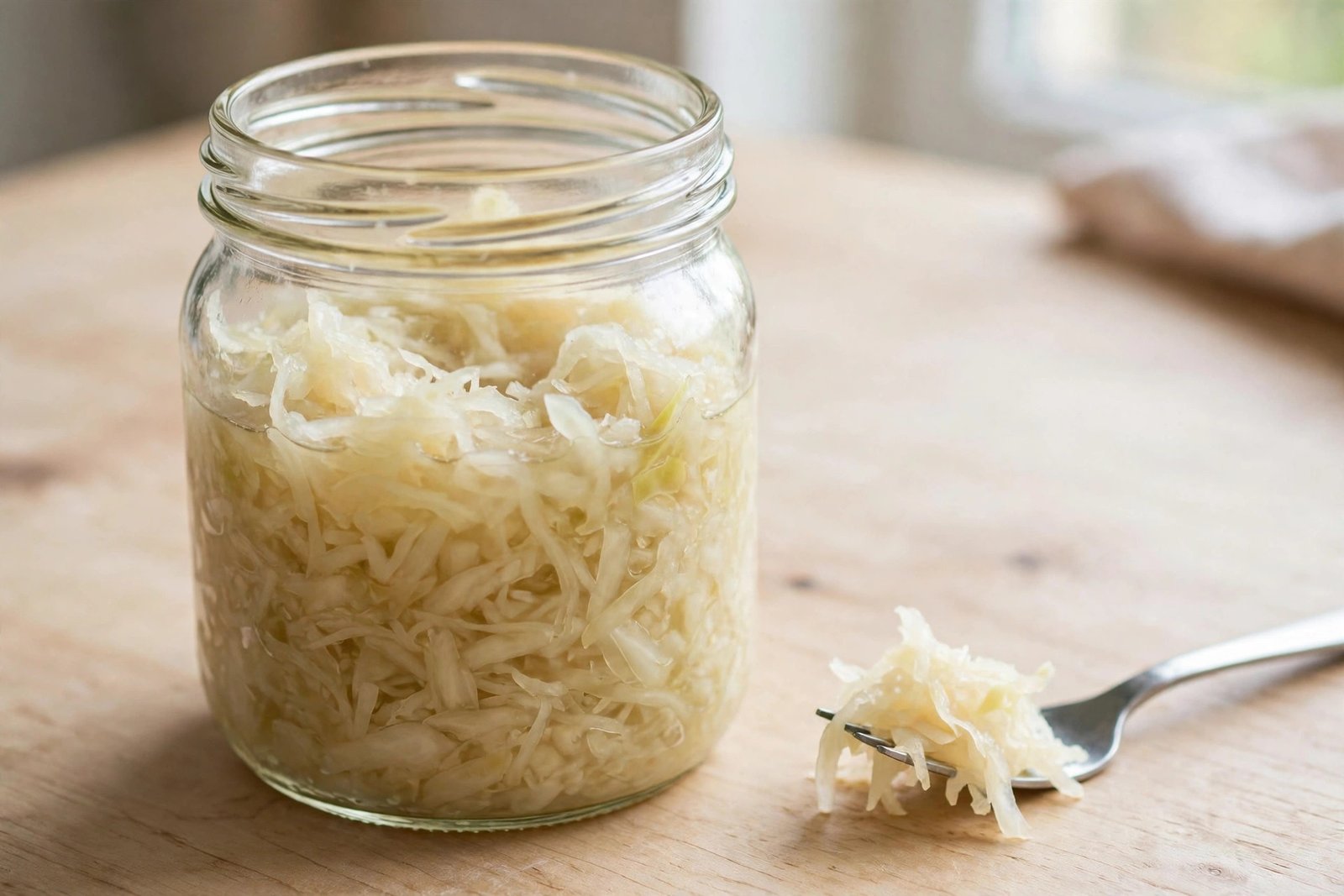
Sauerkraut is fermented cabbage, and it is one of the simplest fermented foods to find. In a crossover trial of 87 healthy adults, people ate 100 grams of fresh or pasteurised sauerkraut every day for four weeks. Single bacterial species shifted, and only the pasteurised sauerkraut raised short-chain fatty acids in the blood. The authors concluded that a healthy gut is fairly resistant to short-term diet changes.
That result is useful because it sets a limit on the hype. An earlier trial in people with IBS found the same symptom improvement from pasteurised sauerkraut as from the live-culture kind, which suggests the cabbage and fibre matter as much as the microbes. A forkful or two with a meal is enough. Pick refrigerated sauerkraut for live cultures, and watch the salt if you eat it daily.
Source: Regular sauerkraut consumption and the human gut microbiota, crossover trial, Microbiome
Up next: 7. Kombucha
7. Kombucha

Kombucha is sweetened tea fermented with bacteria and yeast, and it is the weakest fermented drink on this list. In a 2024 trial, 24 healthy adults drank kombucha daily for four weeks. Inflammation markers did not change, and the microbiome shifts were small, though kombucha microbes and short-chain fatty acid producers became more common. Fasting insulin rose slightly in the kombucha group, which is not a good sign.
A 2025 trial of a fibre-enriched kombucha drink found bigger changes, including a rise in Bifidobacterium, but that drink had added fibre, so the result says more about fibre than about kombucha itself. If you enjoy kombucha, a small glass is fine. Buy it chilled from a reputable maker rather than brewing it at home, since home brews can pick up unwanted microbes, and the drink contains traces of alcohol.
Source: Ecklu-Mensah et al., 2024, kombucha and the gut microbiome
Up next: 8. Bananas
8. Bananas
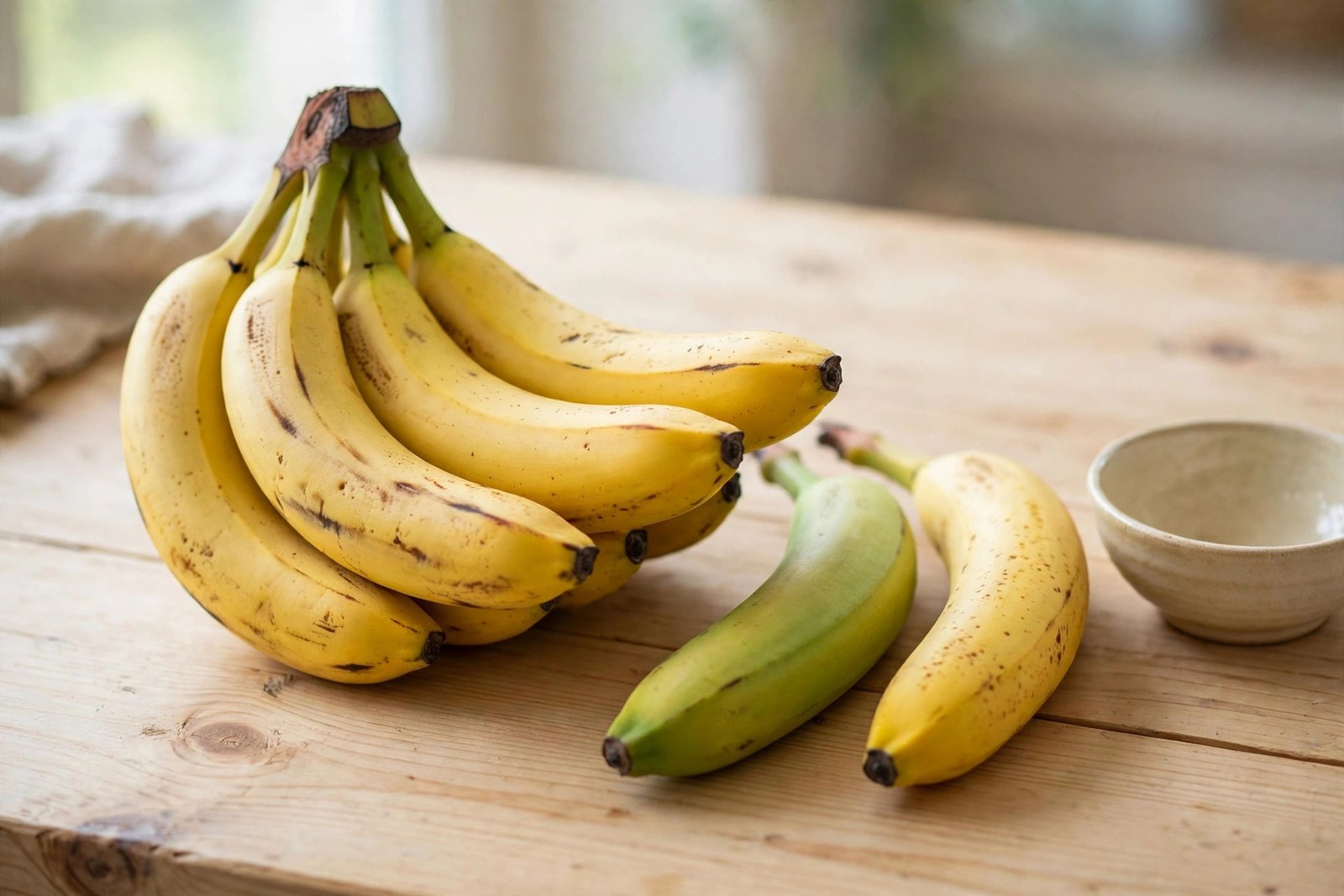
Bananas, especially slightly green ones, carry resistant starch that gut bacteria ferment into short-chain fatty acids. In a 2024 trial, 60 adults took green banana powder daily for 14 days. Seven beneficial species rose, including Faecalibacterium prausnitzii and several Bifidobacterium species, and bowel regularity improved.
The trial used a powder, not whole bananas, and it lasted only two weeks. Ripe bananas have far less resistant starch than green ones, so a spotty yellow banana is mostly a source of potassium and gentle fibre rather than a prebiotic. A banana is still a useful everyday snack, and it pairs well with oats or yoghurt from higher up this list. Bananas also appear in our list of foods that help you sleep. Do not expect a banana alone to change your microbiome.
Source: Chong et al., 2024, green banana powder and the gut microbiome
Up next: 9. Apples
9. Apples
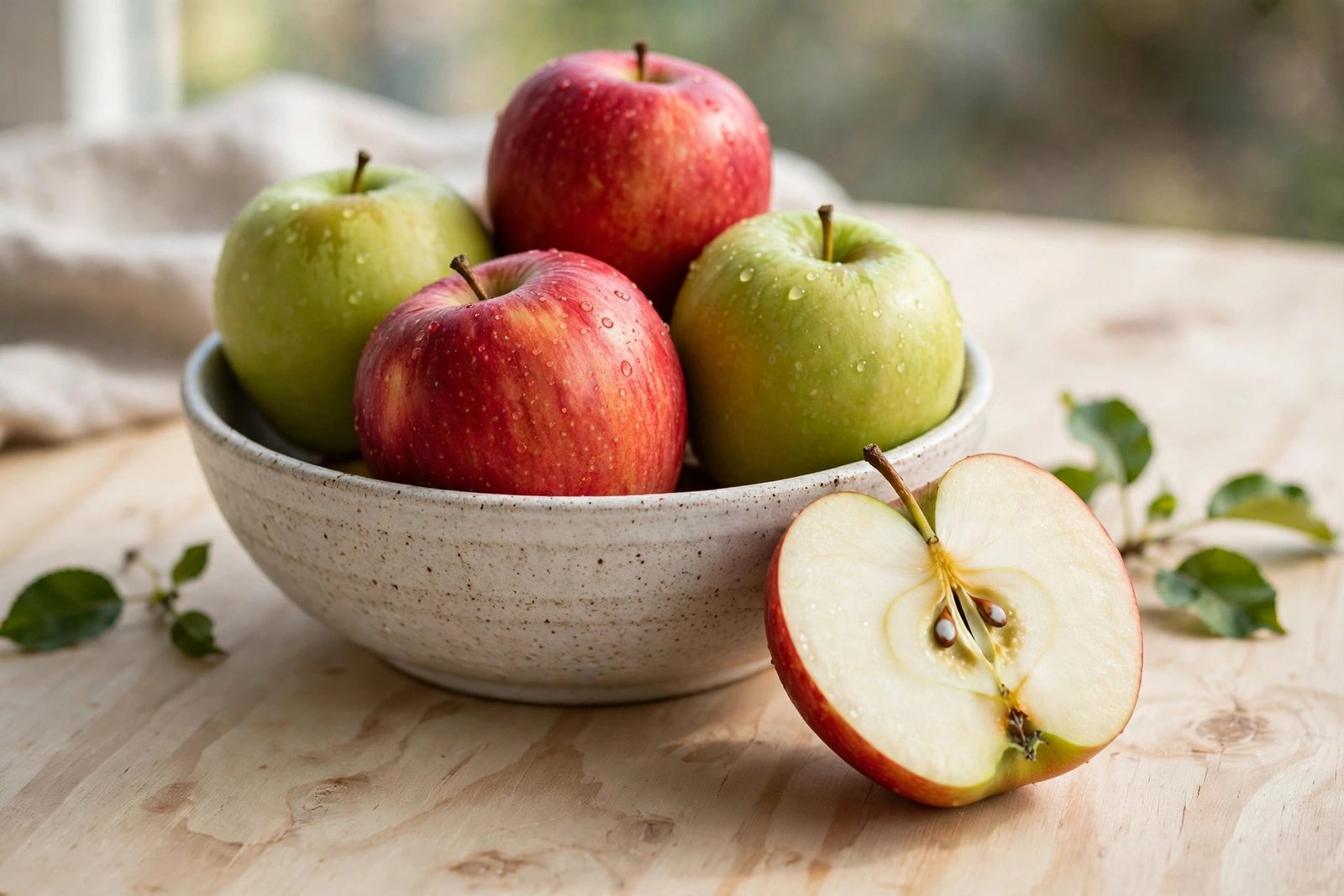
Apples bring pectin, a soluble fibre that gut bacteria ferment readily. In a small 2010 study, eight healthy adults ate two apples a day for two weeks. Bifidobacteria in their stool rose, while Clostridium perfringens fell and faecal sulfide dropped. A 2024 crossover trial of a pectin-rich smoothie found similar shifts, with the biggest changes in people who normally ate little fibre.
Eight people and two weeks is very thin evidence, and the study had no control group. Treat apples as a good fibre habit rather than a proven gut treatment. Eating the whole apple matters, since most of the pectin sits in and just under the skin. An apple a day is easy to keep up, which is more than can be said for most items on this list.
Source: Shinohara et al., 2010, apple intake and faecal microbiota
Up next: 10. Ginger
10. Ginger
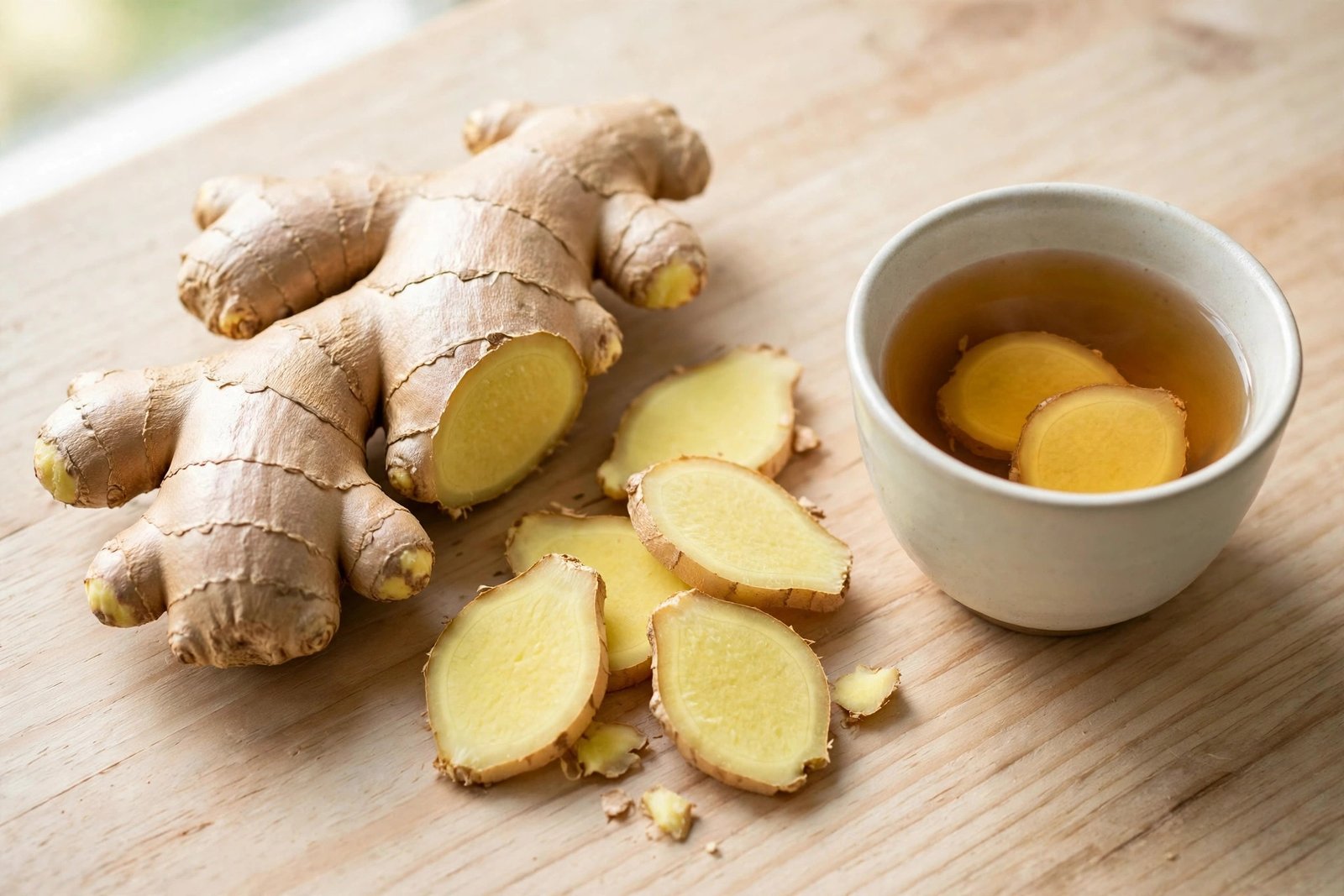
Ginger earns the last place because it changes how the stomach moves, not the microbiome. In a 2011 trial, 11 patients with functional dyspepsia took 1.2 grams of ginger in capsules before a test meal. Their stomachs emptied faster than with a placebo, with a half-emptying time of about 12 minutes against 16 minutes, and stomach contractions increased.
Faster emptying did not mean fewer symptoms. Bloating, fullness and pain were no different from placebo, and the trial was tiny and tested a single dose. Ginger tea or fresh ginger in cooking is a reasonable habit if it settles your stomach, and many people find it helps with nausea. It is not a gut microbiome food, and that is why it sits at the bottom of this list.
Source: Hu et al., 2011, ginger and gastric motility in functional dyspepsia
That is the honest picture. Yoghurt, kefir, kimchi, oats and beans have the best evidence, and even there the effects are modest and need regular eating to last. Fermented foods add microbes, fibre foods feed them, and a mix of both beats a single hero food. If gut symptoms keep going, talk to a qualified professional rather than adding more foods to the list.
References
Sources checked November 23, 2026. General information; individual needs and rules can differ.
- Zhang et al., 2023: probiotics, prebiotics and synbiotics in irritable bowel syndrome, systematic review and meta-analysis of 52 trials
- Choi et al., 2025: kefir consumption and gut microbial diversity in healthy young adults
- Bellikci-Koyu et al., 2019: regular kefir consumption and gut microbiota in metabolic syndrome
- Kim et al., 2022: kimchi and irritable bowel syndrome, randomised double-blind placebo-controlled study
- Xu et al., 2021: prebiotic effects of oats on blood lipids, gut microbiota and short-chain fatty acids
- BE GONE trial, 2023: beans, the gut microbiome and inflammation markers
- Regular sauerkraut consumption and the human gut microbiota: a crossover intervention trial, Microbiome
- Nielsen et al., 2018: lacto-fermented sauerkraut improves symptoms in IBS patients independent of pasteurisation
- Ecklu-Mensah et al., 2024: kombucha consumption, the gut microbiome and health markers
- Fibre-modified kombucha tea and gut microbiota: a randomised controlled trial, 2025
- Chong et al., 2024: green banana and pineapple fibre powder and the host gut microbiome
- Shinohara et al., 2010: apple intake, faecal microbiota and metabolites in humans
- Pihelgas et al., 2024: pectin-enriched smoothie and the gut microbiota of low-fibre consumers
- Hu et al., 2011: ginger, gastric motility and symptoms of functional dyspepsia
- Wastyk et al., 2021: gut-microbiota-targeted diets, fermented foods, fibre and immune status
Keep reading: 25 Budget-Friendly Foods for Simple, Balanced Meals or 13 Food Habits Worth Reviewing as You Get Older.