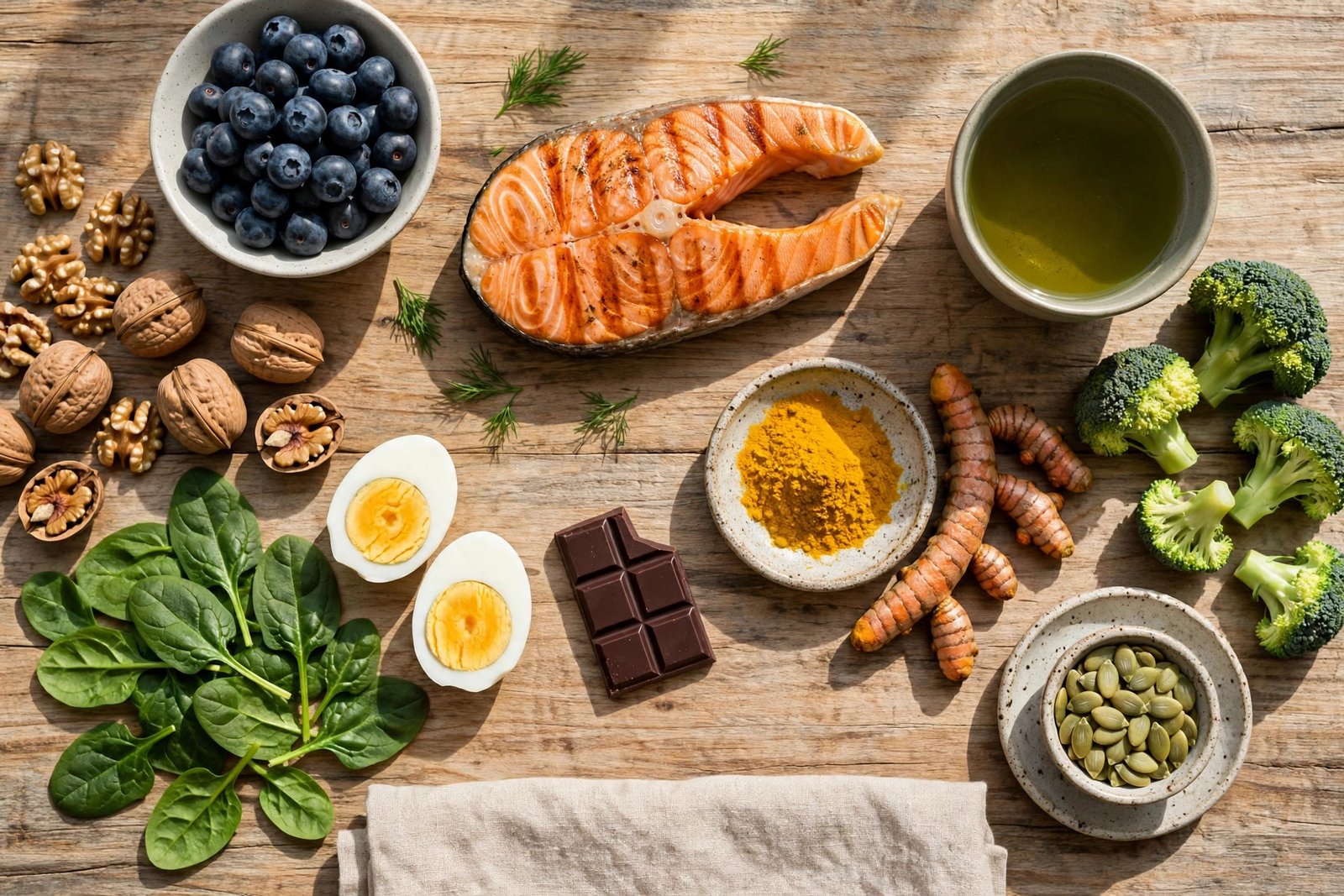
Blueberries, leafy greens and fatty fish carry the strongest evidence of any foods for brain health, and this list ranks ten foods the same way, strongest first. The strongest evidence comes from trials and long studies of older adults, and it points to an overall eating pattern more than to any single food. No food here prevents dementia, and the effects in the studies are small, so treat this list as a guide to what is worth eating often, not as a cure. If memory problems or confusion last more than a few weeks, ask a qualified professional for advice.
Updated November 24, 2026
In this article
- Blueberries
- Leafy greens
- Fatty fish
- Eggs
- Dark chocolate
- Walnuts
- Turmeric
- Green tea
- Broccoli
- Pumpkin seeds
How to use foods for brain health in everyday meals
The pattern behind most of the evidence is simple. In a 2015 study of 923 older adults followed for about four and a half years, people who followed the MIND diet most closely had a much lower rate of Alzheimer’s disease than those who followed it least, and even moderate followers saw a lower rate. The MIND diet is a mix of Mediterranean and DASH eating, built around leafy greens, berries, nuts, beans, whole grains, fish and olive oil. A three-year randomised trial of the same diet, published in 2023, found both groups improved slightly, with no clear difference between them, which is a useful reminder that observational studies can overstate a diet’s effect.
That does not make the foods worthless. It means the honest way to eat for the brain is to build meals around the foods at the top of this list, week after week, rather than buying one hero food. A handful of blueberries with breakfast, a serving of leafy greens at lunch, and fish twice a week cover most of what the research supports. These foods also sit well with other budget-friendly healthy foods, and the fibre in several of them overlaps with our list of foods for gut health.
Keep expectations modest. The trials below measured small changes on memory and attention tests, not a halt to ageing. Sleep, movement and regular meals shape the brain as much as any single food. The foods below help at the edges. They do not replace medical care when something is wrong.
1. Blueberries
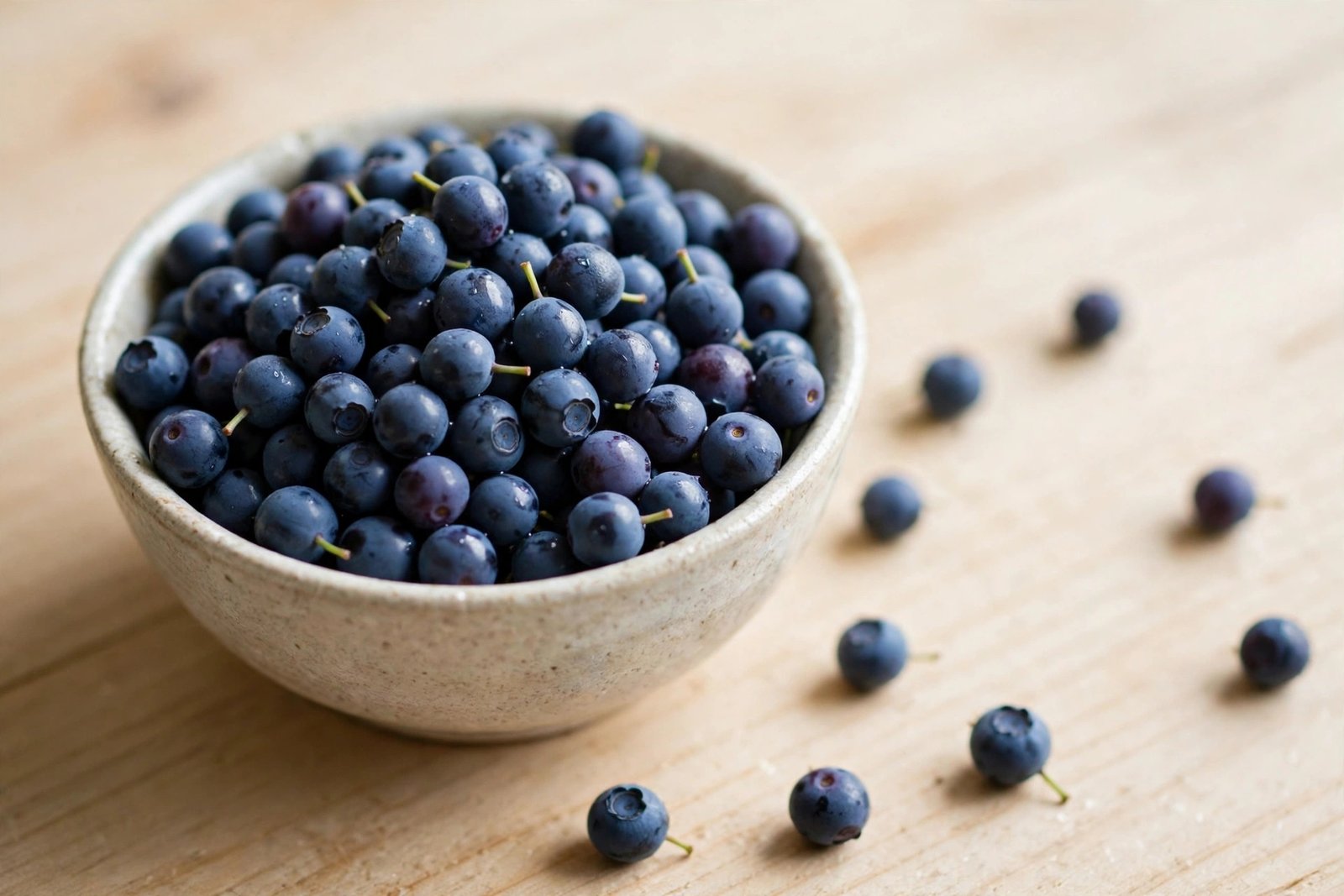
Blueberries top this list because they have the best trial evidence of any single food here. In a 2023 trial, 61 healthy adults aged 65 to 80 drank a daily drink made from 26 grams of freeze-dried wild blueberry powder, equal to about 178 grams of fresh berries, or a matching placebo for 12 weeks. The blueberry group showed better immediate recall and better accuracy on a task-switching test, along with improved blood vessel function and lower blood pressure. A separate six-month trial in 86 older adults with mild cognitive decline found that wild blueberry powder improved speed of processing, and restored it to the level of adults without cognitive problems.
Two limits matter. Both trials used freeze-dried powder, not fresh berries from a shop, and both were small and short. Blueberries are also the food the MIND diet singles out, with two or more servings a week as its target, which fits the trial results. A small handful a few times a week is a reasonable habit. Frozen blueberries keep the same compounds and cost less than fresh out of season.
Source: Wood et al., 2023, wild blueberry powder, vascular and cognitive function in healthy older adults
Up next: 2. Leafy greens
2. Leafy greens
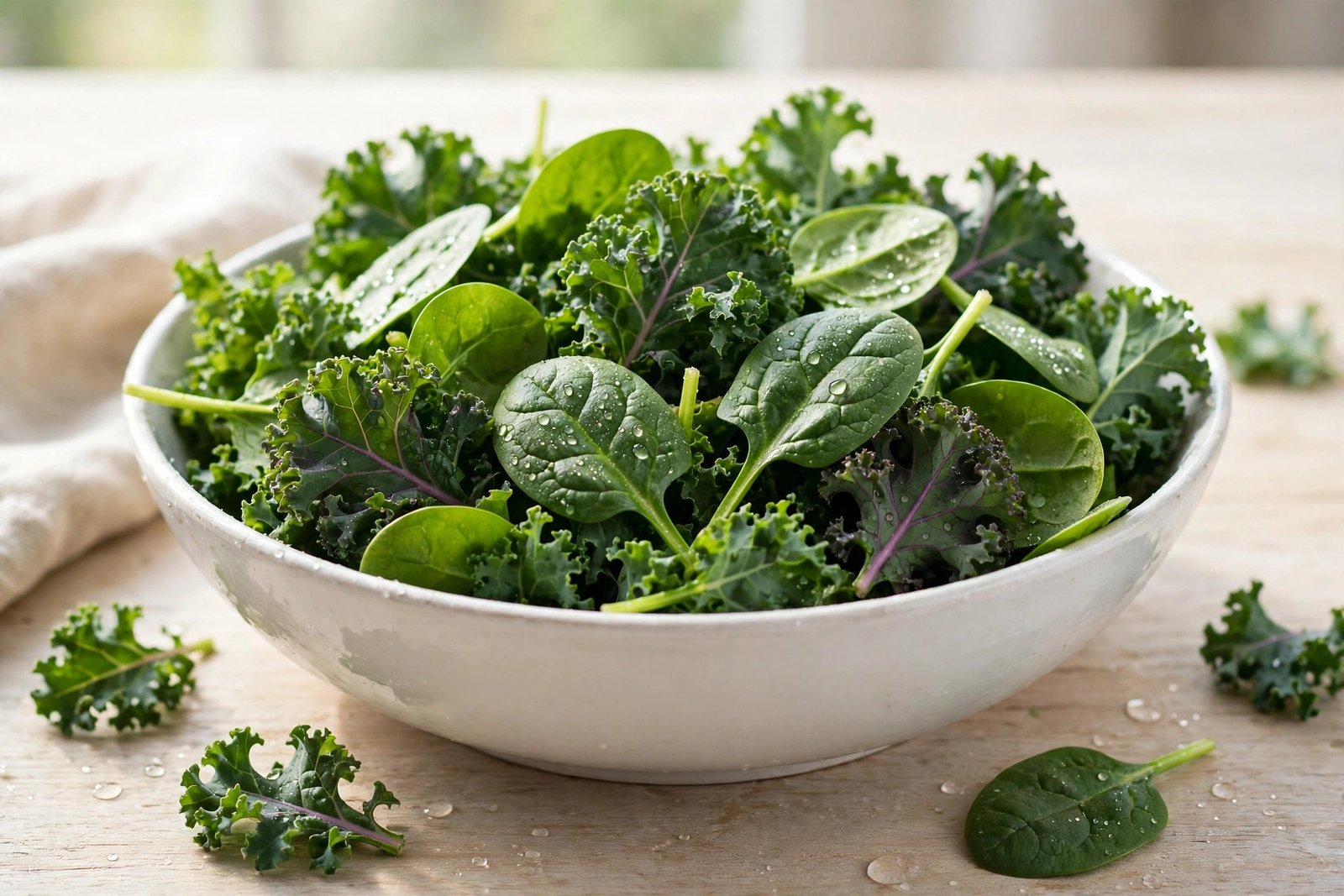
Leafy greens earn second place on the strength of one of the largest studies in this field. In a 2018 study of 960 older adults followed for an average of 4.7 years, people who ate about one serving of green leafy vegetables a day showed a slower rate of decline on memory and thinking tests. The difference was the equivalent of being 11 years younger in age, and it held after accounting for smoking, blood pressure, education and physical activity. Spinach, kale and lettuce were the greens measured, and the nutrients linked to the effect were vitamin K, lutein, folate and nitrate.
The study was observational, so it cannot prove that greens slow brain ageing. People who eat a daily salad also tend to eat better overall, exercise more and smoke less, and the study cannot separate those habits fully. The authors said the same, and noted the results need confirming in other groups and through trials. Still, a daily serving of greens is cheap, easy and low risk, which is why the MIND diet makes it its most distinctive rule. For more on the habits around it, see the food habits that support healthy aging.
Source: Morris et al., 2018, nutrients in green leafy vegetables and cognitive decline
Up next: 3. Fatty fish
3. Fatty fish
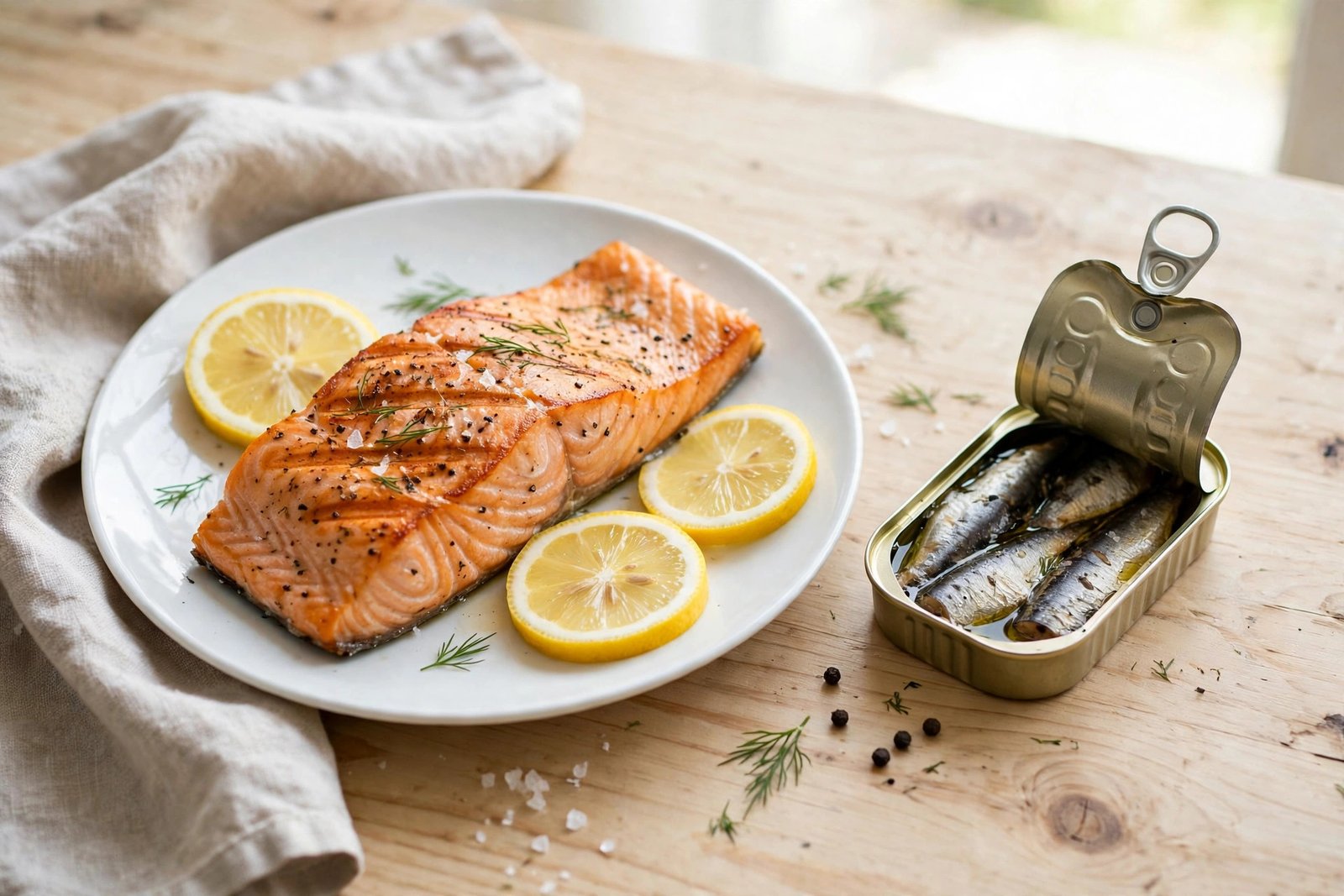
Fatty fish such as salmon and sardines are the main food source of DHA, an omega-3 fat that is a major building block of brain cell membranes. People who eat fish regularly have a lower risk of cognitive decline in long observational studies, and the MIND diet counts fish as one of its ten brain-healthy foods. Sardines are a good choice here because they are rich in DHA and low in mercury, and tinned fish keeps well.
The trial evidence is weaker than the reputation suggests. In a 2020 randomised trial, 271 healthy mid-life adults with low fish intake took fish oil capsules with 1,400 mg of EPA and DHA a day, or a placebo, for 18 weeks. Supplements made no difference to any of the four cognitive areas tested, and brain scans showed no change either. Only a small subgroup with very low DHA at the start showed a gain in executive function. That gap between eating fish and taking capsules is why this item sits third, not first. Eat the fish. Do not expect a capsule to do the same job.
Source: Leckie et al., 2020, omega-3 fatty acids, cognition and brain morphology in mid-life adults
Up next: 4. Eggs
4. Eggs

Eggs rank fourth because of a large study with an unusual strength: it checked the brain itself. In the Rush Memory and Aging Project, 1,024 older adults with an average age of 81 were followed for about 6.7 years. People who ate more than one egg a week had about a 47 percent lower risk of developing Alzheimer’s dementia than those who ate one egg a month or less. Brain autopsies from 578 participants who had died showed the same pattern in the tissue, with less Alzheimer’s-related pathology in regular egg eaters. The researchers estimated that about 39 percent of the link ran through choline, a nutrient eggs are rich in and the body uses to make acetylcholine, a chemical involved in memory.
Two cautions belong here. The study was observational, so it cannot prove eggs prevent dementia, and people who eat eggs may differ in other ways from people who do not. The study also received funding from the Egg Nutrition Center, and the lead author disclosed industry grants, which is a reason to read it carefully rather than a reason to dismiss it. One egg a day is a reasonable amount for most people, and the yolk is where the choline sits, so skip the yolk and you skip the point of the food.
Source: Pan et al., 2024, egg intake and Alzheimer’s dementia risk in older adults
Up next: 5. Dark chocolate
5. Dark chocolate
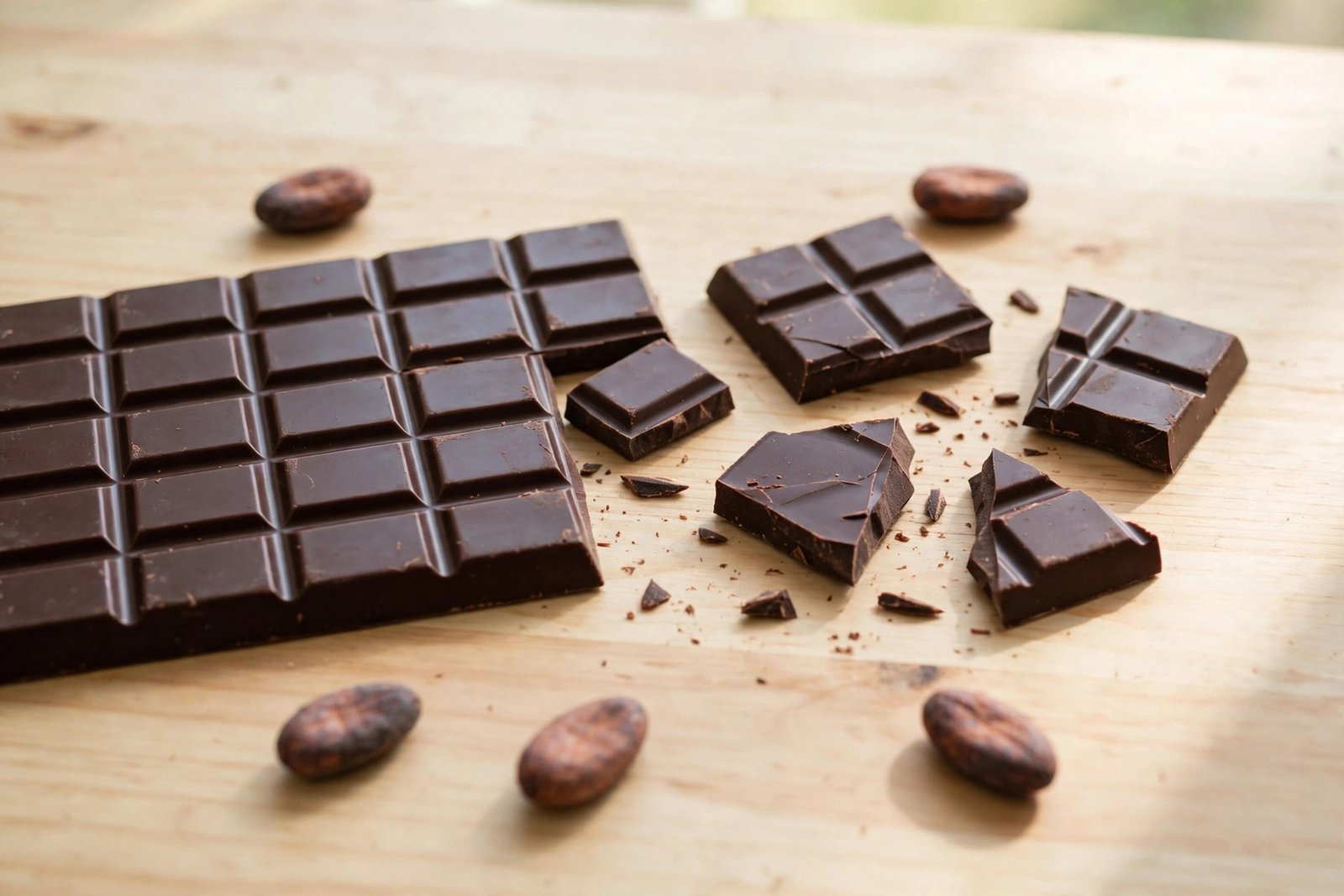
Dark chocolate has one proper trial behind it, which is more than most foods on this list can claim. In the CoCoA study, 90 older adults with mild cognitive impairment drank a daily cocoa drink with about 990 mg, 520 mg or 45 mg of cocoa flavanols for eight weeks. The two higher-flavanol groups finished attention and task-switching tests faster than the low-flavanol group, and scored better on a verbal fluency test. Blood pressure and insulin resistance also fell in the higher-flavanol groups, and the authors thought the brain gains might work through better insulin sensitivity rather than through the flavanols directly.
The trial was small, lasted only eight weeks, and studied people who already had mild cognitive impairment, so the results may not apply to healthy adults. It was also funded by Mars Inc., a chocolate maker, which supplied the drinks. And the trial tested a cocoa drink, not a chocolate bar, so a square of dark chocolate is not the same dose. Choose chocolate with at least 70 percent cocoa, keep the portion small, and treat it as a pleasant extra, not a brain treatment.
Source: Desideri et al., 2012, cocoa flavanols, cognition and mild cognitive impairment
Up next: 6. Walnuts
6. Walnuts
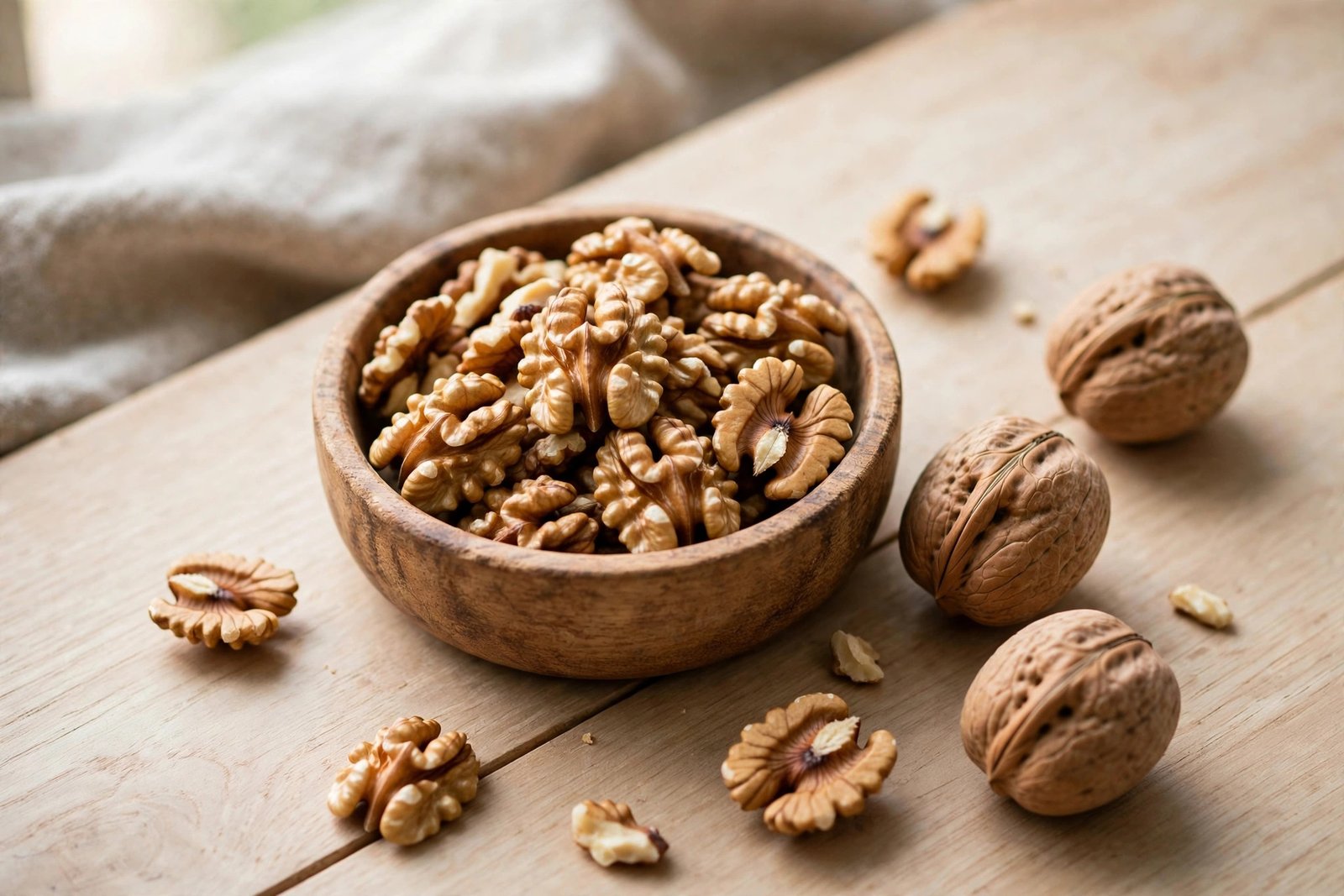
Walnuts sit in the middle of this list because the biggest trial of them found no overall benefit. In the WAHA study, 708 healthy adults aged 63 to 79 were randomised to eat 30 to 60 grams of walnuts a day, or to avoid walnuts, for two years. After two years there was no difference between the groups on the main measure of overall cognition, and no difference in memory, language or perception either. Brain scans in a smaller group did show better connectivity in the walnut group, and a post-hoc look found slower decline in one of the two study sites, but the authors called that finding exploratory and said it needs confirming.
Walnuts still belong on the list. They supply alpha-linolenic acid, a plant omega-3, plus vitamin E and polyphenols, and observational studies link higher nut intake with better cognitive test scores. A small handful a day is a sensible snack. The lesson of WAHA is narrower: walnuts are a good food, but the trial evidence does not support eating them as a way to hold off cognitive decline.
Source: Sala-Vila et al., 2020, two-year walnut diet and cognitive decline, the WAHA trial
Up next: 7. Turmeric
7. Turmeric
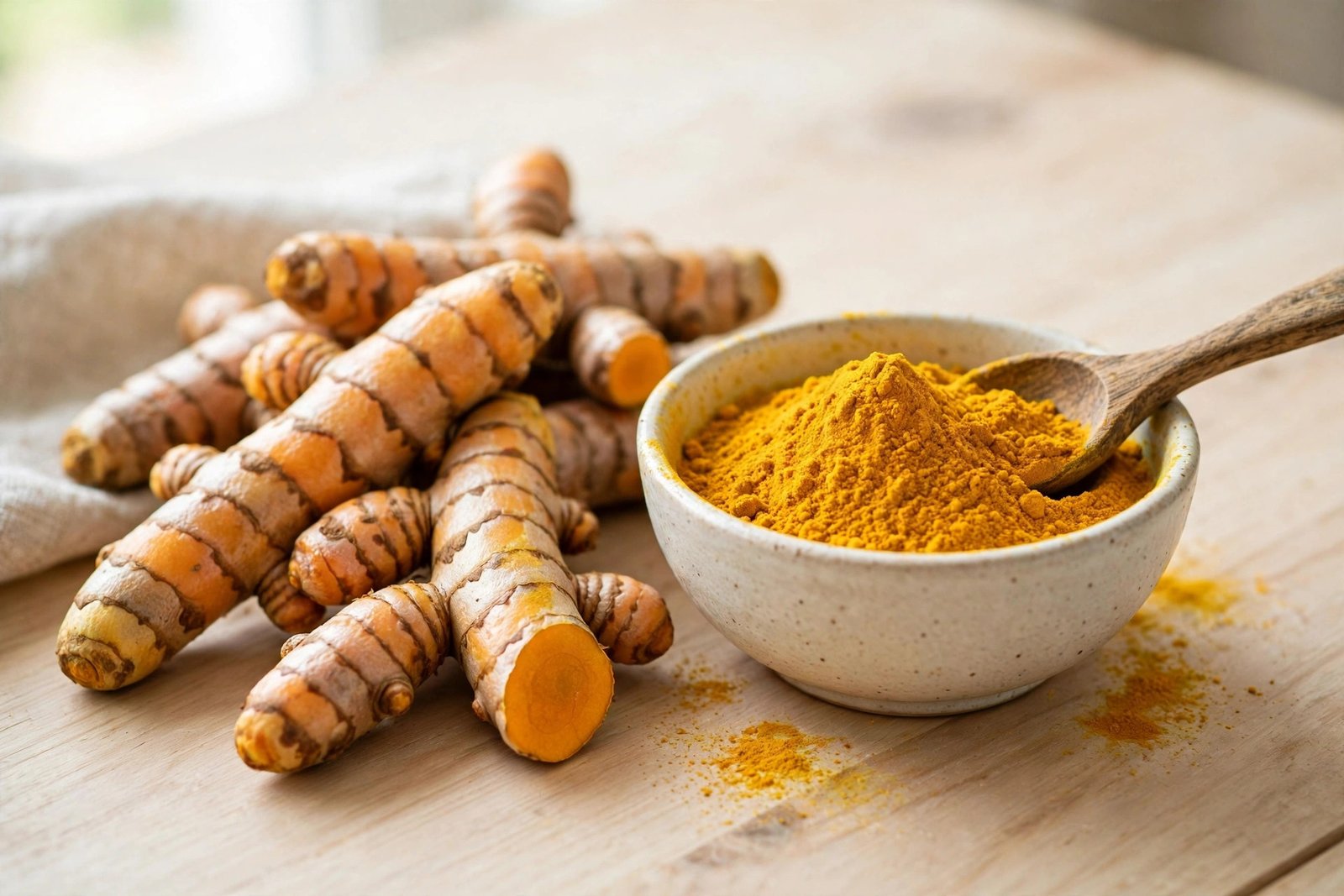
Turmeric’s case rests on one small but interesting trial of its active compound, curcumin. In a 2018 trial, 40 adults aged 50 to 90 with mild memory complaints took a highly absorbable form of curcumin, 90 mg twice a day, or a placebo, for 18 months. The curcumin group improved on memory and attention tests while the placebo group did not, and brain scans showed less amyloid and tau build-up in two brain regions linked to memory and mood. The authors said the results need replicating in a larger group, and no follow-up of that size has yet appeared.
Two limits keep turmeric this low. The trial tested a specially processed supplement, not the spice in cooking, and ordinary turmeric is poorly absorbed by the body, so a spoonful in a curry is not the same as the trial dose. A second trial of a different curcumin supplement in 39 healthy adults found no change in cognition after 12 weeks. Turmeric is a fine spice to cook with, and it appears in our curry leaves article as part of the same food tradition, but the evidence does not support taking it as a brain supplement.
Source: Small et al., 2018, bioavailable curcumin, memory and brain amyloid and tau in non-demented adults
Up next: 8. Green tea
8. Green tea

Green tea’s evidence is broad but shallow. A 2025 meta-analysis of 18 observational studies, covering 58,929 people without cognitive impairment, found that green tea drinkers had lower odds of cognitive impairment than non-drinkers, with the clearest link in people aged 50 to 69. Green tea contains caffeine, EGCG and L-theanine, and all three reach the brain, which gives the link a plausible mechanism. A 16-week trial of a green tea extract with L-theanine in 91 people with mild cognitive impairment found small gains in memory and attention.
The problem is that almost all of the evidence is observational, and tea drinkers differ from non-drinkers in diet, income and health habits that studies can only partly adjust for. A 2025 meta-analysis of five small trials of L-theanine on its own found mixed results across test types and could not confirm a benefit. A cup or two of green tea a day is a reasonable habit, and it is a gentler source of caffeine than coffee late in the day. For evening routines, see our list of foods that help you sleep. Do not expect tea alone to protect memory.
Source: Lifestyle medicine for prevention of cognitive decline: focus on green tea
Up next: 9. Broccoli
9. Broccoli
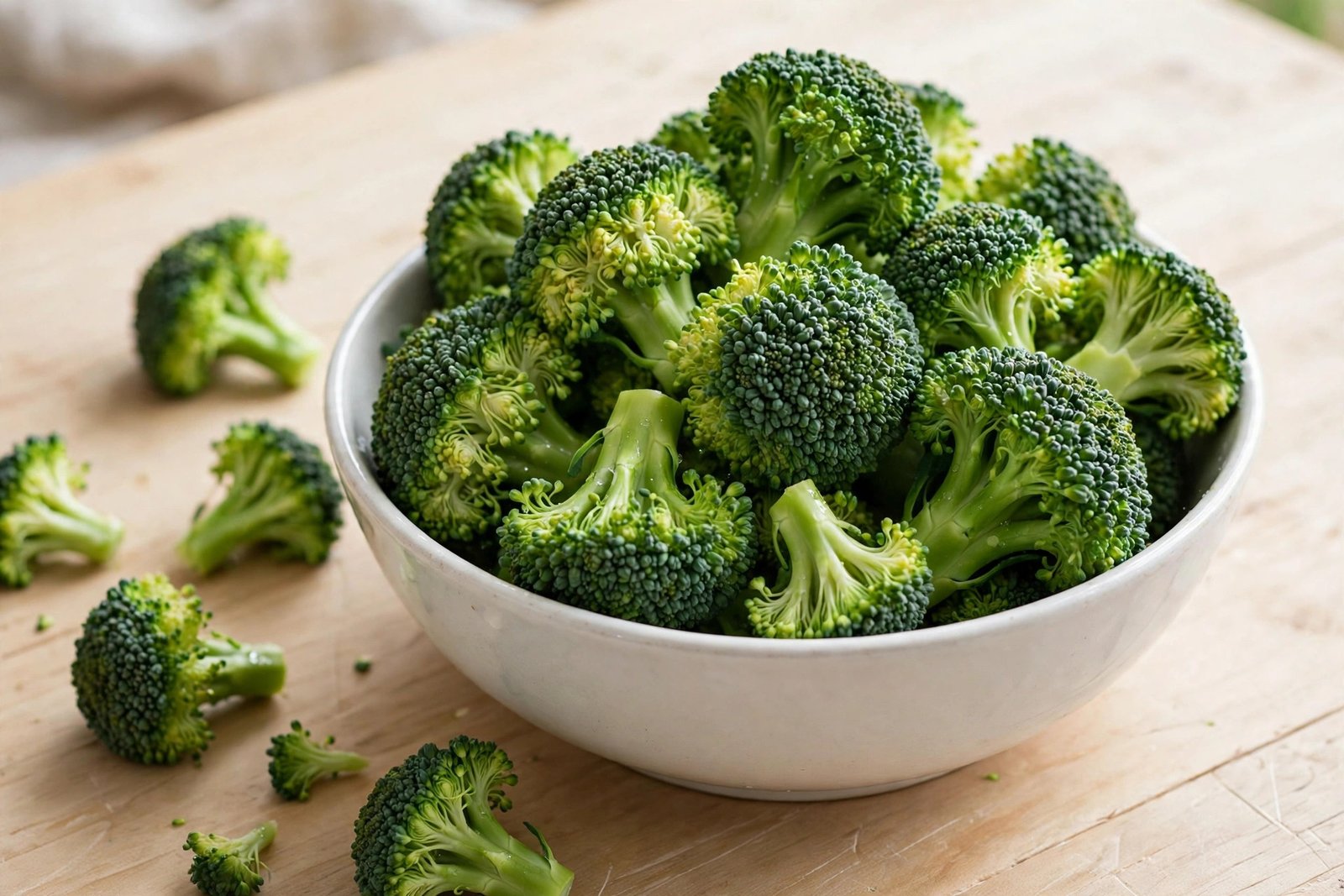
Broccoli is here on its nutrient profile, not on a trial, and that is why it sits near the bottom. It is rich in vitamin K, and vitamin K was one of the nutrients linked to slower cognitive decline in the leafy greens study above. Broccoli also contains sulforaphane, a compound that has shown protective effects in animal and lab studies of brain cells, and choline, the same nutrient that explains part of the egg result. None of that is proof that eating broccoli helps the brain, and no trial has tested broccoli itself against memory or thinking.
That does not make broccoli a bad choice. It is a low-calorie vegetable with fibre, folate and vitamin C, and it fits easily into the same eating pattern as the foods at the top of this list. Steam it lightly rather than boiling it hard, since long boiling leaches nutrients into the water. Eat it because it is a good vegetable, not because it has been shown to sharpen memory.
Up next: 10. Pumpkin seeds
10. Pumpkin seeds
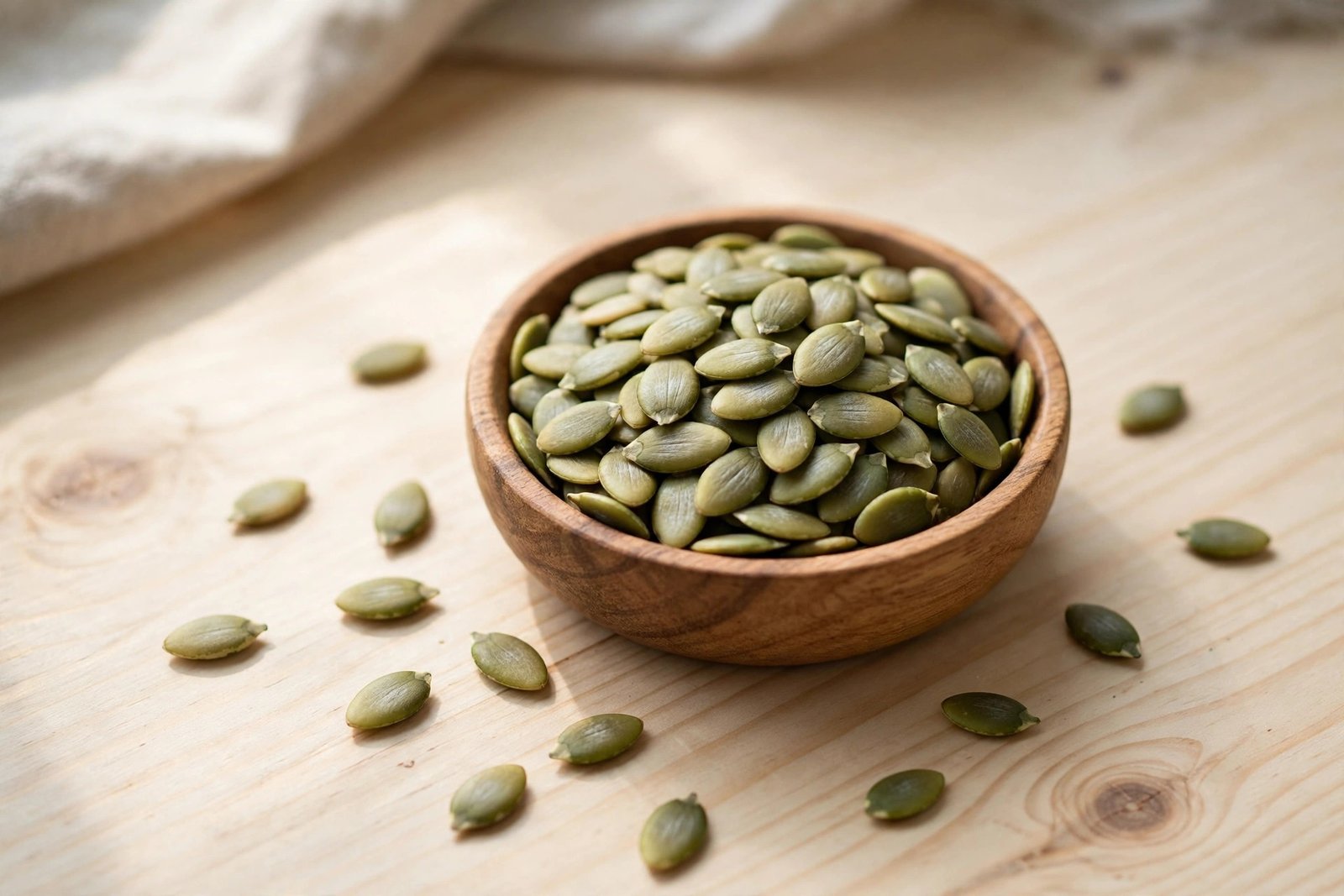
Pumpkin seeds take the last place because no study has tested them against brain outcomes at all. Their case is purely nutritional: they are rich in magnesium, which supports nerve signalling, and in zinc and antioxidants, which the brain uses in normal function. Low magnesium and zinc intakes are common in older adults, so a food that supplies both has a plausible role in a brain-friendly diet. Plausible is the key word. No trial, no cohort study and no lab study of pumpkin seeds and cognition was found.
A small handful a day is still a reasonable snack, and pumpkin seeds are cheap, filling foods that keep well in a jar. Sprinkle them on salads, porridge or yoghurt rather than eating them on their own. If a list ever claims pumpkin seeds are proven brain food, it is guessing, and this article would rather say so than repeat the claim.
That is the honest picture. Blueberries and leafy greens have the best evidence, fatty fish and eggs have strong observational support with real limits, and the rest of the list runs from one small trial each down to no direct trial at all. The pattern matters more than any single item: greens, berries, fish, nuts and eggs, eaten often, beat a cupboard full of supplements. If memory problems keep going, talk to a qualified professional rather than adding more foods to the list.
References
Sources checked November 24, 2026. General information; individual needs and rules can differ.
- Morris et al., 2015: MIND diet associated with reduced incidence of Alzheimer’s disease, 923 participants
- Wood et al., 2023: wild blueberry powder, vascular and cognitive function in healthy older adults, 61 participants, 12 weeks
- Six-month wild blueberry intervention and speed of processing in mild cognitive decline, 2023, 86 participants
- Morris et al., 2018: nutrients in green leafy vegetables and cognitive decline, 960 participants
- Leckie et al., 2020: omega-3 fatty acids, cognition and brain morphology in mid-life adults, 271 participants
- Pan et al., 2024: egg intake and Alzheimer’s dementia risk, Rush Memory and Aging Project, 1,024 participants
- Desideri et al., 2012: cocoa flavanols, cognition and mild cognitive impairment, 90 participants
- Sala-Vila et al., 2020: two-year walnut diet and cognitive decline, the WAHA trial, 708 participants
- Small et al., 2018: bioavailable curcumin, memory and brain amyloid and tau, 40 participants, 18 months
- Lifestyle medicine for prevention of cognitive decline: focus on green tea
- Alzheimer’s Drug Discovery Foundation, 2025: green tea evidence summary, meta-analysis of 18 observational studies, 58,929 people
Keep reading: 25 Budget-Friendly Foods for Simple, Balanced Meals.