A cabbage can do more than become a bowl of slaw. Cut it into thick wedges for the oven, or shred it so it softens into noodles, soup or a skillet. The ten ideas below use those different textures; start with part of the head and save the rest for another meal.
Only using part of the head today? These ideas for half-finished ingredients can help you plan the next meal around what remains.
Start with green or Savoy cabbage for most of these ideas. Red cabbage works particularly well in the braise, but its color can spread into other ingredients. The quantities below are starting points for roughly two servings, with bread, rice or another side where suggested. These are home-cooking ideas rather than kitchen-tested recipes; use the texture cues instead of treating a cooking time as a deadline.
A little preparation makes the difference
Remove damaged outer leaves, cut out the tough core where needed and wash the cabbage under running water. A wide pan helps shreds cook evenly. If your pan is small, work in batches rather than cramming in a whole head.
Published October 18, 2026 · Updated October 26, 2026
In this article
- Roasted cabbage wedges with lemon
- Soft cabbage and onion noodles
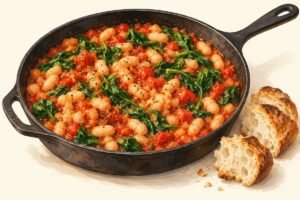
- A cabbage and white-bean soup
- A quick cabbage and mushroom skillet
- A red-cabbage and apple braise
- Cabbage fried rice with fully cooked egg
- A cabbage and potato hash
- Small savory cabbage pancakes
- Creamy cabbage and mustard pasta
- A warm cabbage bowl with chickpeas
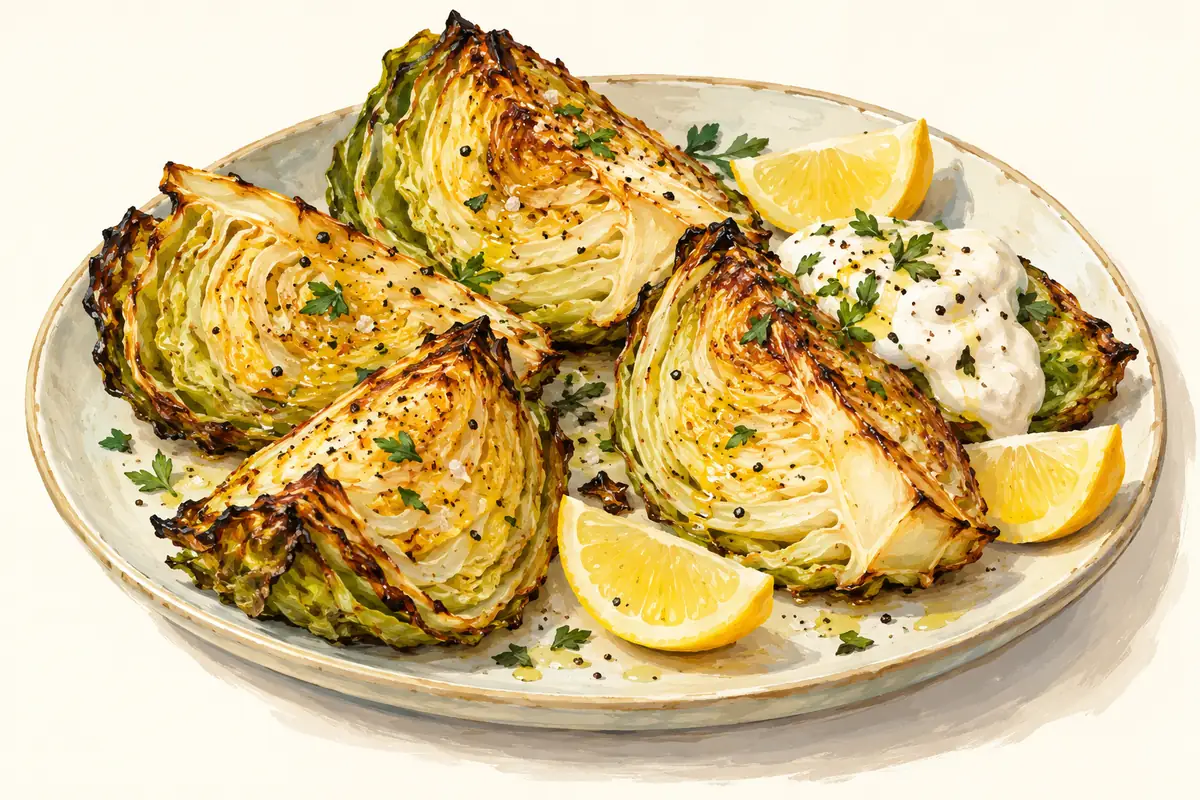
1. Roasted cabbage wedges with lemon
References
These practical meal ideas are not kitchen-tested recipes. Source links support the handling guidance and cultural context; they are not claims that these exact methods were tested by those organizations.
Cut about half a small cabbage into four wedges, leaving a little core attached to hold each one together. Pat the cut surfaces dry. Brush with about a tablespoon of olive oil in total, season lightly and spread them on a baking sheet with space between them.
Roast at 425°F (220°C), turning carefully when the first side browns, until the thickest part is tender. Begin checking after about 20 minutes; the size of the wedges will change the time. If the edges darken before the center softens, lower the heat and loosely cover the tray.
Finish with lemon juice. Serve beside beans or spoon plain yogurt over the wedges and add bread. Aim for browned cut faces and tender centers; the exact color will vary with wedge size.
2. Soft cabbage and onion noodles
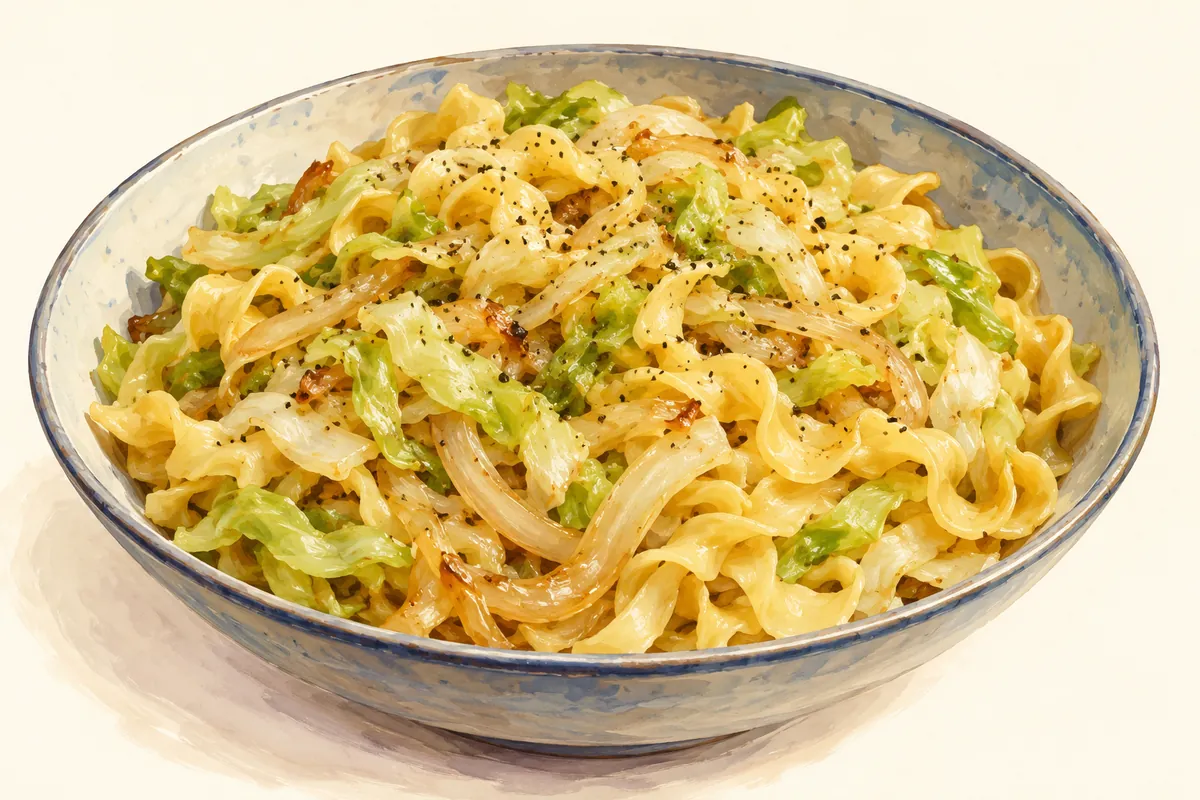
Slice a quarter of a medium cabbage and half an onion thinly. Cook 4 ounces of dry egg noodles according to the package, reserving a little cooking water before draining. Meanwhile, soften the onion in a tablespoon of oil or butter in a wide skillet.
Add the cabbage and a splash of water. Cook over medium heat, stirring and scraping up any browned bits, until the shreds are soft. Add water a spoonful at a time if the pan dries out. This version benefits from tenderness rather than a quick, crunchy stir-fry.
Toss in the noodles, black pepper and enough reserved water to bring everything together. Mustard or a little lemon juice can sharpen the finish. Add cooked beans if you want a more substantial bowl. Use noodles that suit your allergies; egg noodles commonly contain both wheat and egg.
3. A cabbage and white-bean soup
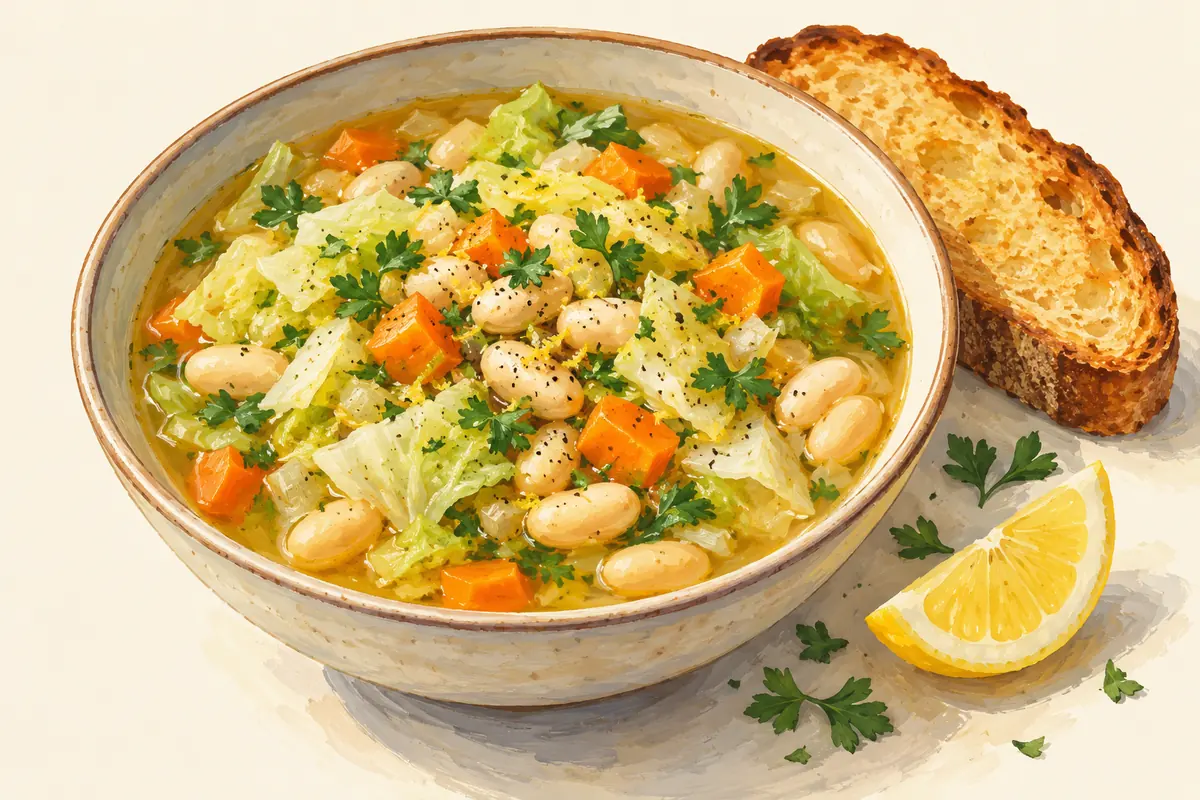
Chop a quarter of a cabbage, one carrot and half an onion. Soften the onion and carrot in a tablespoon of oil, then add the cabbage, a drained 15-ounce can of white beans and about 3 cups of vegetable broth.
Simmer until the vegetables are tender, adding broth or water if the soup becomes crowded. Crush a few beans against the pot with a spoon if you want a fuller broth. There is no need to blend the whole pot or add cream to give it body.
Taste before salting: broth and canned beans vary. Serve with toast and finish with parsley, lemon or grated cheese if you have them. Keep the cabbage pieces small enough to fit comfortably on a spoon. This is also a useful place for a fresh celery stalk or a small piece of zucchini.
4. A quick cabbage and mushroom skillet
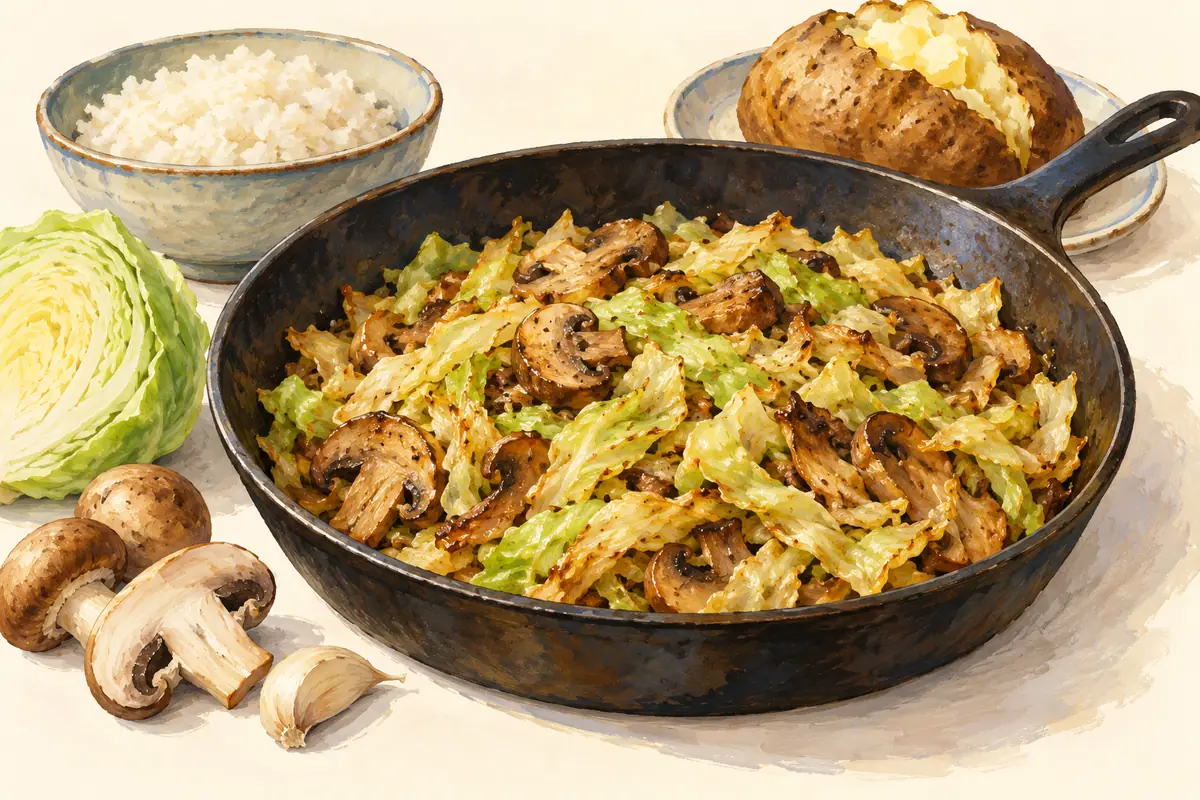
Shred a quarter of a cabbage and slice about 4 ounces of mushrooms. Heat a tablespoon of oil in a wide skillet. Cook the mushrooms first, in a shallow layer, so that some of their moisture evaporates before the cabbage goes in.
Add the cabbage and cook, turning it through the mushrooms. A splash of water will help soften thicker shreds; let that water evaporate before finishing. Stir in a small amount of soy sauce or a suitable alternative, then taste.
Spoon over rice or serve beside a baked potato. Add garlic if you like, but put it in after the mushrooms have begun cooking so it doesn’t burn. Soy sauce is seasoning, not a required ingredient; lemon and black pepper take the skillet in another direction. Check sauces for wheat and soy when relevant.
5. A red-cabbage and apple braise
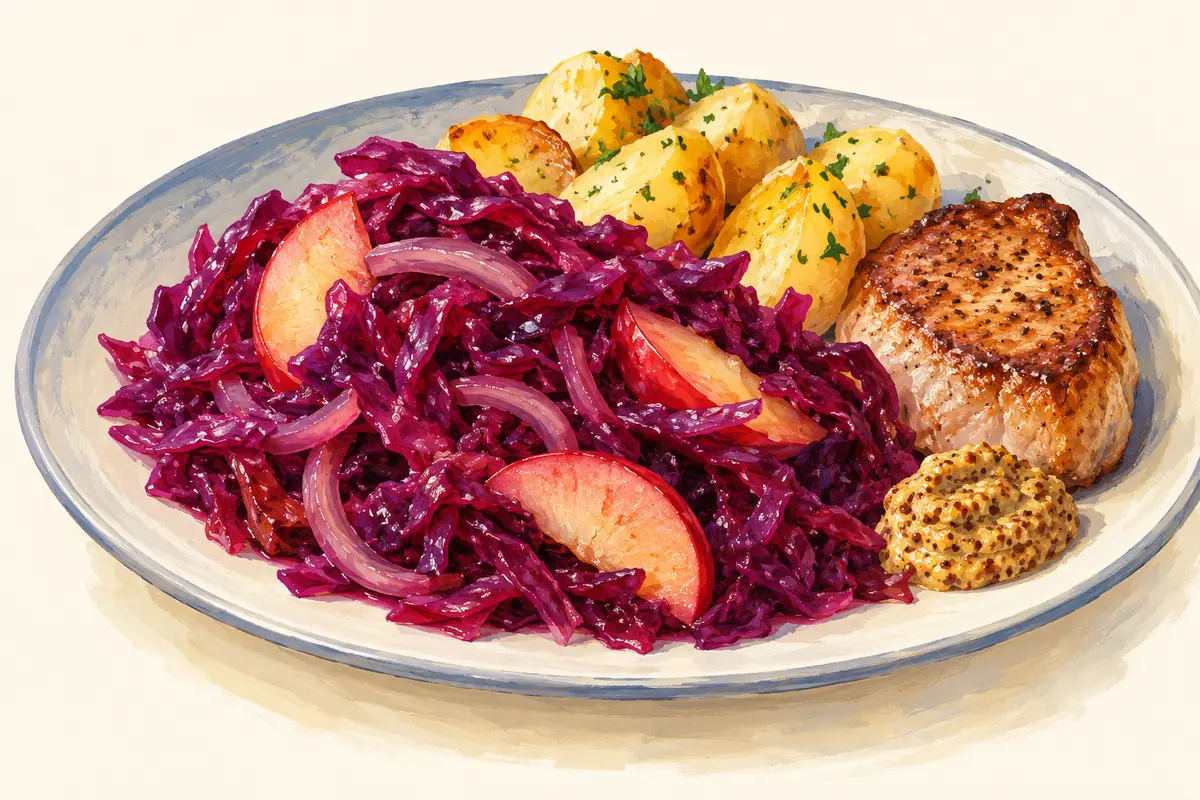
Thinly slice half a small red cabbage, half an onion and one apple. Put them in a saucepan with a tablespoon of oil, a tablespoon of cider vinegar and about a quarter cup of water. Add a pinch of salt if wanted.
Cover and cook gently, stirring occasionally, until the cabbage is tender. Add a little water if it catches. Uncover near the end if there is more liquid than you want. The apple’s sweetness and the vinegar’s sharpness will vary, so adjust after cooking.
This is a side dish rather than a complete dinner on its own. Serve it with potatoes and a protein food that suits you. A spoonful of mustard alongside can work well. Don’t add a large amount of sugar before tasting; the apple may already give you the balance you want.
6. Cabbage fried rice with fully cooked egg
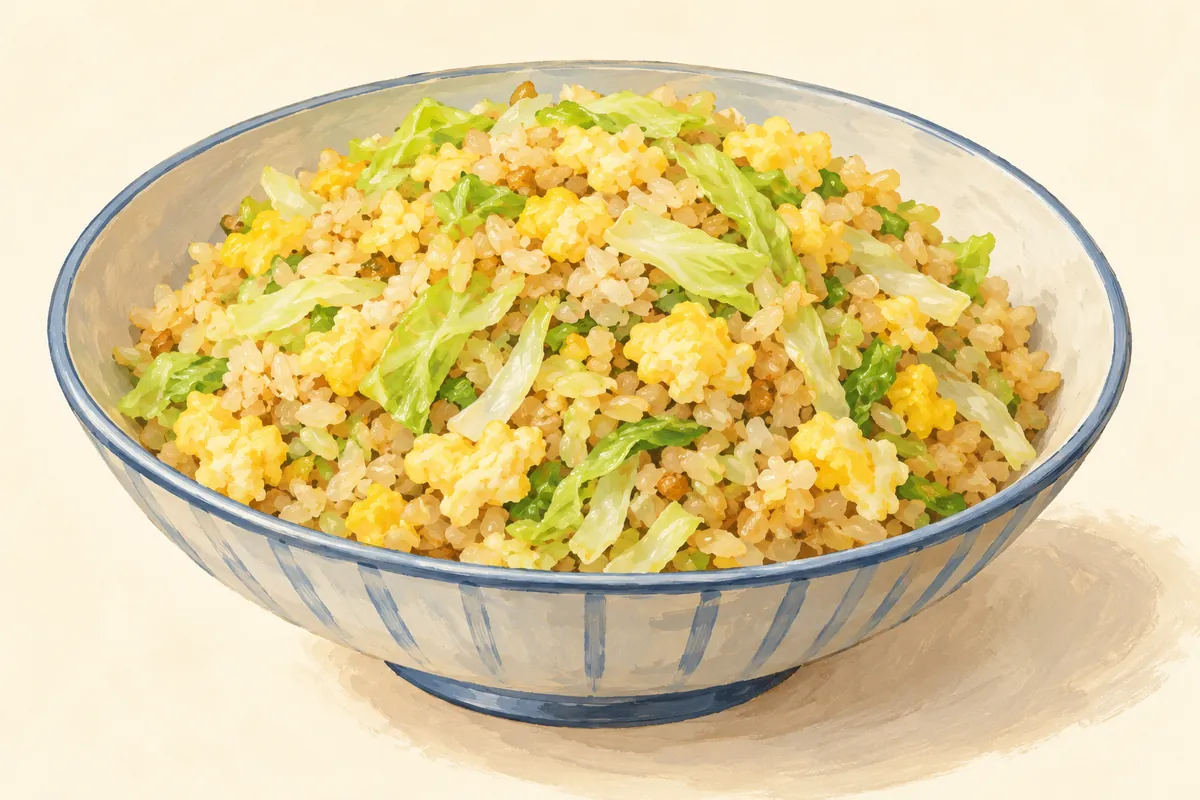
For two bowls, start with about 2 cups of freshly cooked rice, a quarter cabbage shredded finely, two eggs and a tablespoon of oil. Cook the cabbage in a wide pan until tender enough for you, then move it aside.
Scramble the eggs in the cleared space until fully set, then mix with the cabbage and rice. Stir until everything is hot, separating clumps rather than pressing them into the pan. Season gradually with soy sauce or another suitable sauce.
Fresh rice makes this possible without relying on leftovers. If using refrigerated rice, only use rice that was cooled and stored safely, and reheat it to 165°F (74°C) with a thermometer. A hot pan cannot make mishandled rice safe again. Keep the egg pieces small so they distribute through the bowls.
7. A cabbage and potato hash
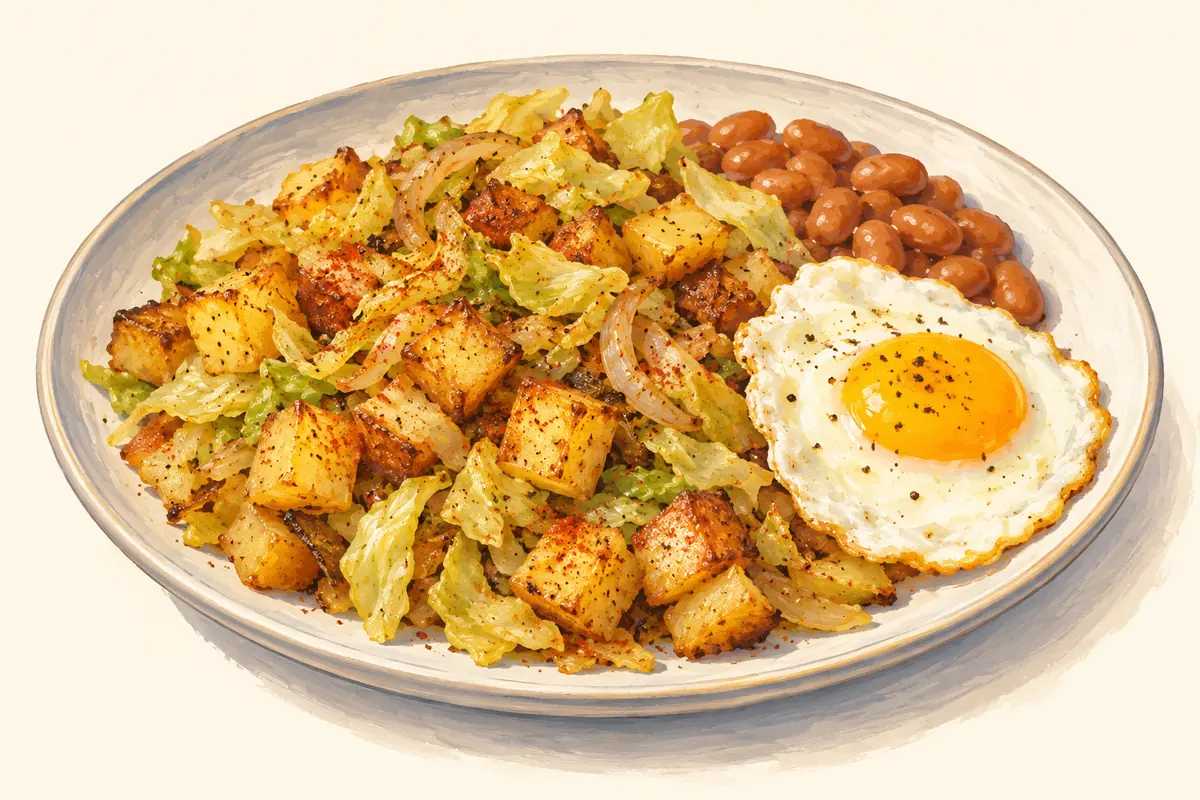
Dice two medium potatoes into small, even pieces and cook them in simmering water until just tender. Drain well. Thinly slice a quarter cabbage and half an onion while the potatoes cook.
Soften the onion in a tablespoon of oil in a large skillet, then add the cabbage. When the cabbage is tender, add the potatoes. Let the potatoes sit against the pan briefly before turning so they can pick up some color. Work in batches if necessary.
Season with pepper and a little smoked paprika, then serve with beans or a fully cooked egg. The potato pieces should be cooked through before you try to brown them; otherwise the outside can darken while the middle stays hard. This is a useful savory breakfast-for-dinner option.
8. Small savory cabbage pancakes
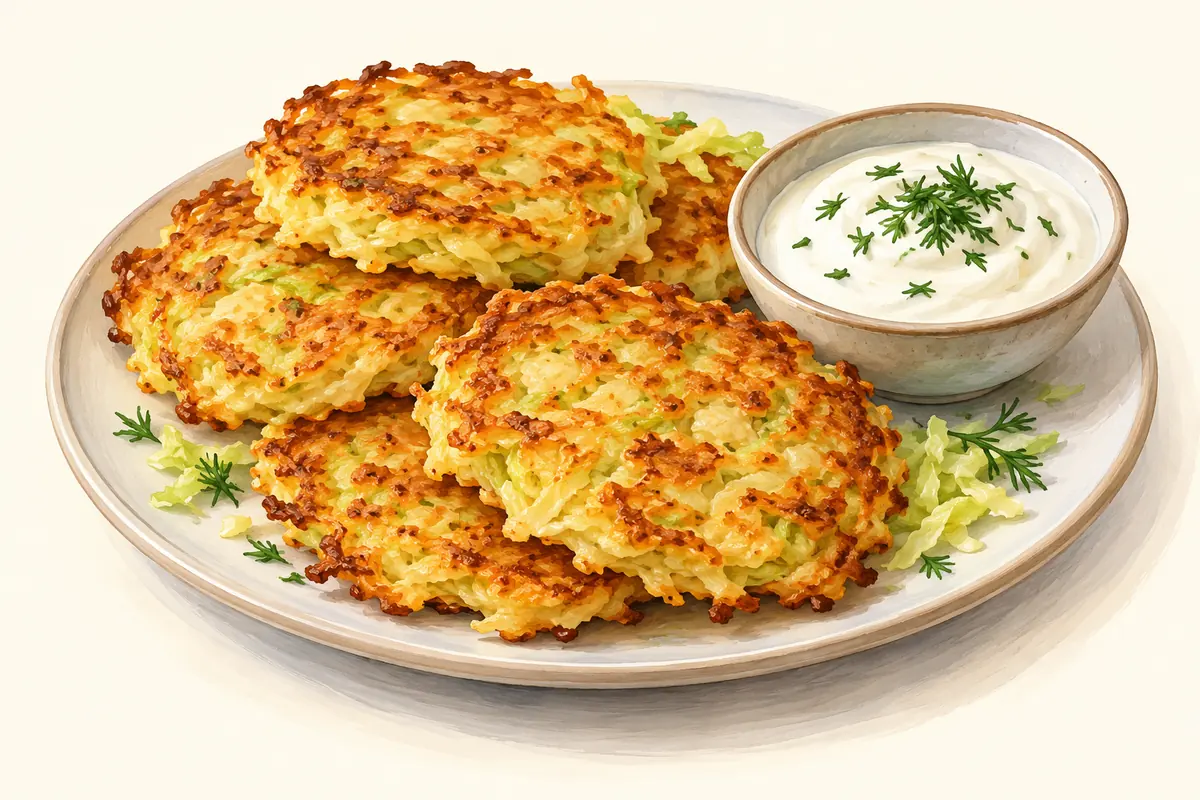
Mix 2 cups of very finely shredded cabbage with two eggs, a quarter cup of all-purpose flour and 2 tablespoons of water. The batter should hold the cabbage together; add a small splash of water only if it is too stiff to spoon.
Cook small, thin pancakes in a lightly oiled skillet over medium-low heat. Turn when the underside is set and golden, then continue until the center is cooked. Egg dishes should reach 160°F (71°C). Use a thermometer and don’t taste raw batter: both raw flour and eggs need proper cooking.
Serve with yogurt or another suitable sauce. This is a simple cabbage pancake idea, not a claim to reproduce a particular regional recipe. Finely cut cabbage is easier to cook through than thick strips. Smaller pancakes are also easier to turn without breaking.
9. Creamy cabbage and mustard pasta
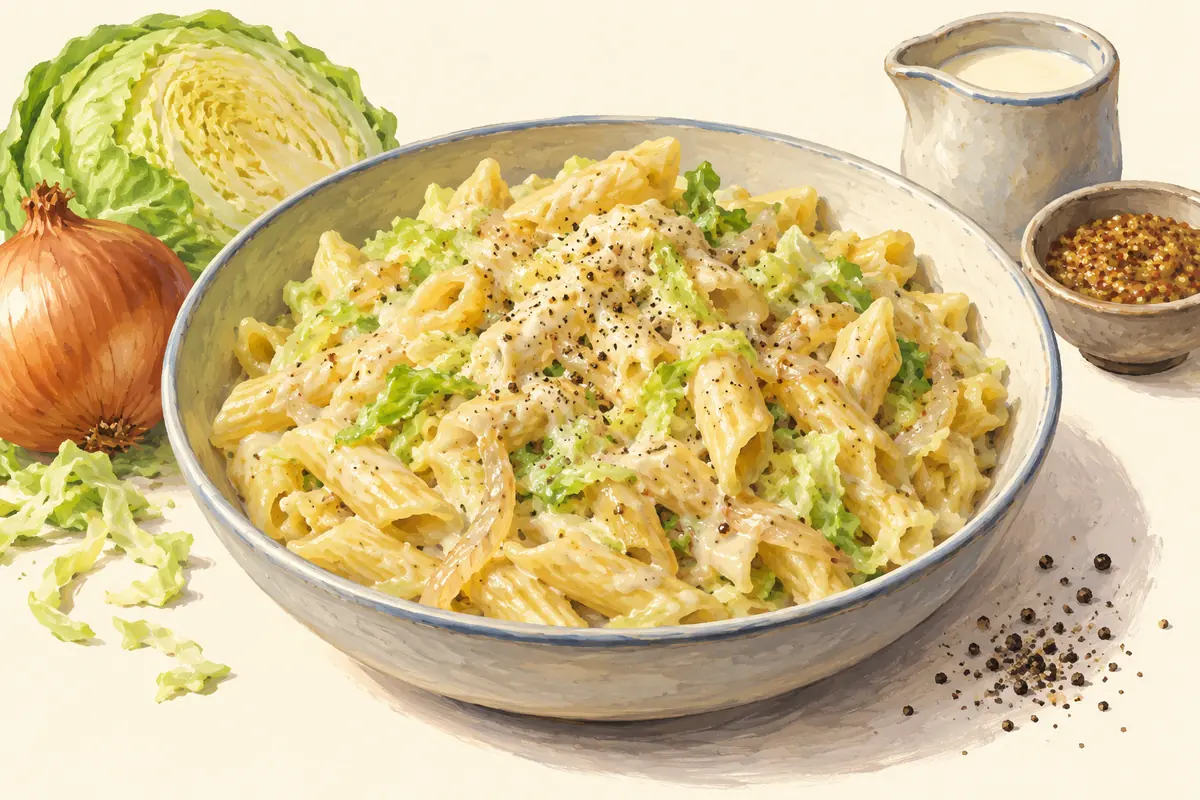
Cook 4 ounces of pasta according to the packet. While it cooks, soften half a sliced onion and a quarter cabbage, shredded, in a tablespoon of oil. Add small splashes of pasta water as needed to stop the cabbage catching.
When the cabbage is soft, stir in a quarter cup of cream or a suitable unsweetened cooking alternative. Add a teaspoon of mustard, then taste before adding more. Toss with the pasta and loosen with cooking water until the sauce coats the shapes.
A little sharpness helps this dish avoid tasting flat. Black pepper or lemon juice may be enough if you don’t use mustard. Choose a plant-based cooking product for its flavor and cooking instructions rather than assuming every drink can stand in for cream. A bean side can make the meal more substantial.
10. A warm cabbage bowl with chickpeas
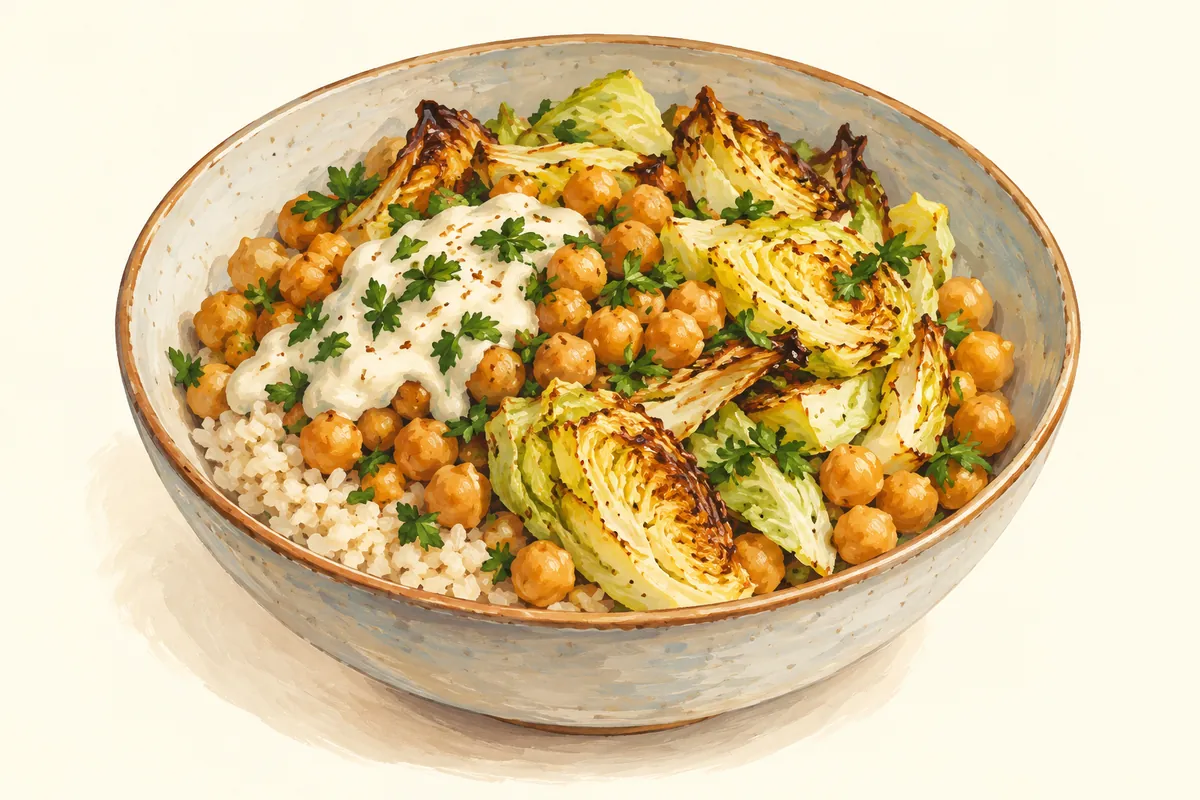
Roast a tray of cabbage wedges using the first method, then roughly chop the tender wedges into bite-size pieces. Warm a drained 15-ounce can of chickpeas in a saucepan with a splash of water and a little cumin.
Divide the warm chickpeas and cabbage between bowls. Add cooked rice, couscous or bread if you want a larger meal. Stir plain yogurt with lemon juice for a topping, or use a tahini sauce made with a product that is suitable for you.
Keep the different parts separate until serving so the roasted edges retain some texture. Tahini contains sesame and yogurt usually contains milk, so choose the dressing around your needs. This bowl is a way to use the cooking you already did, without needing a second elaborate recipe.
Choose how to cook cabbage before cutting it
For a browned surface, use wedges and leave room on the tray. For a soft, spoonable dish, choose shreds and a little liquid. If a head of cabbage seems too large, plan one roasted meal and one soup before buying it. Find more pantry combinations in our canned-bean dinner guide.
Store cooked food safely
Keep the refrigerator at 40°F (4°C) or below. Refrigerate perishables promptly, use cooked leftovers within 3–4 days and reheat leftovers to 165°F (74°C). Follow USDA’s full guidance, including the shorter room-temperature limit in hot conditions.



5 thoughts on “10 Ways to Cook Cabbage Beyond Coleslaw”