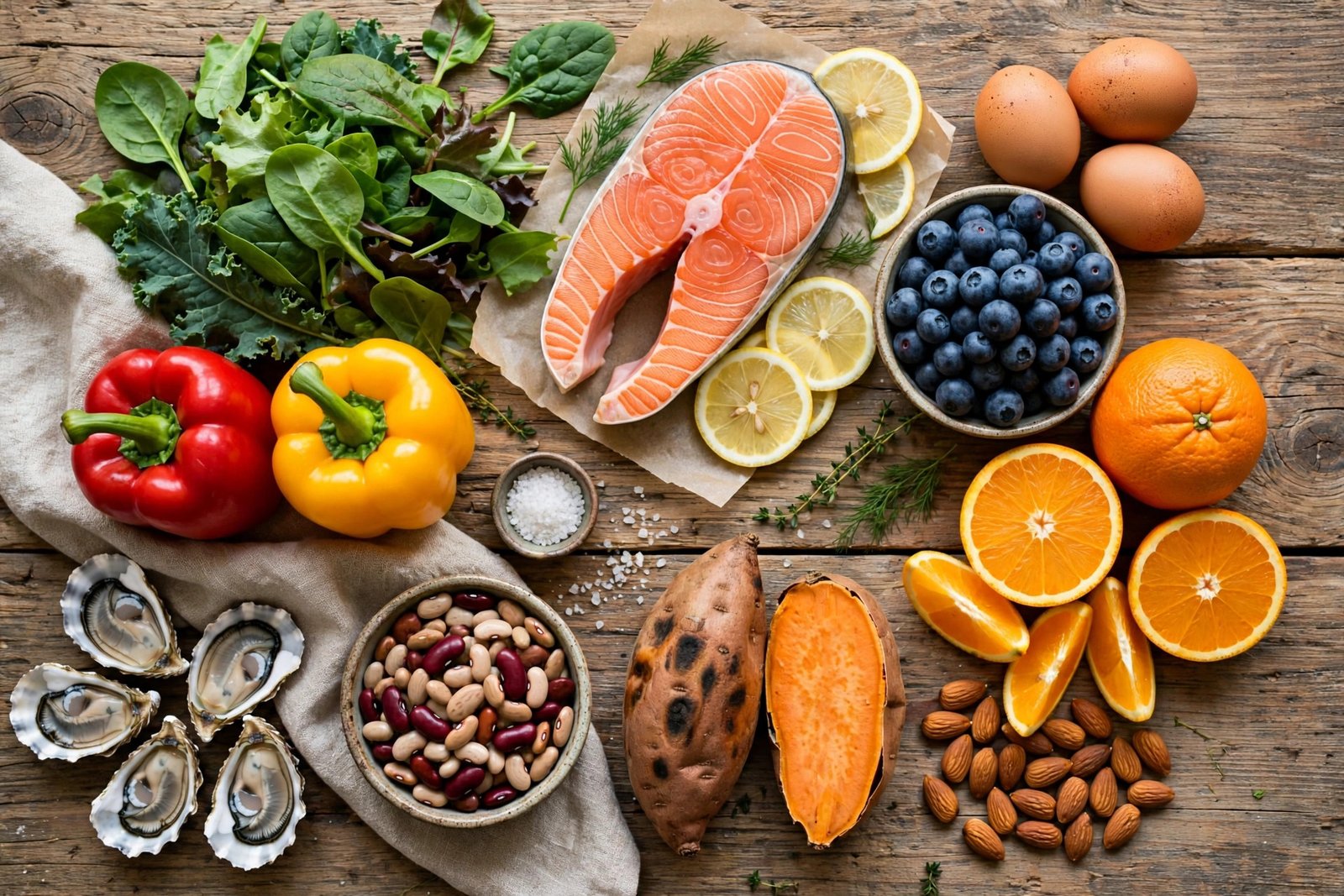
10 Foods for Eye Health, Ranked by the Evidence
Foods for eye health have a short answer: leafy greens, fatty fish and eggs carry the strongest evidence, because they supply the lutein, zeaxanthin and omega-3 fats that the eye actually uses. The honest part is what the evidence does not show. No food has been proven to prevent eye disease in healthy eyes, and the best trials tested a supplement formula in people who already had macular degeneration, not a diet. This list ranks ten foods by how strong the evidence behind each one is, and says plainly where the proof runs out.
Updated November 28, 2026
In this article
- 1. Leafy greens
- 2. Fatty fish
- 3. Eggs
- 4. Citrus fruits
- 5. Almonds
- 6. Sweet potatoes and carrots
- 7. Oysters
- 8. Bell peppers
- 9. Legumes
- 10. Berries
How to use foods for eye health in everyday meals
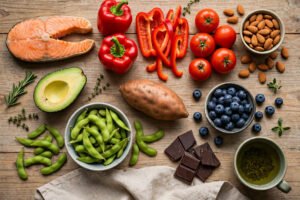
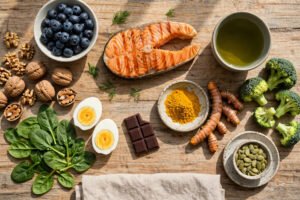
The pattern that the research supports is simple, and it looks like an ordinary healthy diet. Leafy greens most days, oily fish twice a week, an egg most days, a citrus fruit, and a small handful of nuts. The National Eye Institute’s AREDS2 trial tested a formula of vitamin C, vitamin E, lutein, zeaxanthin, zinc and copper. It slowed the progress of macular degeneration in people who already had the intermediate stage. It did not show that healthy people can prevent the disease by eating the same nutrients, so the goal here is a diet that supports the eyes, not a cure.
Cook the greens in a little oil. Lutein and zeaxanthin dissolve in fat, so the body absorbs them better from a salad with olive oil or spinach wilted in a pan than from raw leaves on their own. The same trick works for carrots and sweet potatoes. Pairing foods this way costs nothing and makes the nutrients in them easier to use. Most of the foods on this list are also budget-friendly healthy foods, so the pattern does not need a special shopping trip. If your vision changes, or an eye exam raises something new, ask a qualified professional rather than changing your diet and waiting.
Two notes before the list. First, the order follows the evidence, not popularity: the foods at the top have trials or large studies behind them, and the foods at the bottom are there on a nutrient argument, not a proven effect. Second, supplements are not the same as food. The AREDS2 formula used doses far above what food provides, and the American Academy of Ophthalmology advises against a do-it-yourself approach with high-dose vitamins. Food gives you these nutrients with fibre and other compounds, and without the cost. Our foods for gut health list follows the same honest approach.
1. Leafy greens
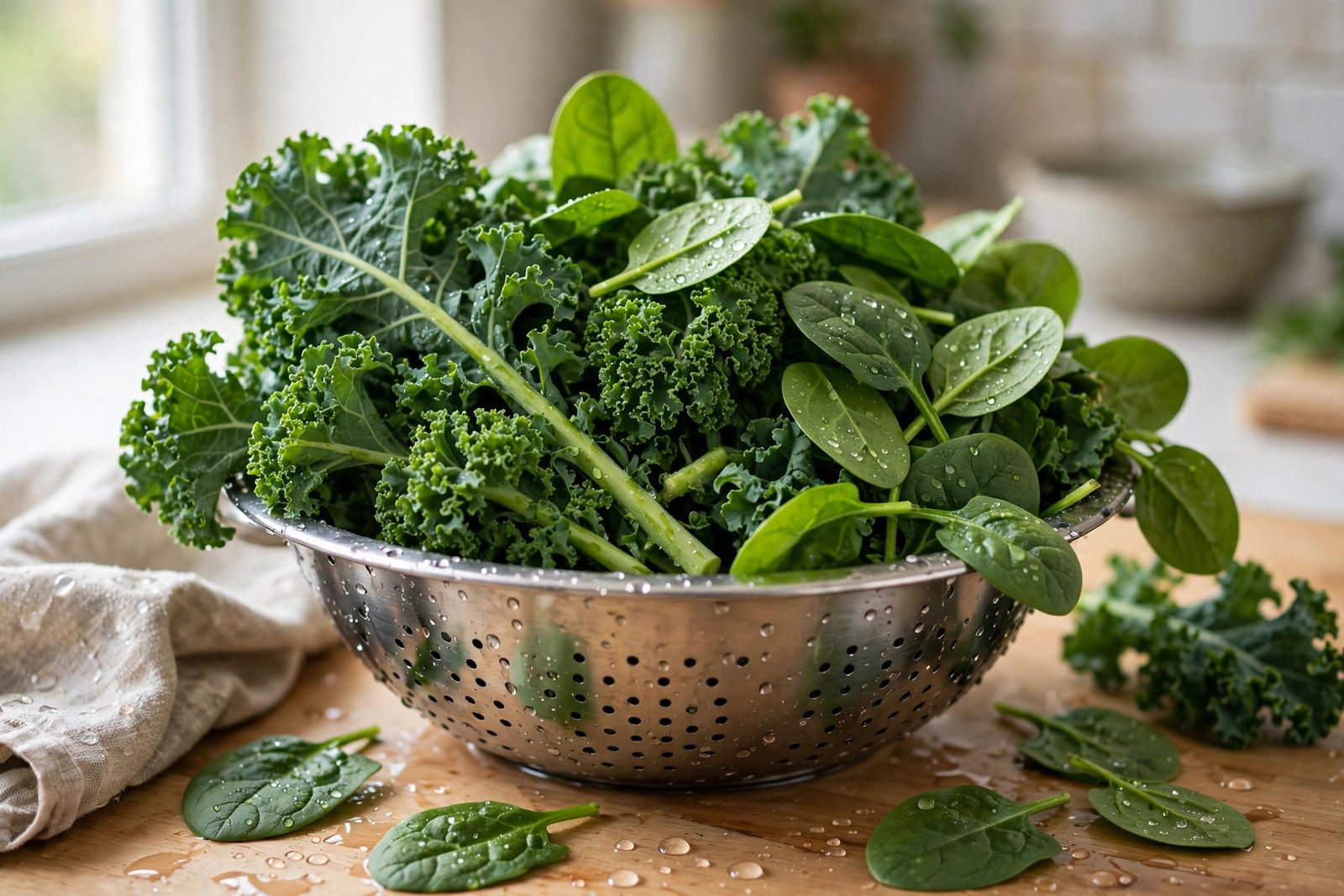
Kale, spinach, Swiss chard and collard greens sit at the top of this list because they are the richest food sources of lutein and zeaxanthin, the two pigments that collect in the macula, the part of the retina that gives sharp central vision. These pigments filter blue light and act as antioxidants. People who eat more of them through food tend to have lower rates of macular degeneration, and the AREDS2 trial confirmed that lutein and zeaxanthin belong in the formula that slowed the disease. Kale carries about twice the lutein and zeaxanthin of spinach, so a mix of the two covers the range well.
A practical amount is a cooked handful most days. Eating a cooked 10-ounce block of frozen spinach over the course of a week is enough to move the numbers, and a cup of cooked kale or Swiss chard provides roughly the same. Stir greens into soups, wilt them into eggs, or blend a handful into a smoothie. Cooking them lightly in oil helps the body absorb the pigments, and freezing does not destroy them.
Source: National Eye Institute, AREDS2 results
Up next: 2. Fatty fish
2. Fatty fish
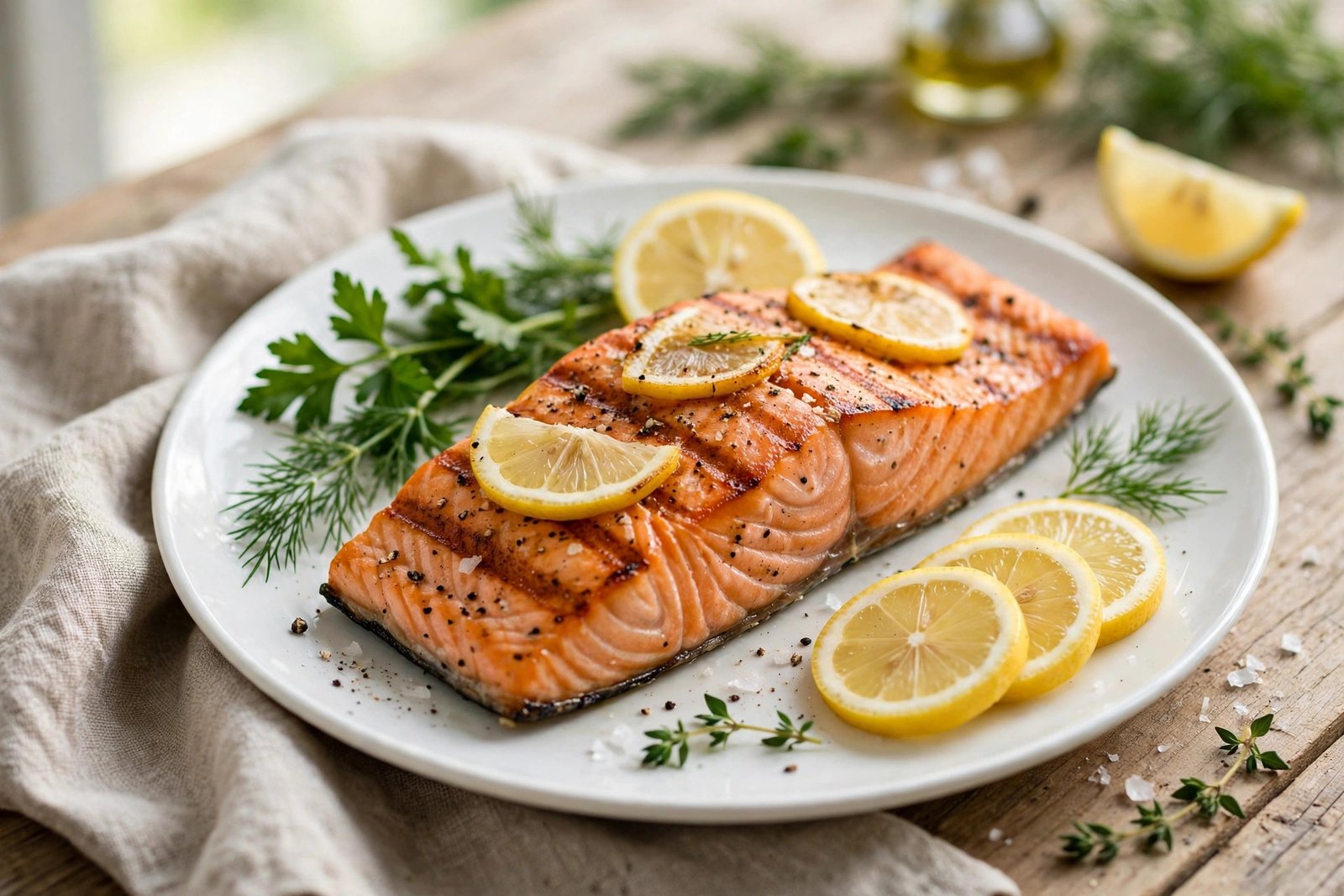
Salmon, sardines, trout and mackerel are the best food sources of omega-3 fats, and they earn second place on the strength of the Mediterranean diet studies. People who follow a Mediterranean pattern rich in fish have a significantly slower progression of late-stage macular degeneration, the leading cause of vision loss in older adults. Two servings of cold-water fish a week is the amount the eye specialists quote. Sardines and salmon carry the most omega-3s of the common choices.
There is one honest caveat, and it matters. The large DREAM trial gave dry-eye patients high-dose omega-3 capsules and found no better result than a placebo. Observational studies still link regular fish intake with fewer dry-eye symptoms, so fish as part of a healthy diet is sensible, but omega-3 capsules are not a proven treatment for dry eye. Eat the fish. Skip the claim that a capsule fixes dry eyes. Fatty fish also top our list of foods for brain health, for the same omega-3 reason.
Source: American Academy of Ophthalmology, diet and eye health
Up next: 3. Eggs
3. Eggs
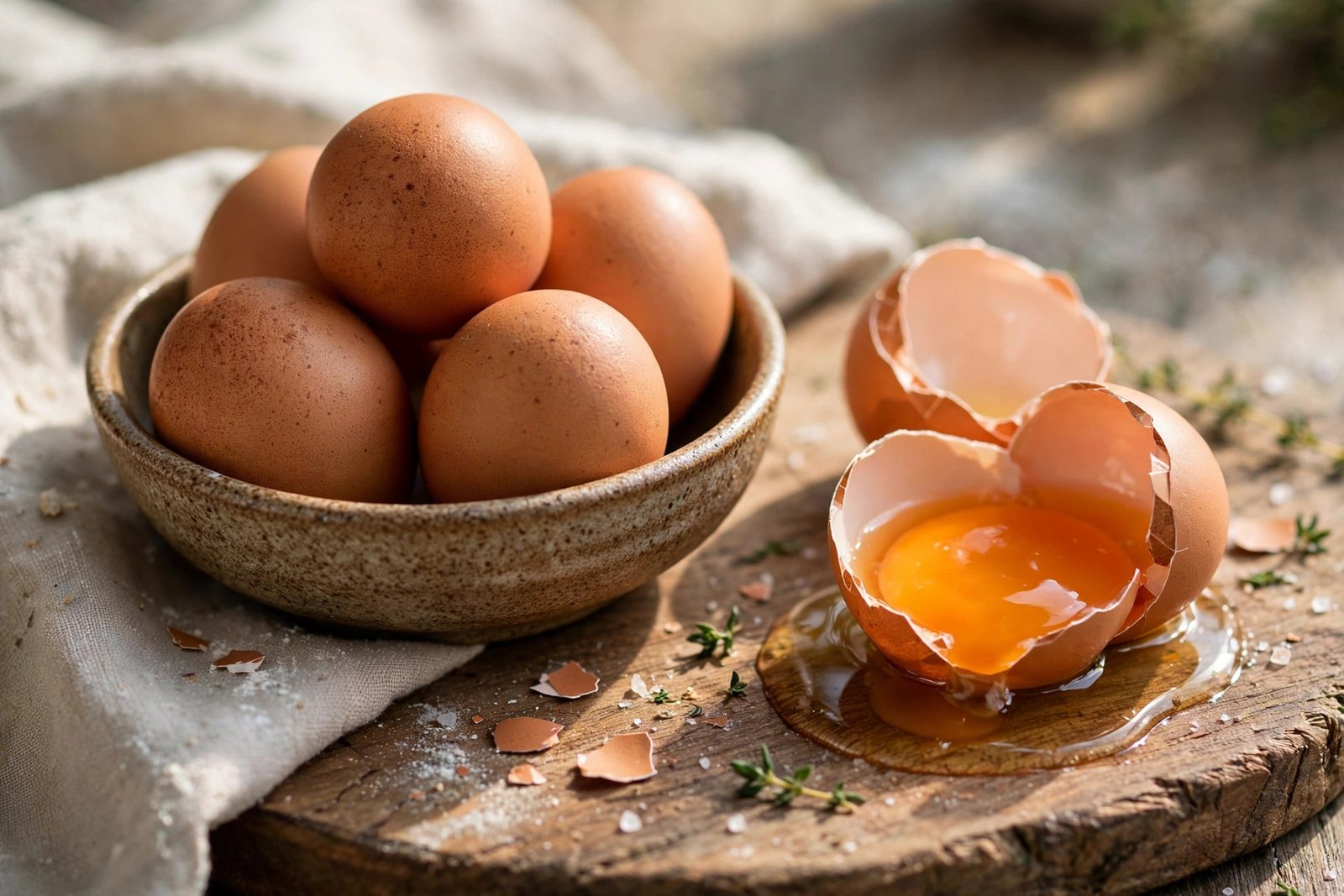
Eggs earn third place for a practical reason: the yolk carries lutein and zeaxanthin in a form the body absorbs well. The fat in the yolk helps the body take up the pigments, which is why an egg can deliver more usable lutein than a larger serving of a low-fat vegetable. Egg yolks from hens fed a varied diet tend to be a deeper orange, which usually means more pigment. The colour is not a guarantee of the amount.
One egg most days fits easily into the pattern: boiled for breakfast, folded into a greens omelette, or sliced over a salad. Eggs also supply zinc and vitamin A, which matter for the retina, and they are one of the cheapest sources of both on this list. There is no trial showing that eggs alone slow eye disease, so this ranking rests on the nutrient and absorption argument, not on a trial result.
Up next: 4. Citrus fruits
4. Citrus fruits
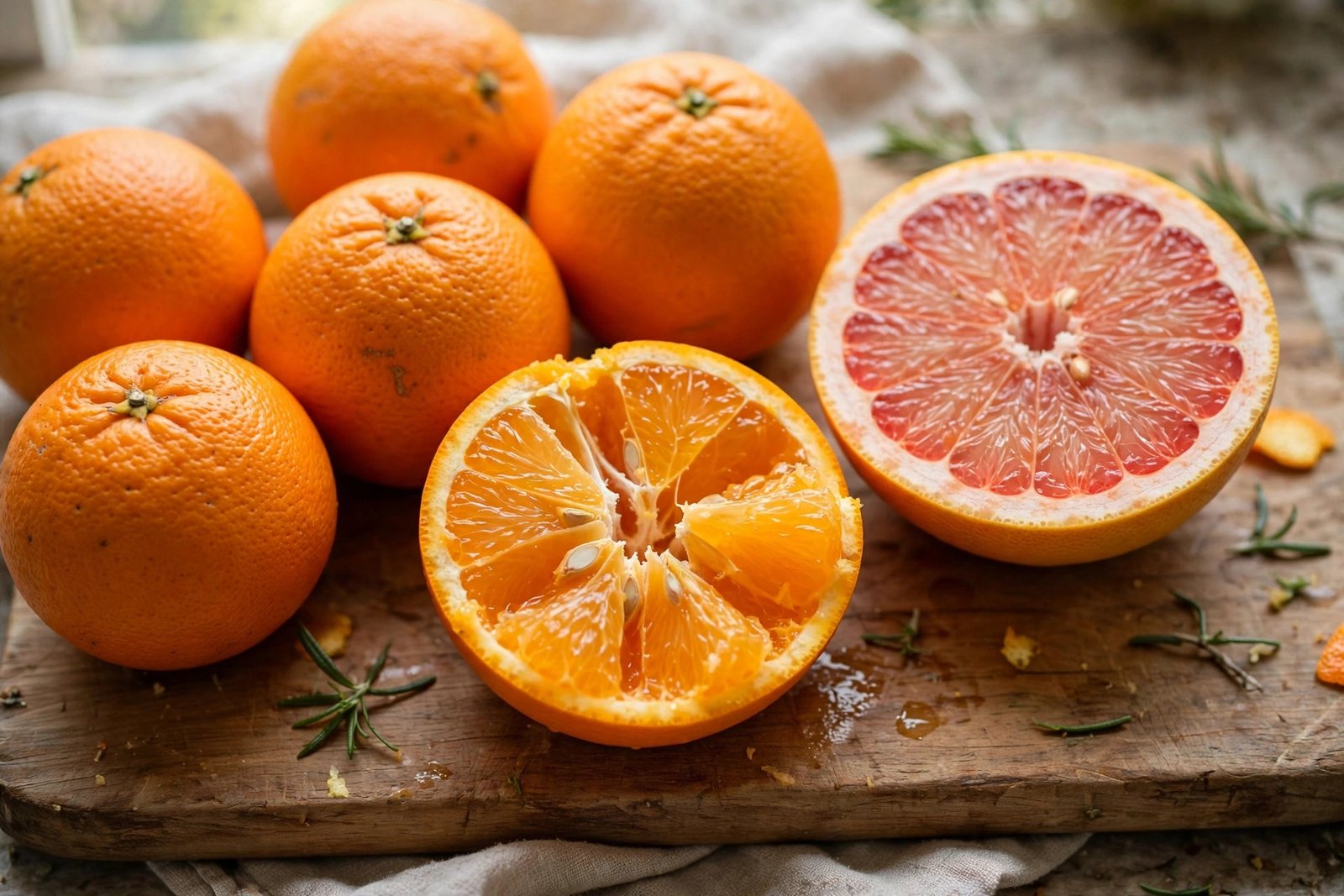
Oranges, grapefruit, kiwi and strawberries are among the top sources of vitamin C, and vitamin C was one of the ingredients in the AREDS and AREDS2 formulas. Half a grapefruit and a handful of strawberries a day covers the vitamin C most adults need. Papaya, oranges and green peppers are other good sources. Vitamin C is an antioxidant, and the eye’s lens and retina are exposed to light and oxygen all day, so the antioxidant argument is straightforward.
The limit is the same as for the rest of the list. Vitamin C from food has not been shown on its own to prevent eye disease. The AREDS formula used 500 mg of vitamin C a day, far above what food provides, and it was tested as a combination, not as a single nutrient. So eat the fruit because it belongs in a healthy diet, not because one orange protects your sight. Citrus also appears in our foods for healthy skin list, for the same vitamin C reason.
Source: American Academy of Ophthalmology, diet and eye health
Up next: 5. Almonds
5. Almonds
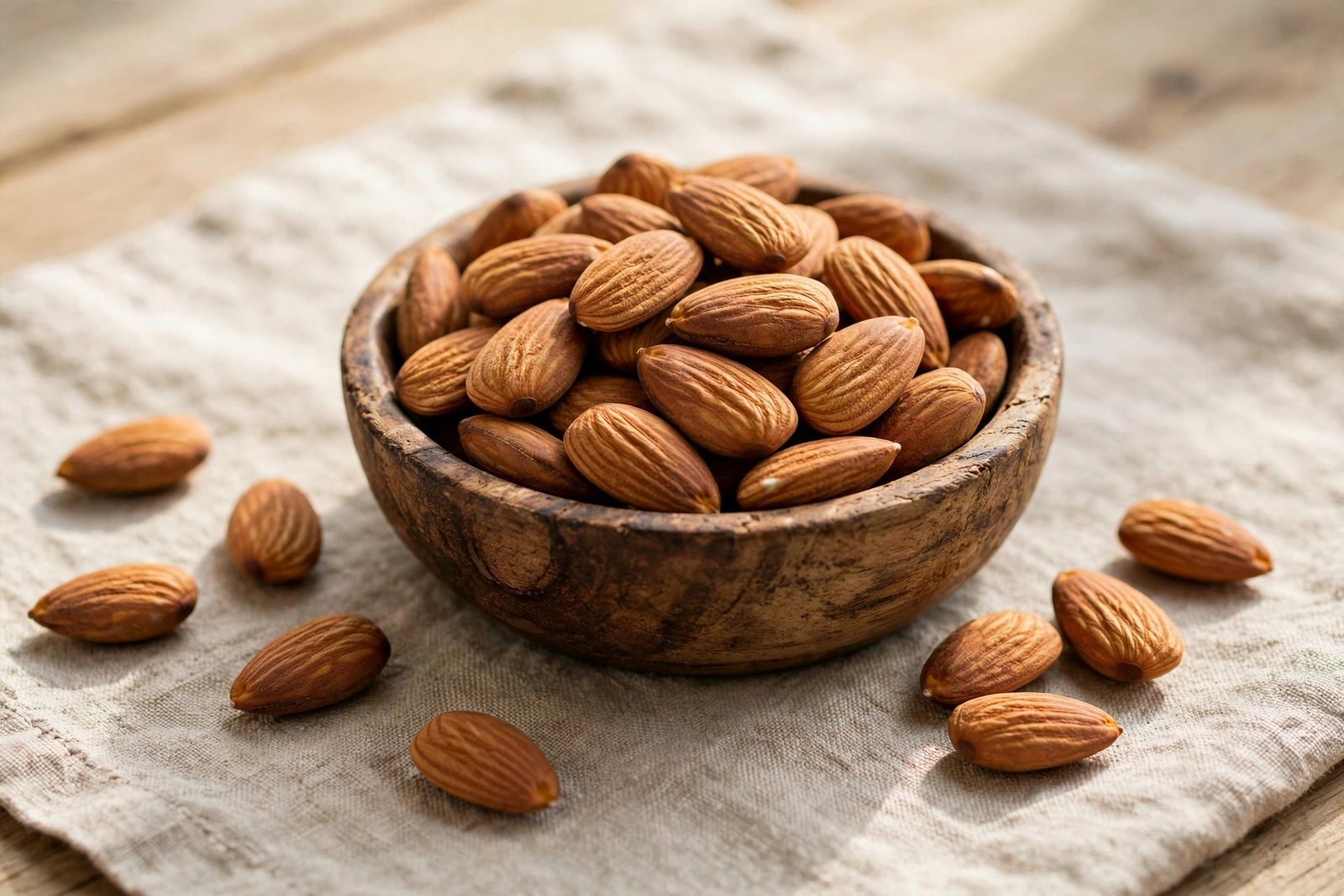
Almonds are the simplest way onto this list for vitamin E. A small handful, or a spoonful of wheat germ oil in a salad dressing, gives a big share of the day’s vitamin E, and almonds and pecans are both good sources. Vitamin E was the second ingredient in the AREDS formula, at 400 IU a day, and it works alongside vitamin C as an antioxidant pair in the eye.
The portion matters more than the nut. A small handful a day is enough, and a larger handful adds calories without adding benefit. Almonds keep well, travel well, and need no preparation, which is why they survive as a habit when the rest of the list does not. They are also one of the food habits that support healthy aging, and the same small handful covers both lists.
Up next: 6. Sweet potatoes and carrots
6. Sweet potatoes and carrots
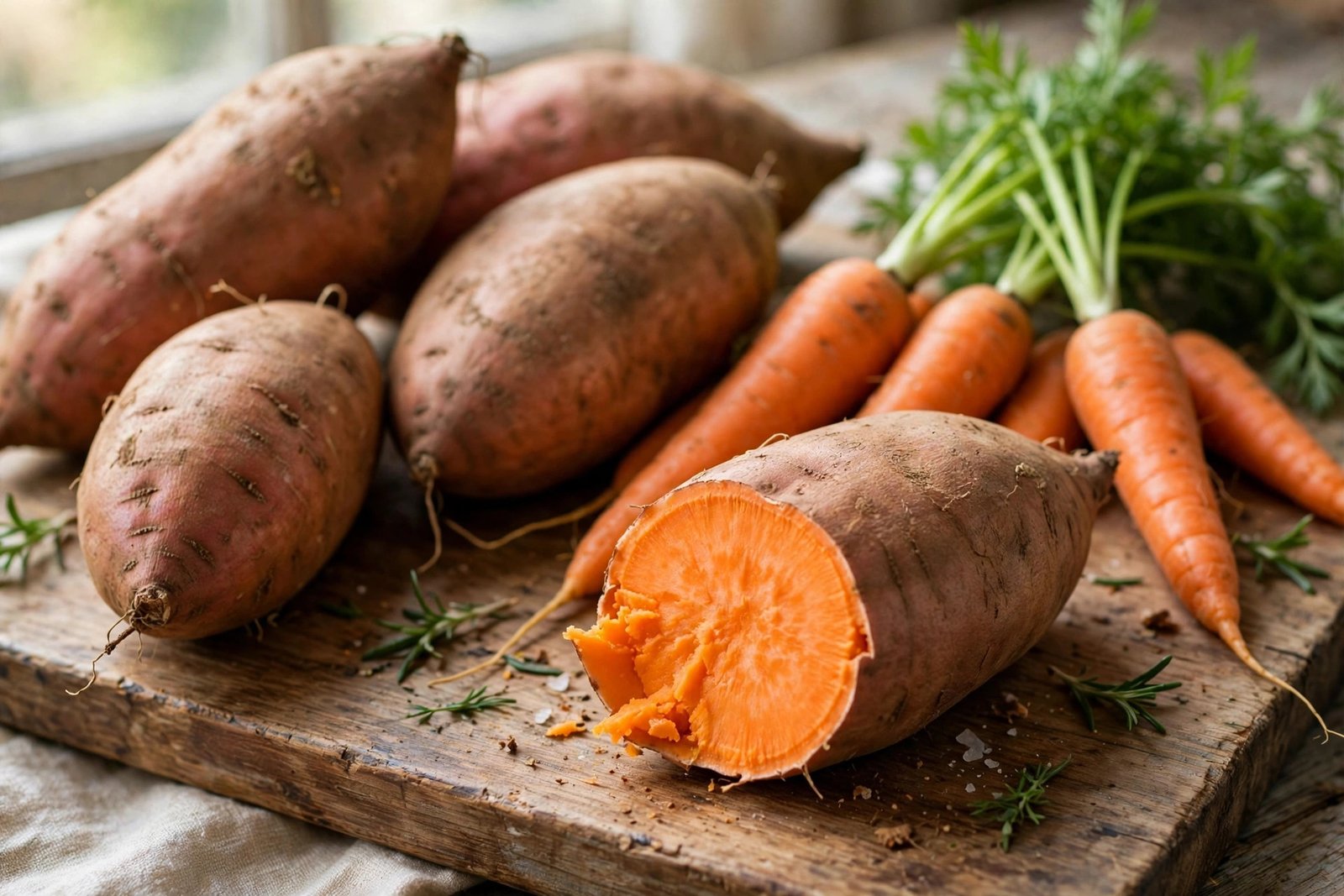
A small sweet potato, a carrot, or a bowl of pumpkin soup sets you up for the day’s vitamin A. Winter squash, kale and red pepper are other top sources. Vitamin A keeps the retina working, and a shortage of it causes night blindness, so the link between these foods and vision is real and direct. Cooking them in a little oil helps the body absorb the beta-carotene they contain.
There is an important correction in the trial history here. The first AREDS formula included 15 mg of beta-carotene, but AREDS2 replaced it with lutein and zeaxanthin, because beta-carotene raised the risk of lung cancer in smokers. The 10-year follow-up found the lutein and zeaxanthin version worked better, with about 20% lower risk of late macular degeneration than the beta-carotene version. So eat the carrots and sweet potatoes, but do not take high-dose beta-carotene supplements for your eyes.
Source: American Optometric Association, AREDS2 10-year follow-up
Up next: 7. Oysters
7. Oysters
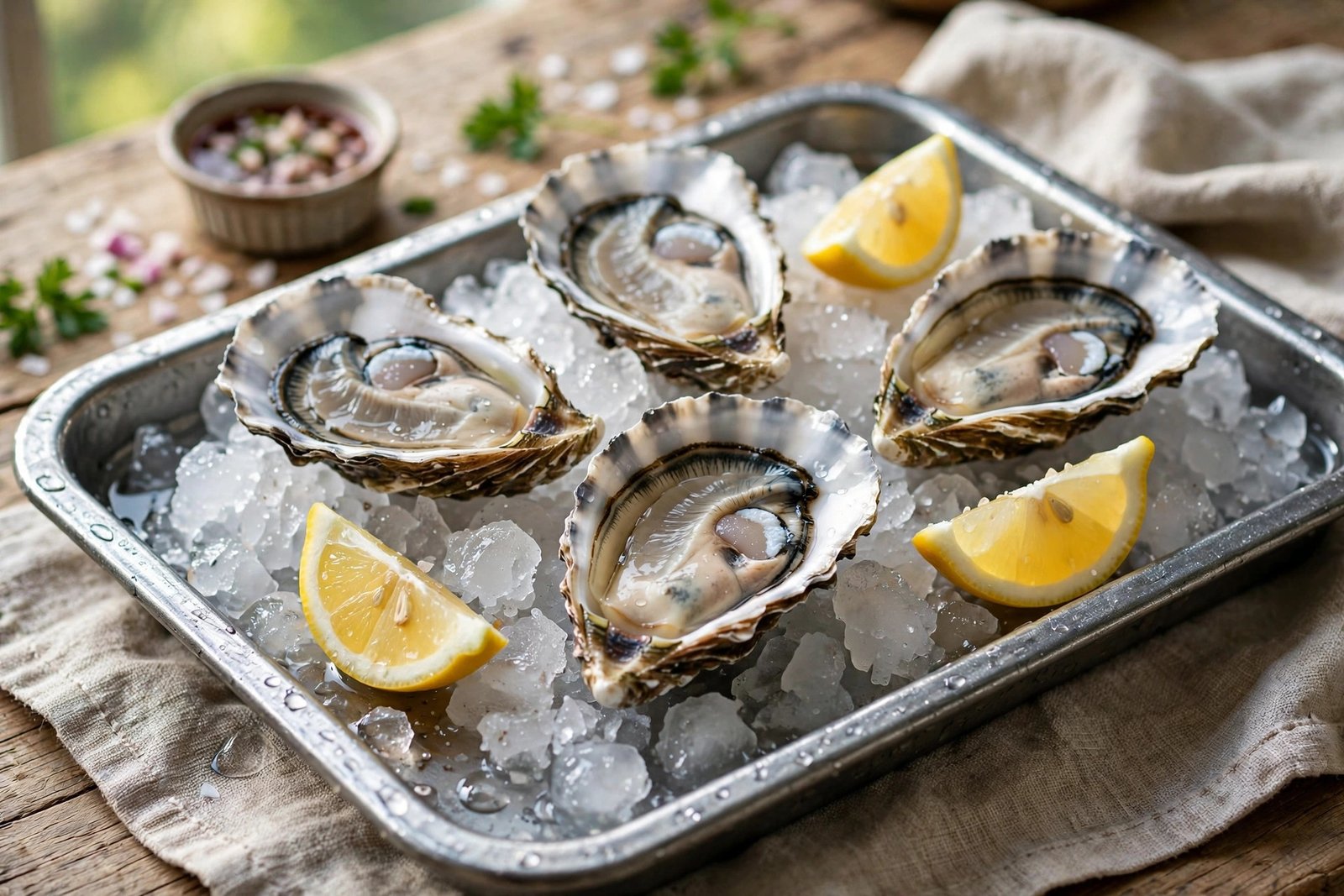
Oysters are the most concentrated food source of zinc on this list. Just two oysters give you more than enough daily zinc, which keeps the retina working as it should. Zinc was the mineral in the AREDS formula, at 80 mg a day, alongside 2 mg of copper, and the trial showed the combination slowed the progress of macular degeneration in people who already had the intermediate stage.
Oysters are not an everyday food for most people, and they do not need to be. They sit at seventh because the zinc argument is strong but the practical case is weak: they are expensive, seasonal, and not everyone eats shellfish. The dose in the trial was far above what food provides. Two oysters are a useful top-up, not a treatment. If shellfish is not on your table, the legumes further down this list cover zinc in a smaller dose.
Up next: 8. Bell peppers
8. Bell peppers
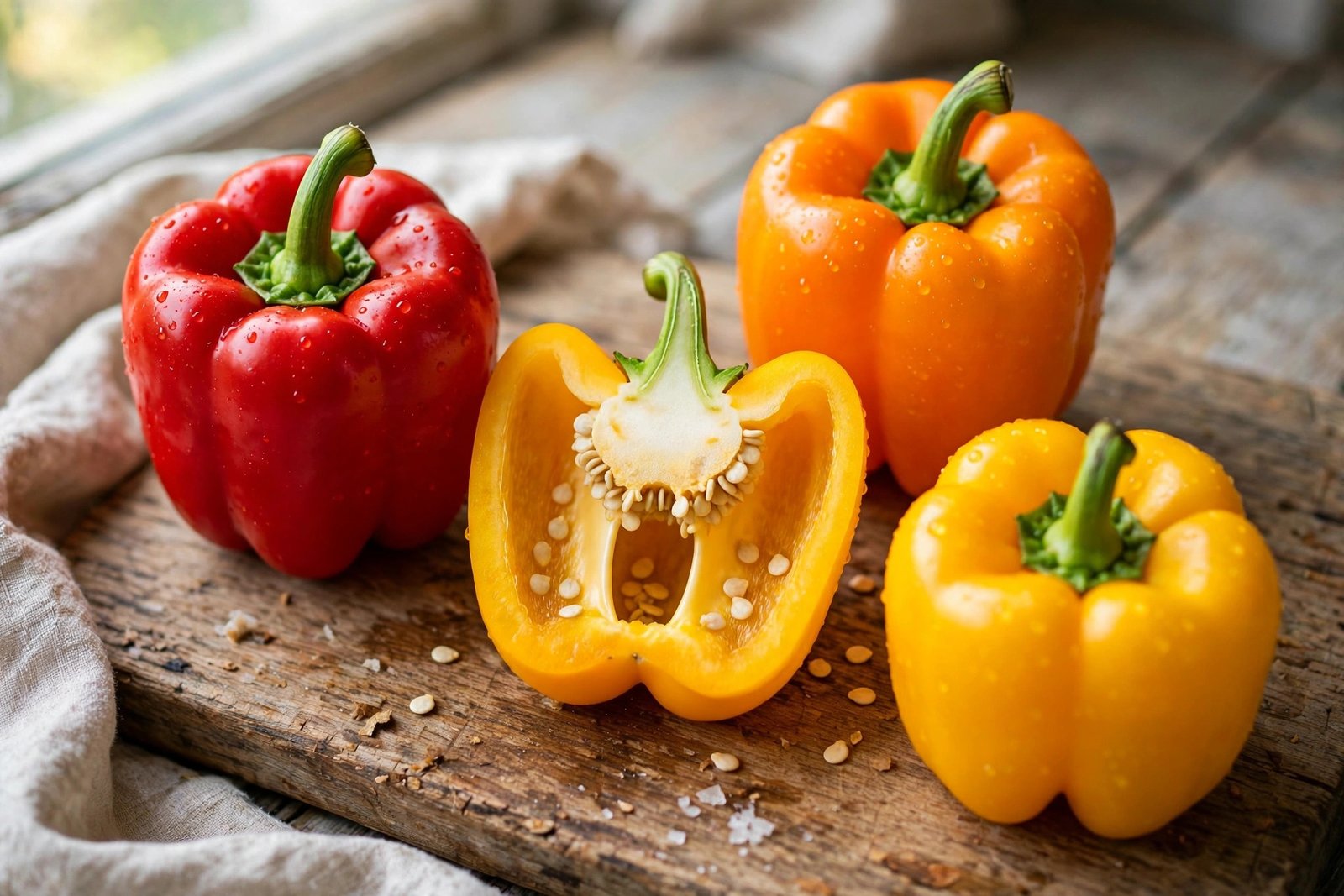
Red, orange and yellow bell peppers carry two eye nutrients at once: vitamin C and zeaxanthin. A pepper in a salad or a stir-fry adds a useful amount of both, and the colour is the clue: the orange and red pigments are the carotenoids themselves. Green peppers are a good vitamin C source too, but they carry far less zeaxanthin than the coloured ones.
Peppers sit at eighth because no trial has tested them on their own, and their ranking rests on the nutrient argument. That is still a good reason to eat them: they are cheap, they keep for a week in the fridge, and they make the rest of the list taste better. Slice them raw for crunch, roast them for sweetness, or stuff them with beans and rice for a full meal.
Up next: 9. Legumes
9. Legumes
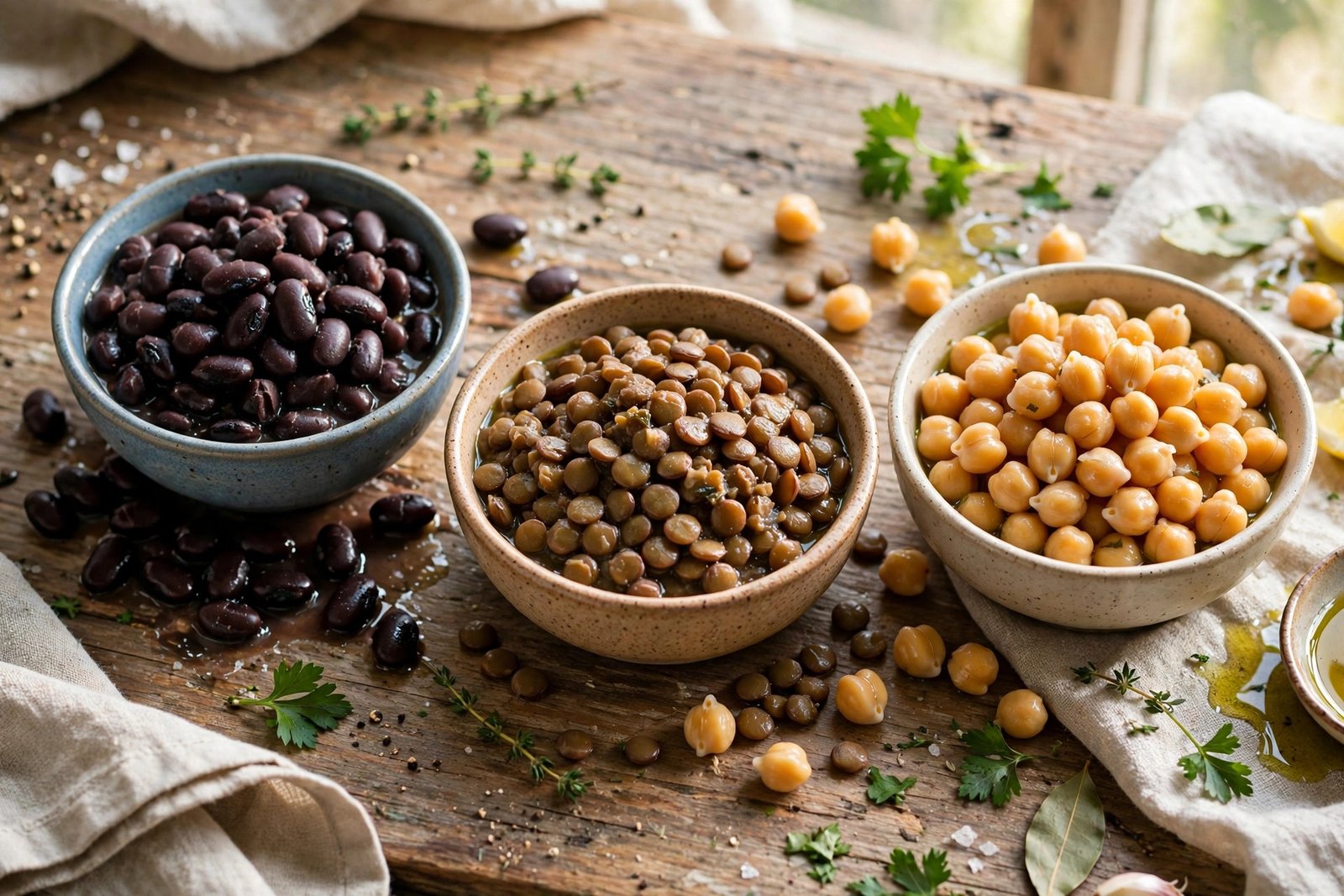
Beans, lentils and chickpeas are the everyday zinc source on this list. Legumes, seeds, meat, seafood, dairy and eggs all contain zinc, and a bowl of lentils or black beans adds a meaningful share of the day’s intake without the cost of oysters or the planning of a fish dinner. Zinc supports the retina, and it was one of the minerals in the AREDS formula, so the nutrient link is genuine.
The limit is absorption. The zinc in plants is harder for the body to take up than the zinc in meat or oysters, because the fibre and phytates in beans slow it down. Soaking and cooking help, and eating legumes with a vitamin C food, such as peppers or citrus, improves the uptake. Legumes are also one of the foods that help you sleep, so the same bowl of lentils covers two lists.
Up next: 10. Berries
10. Berries
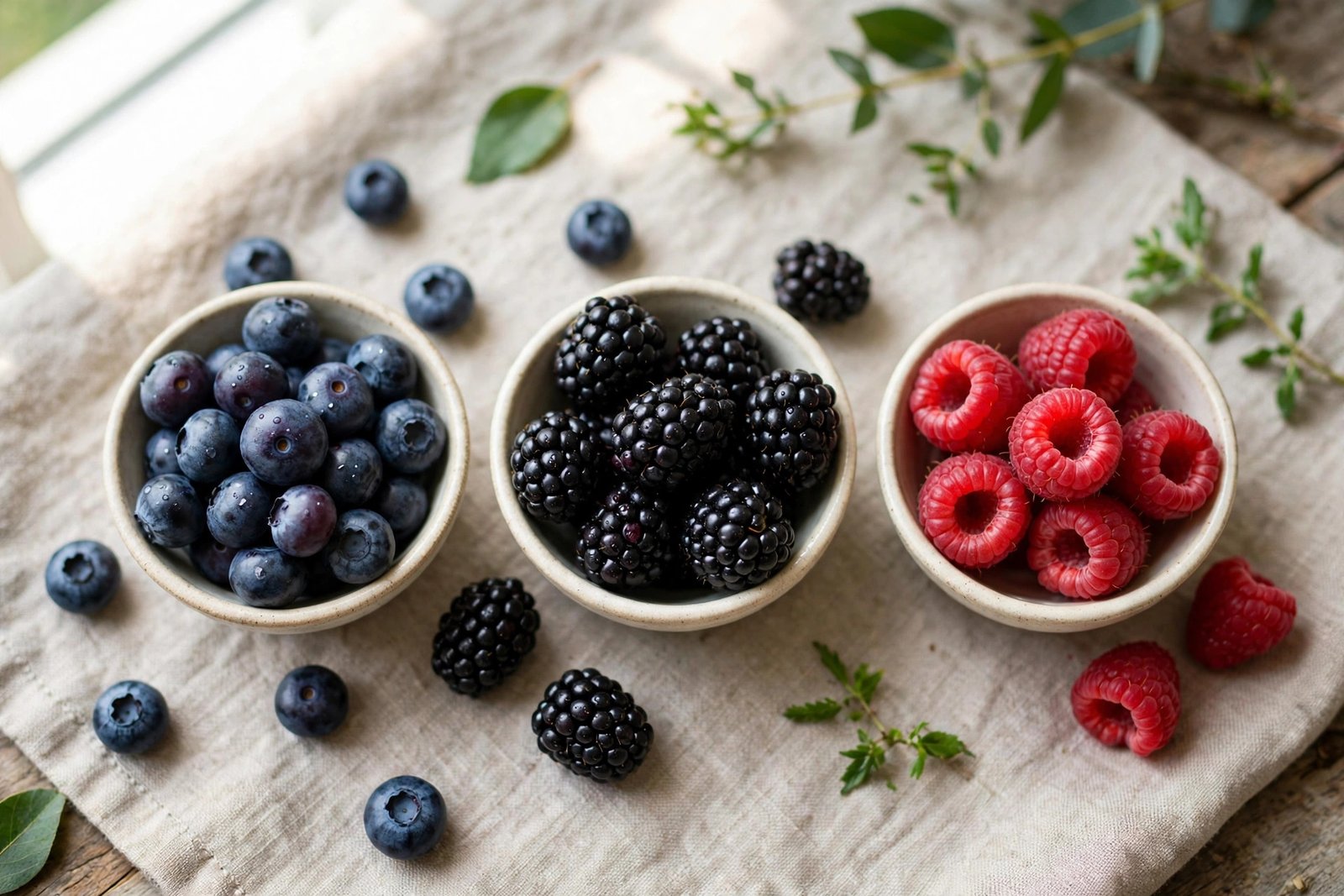
Blueberries and blackberries sit last on this list, and the reason is honest: no trial has tested them against eye outcomes at all. They are here on a nutrient argument. Berries are rich in anthocyanins, the pigments that give them their colour, and anthocyanins are antioxidants. They also carry vitamin C and fibre, and they are one of the most pleasant foods on this list to eat.
That is not a reason to skip them. A small bowl of berries with breakfast or yoghurt adds colour and variety to the pattern. Variety is what keeps a diet going for months rather than days. But if a list tells you that blueberries protect your sight, ask which trial showed it. The answer, at the time of writing, is none. Berries also top our list of foods for brain health, where the evidence for them is stronger than it is for eyes.
Sources checked November 28, 2026. General information; individual needs and rules can differ.
- National Eye Institute — NIH study provides clarity on supplements for protection against blinding eye disease (AREDS and AREDS2 results)
- American Academy of Ophthalmology — Diet, Nutrition, and Eye Health Supplements
- WebMD — Good Foods for Eye Health
- American Optometric Association — Lutein, zeaxanthin reaffirmed over beta-carotene in AREDS2
- NDTV — Can Food Protect Your Vision? What The Science Says About Diet And Eye Supplements
No single food on this list protects your sight on its own. What the evidence supports is a pattern: leafy greens most days, oily fish twice a week, an egg most days, a citrus fruit, and a small handful of nuts, with the rest of the list filling in around them. If your vision changes, or you already have macular degeneration, ask your eye doctor whether the AREDS2 formula suits you, rather than guessing at supplements. Food is the easy part. The exam is the important one.
Keep reading: foods for brain health or 13 food habits worth reviewing as you get older.